China has set its most modest economic growth target in more than 30 years, a move analysts say signals an acknowledgement of strain in the model powering its economic rise.
China has cut its growth target to 4.5-5 per cent, downgrading the target for the first time since it was set at “around 5 per cent” in 2023. It marks the country’s lowest growth goal since 1991.
The target was outlined in the economic plan released during China’s largest political gathering, known as the “two sessions”, which began on Wednesday and is expected to run for around two weeks.
The government also released its 15th five-year plan, which sets the strategic objectives and policies of the world’s second-largest economy for the period 2026-30.
“The task of transitioning to new growth drivers is formidable,” premier Li Qiang said in a speech in Beijing on Thursday.
“The imbalance between strong supply and weak demand is acute, market expectations are weak, and there are many risks and hidden dangers in key areas.”
Mr Li made a more than hour-long address during which he read much of the 46-page work report to thousands of delegates gathered for the National People’s Congress.

The tightly choreographed meetings of the political advisory body and the national legislature are overseen by president Xi Jinping.
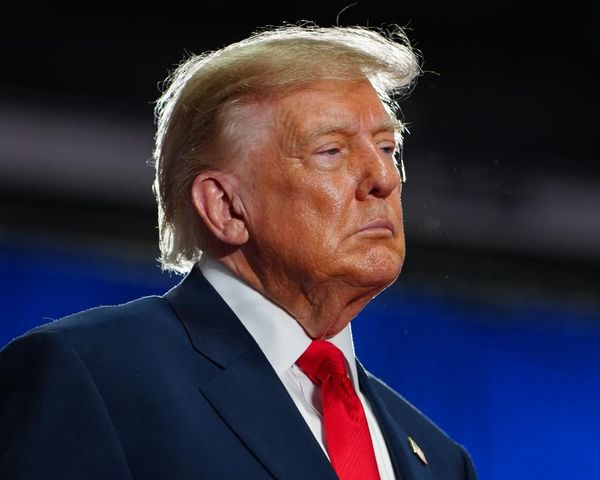
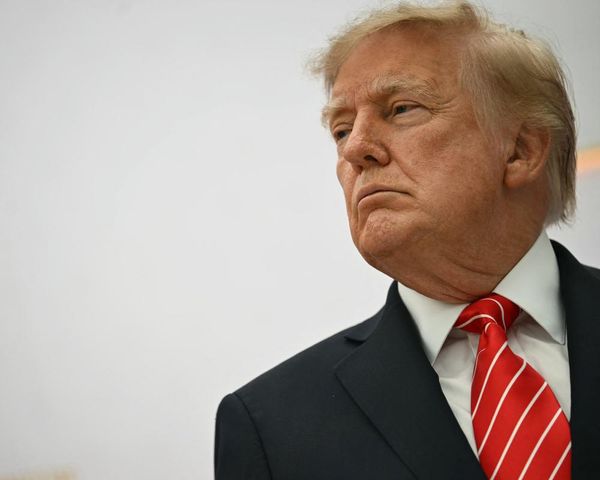
They come weeks before president Donald Trump’s expected visit to China to meet Mr Xi amid a looming trade war between the two countries.
Beijing is aiming to recalibrate its export-dependent economy as it faces challenges including weak consumption, a prolonged property slump, rising local government debt and a shrinking population, alongside an energy crisis linked to the Iran war.
Analysts say a lower target gives Beijing more flexibility to implement reforms, such as reducing industrial overcapacity, to make the world’s second-largest economy less reliant on exports after posting a record $1.2 trillion trade surplus in 2025.
But they caution that the shift does not necessarily signal a departure from the production-focused growth model.
“Facing internal and external headwinds, China has dialled back its 2026 growth target to 4.5-5 per cent. While this marks the lowest since 1991, it may still prove ambitious unless Beijing aggressively ramps up domestic economic reforms,” Mohamed El-Erian, chief economic adviser at Allianz, said.

Andy Ji, an analyst, said the key takeaway was that Beijing had acknowledged the structural slowdown by shifting from a fixed “around 5 per cent” target to a flexible and lower range.
“Beijing is trying to manage a ‘controlled glide’ in growth while building a new economy based on technology rather than property,” he said, adding that Beijing was trying to force a shift from investment-led to consumption-led growth.
In terms of stimulus, China plans a budget deficit of 4 per cent of GDP, similar to last year. It kept special debt issuance quotas unchanged, setting 1.3tn yuan ($188.49bn) for the central government and 4.4 trillion yuan for local governments.
China also pledged to raise minimum monthly pensions by 20 yuan per person and increase basic medical insurance subsidies for rural, non-working residents by 24 yuan. It said it aimed to boost education spending, subsidise childcare and reform public hospitals.
Mr Li said the government would roll out economic policies “in response to US tariffs”, which have fluctuated sharply since Mr Trump launched a trade war with China after returning to office last year.
Beijing will also increase defence spending to 7 per cent, according to a separate budget report. It is down from the 7.2 per cent target set last year but still outpaces wider economic growth targets at a time of rising global tensions.
“We will make solid gains in military training and combat readiness and speed up the development of advanced combat capabilities,” Mr Li said in his speech.
China, which has recently carried out a sweeping purge of senior military officers, aims to modernise its armed forces by 2035 amid rising regional tensions, including over Taiwan, which Beijing claims as its territory.

China is seeking to project confidence in the face of ongoing geopolitical and economic uncertainties as the US-Israeli strikes on its longtime strategic partner, Iran, have destabilised the oil market.
China has remained heavily reliant on Iran, buying 80 per cent of its crude oil imports at discounted rates. Iranian oil accounted for about 13 per cent of China’s oil imports.
Iran was China’s second economic partner to be targeted in recent months after the US military action in Venezuela.
Beijing is no longer able to access Venezuelan oil after the US military captured president Nicolas Maduro in January.
Polls open in Nepal’s first election since deadly Gen Z protests
Satellite images show Afghanistan’s Bagram air base damaged by Pakistan’s airstrikes
Xi tightens grip on military as three generals ousted ahead of political gathering
Robotaxi fleet suspended in Dubai as Gulf conflict intensifies
China says US didn’t inform it before attacking Iran as one national confirmed dead
Inside China’s huge semi-abandoned housing complex inspired by Italy’s Venice