Get all your news in one place.
100’s of premium titles.
One app.
Start reading
The Times of India
The Times of India
Travel
TIMESOFINDIA.COM

China’s Great Green Wall: 46 years of planting trees around Taklamakan Desert

This is the story of China's great green wall—a belt of green, defiant trees encircling the Taklamakan Desert in China, and the incredible 46-year effort to achieve this feat.

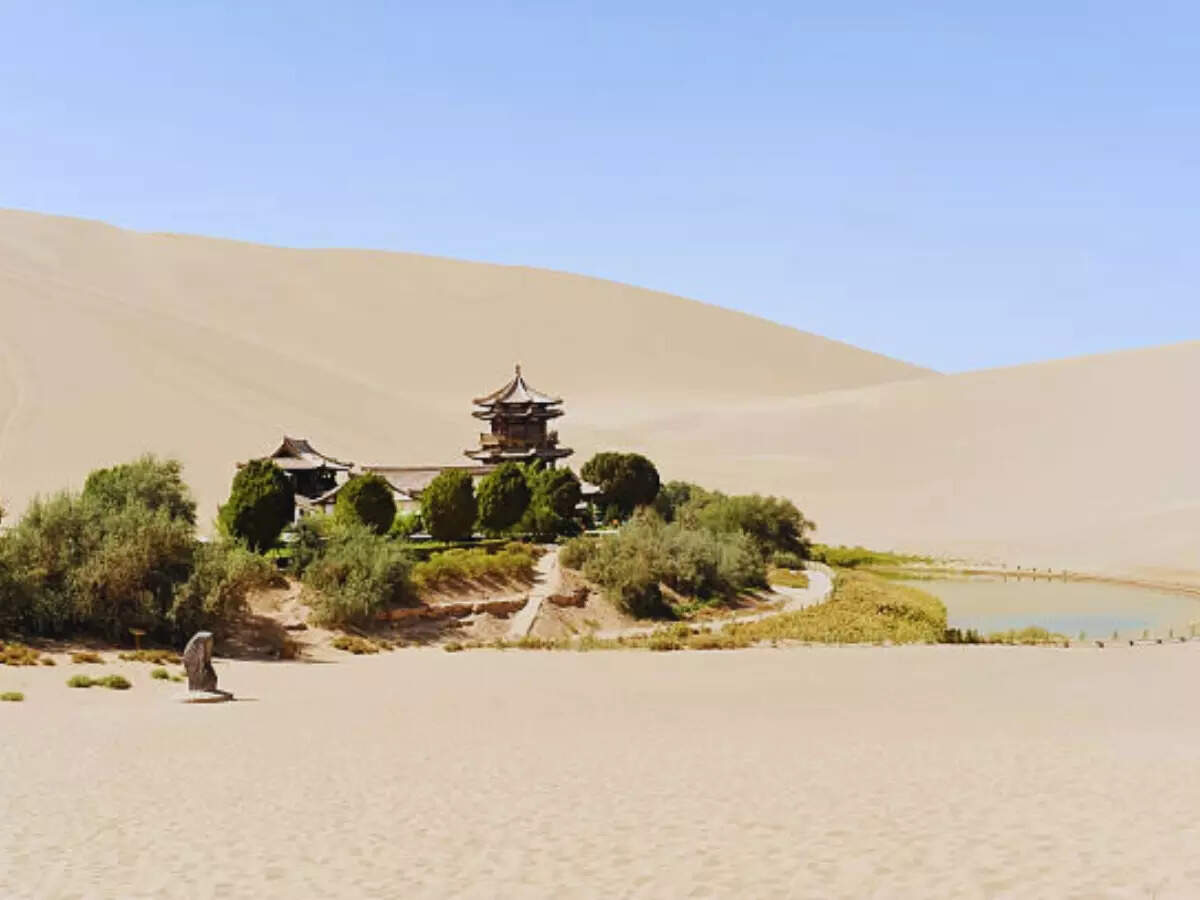
Located in the northwestern region of Xinjiang, the Taklamakan Desert, also known as the Sea of Death, is one of the world’s largest and harshest deserts. For decades, its sands were a constant menace, fueling devastating sandstorms that swept across China every spring, even reaching Beijing. As per the latest reports, China has completed the 3,000-kilometer-long “green belt” of trees around the desert.

The initiative is a part of China’s ambitious "Three-North Shelterbelt" project launched in 1978, was nothing short of monumental. The initiative was dubbed “Great Green Wall.” This campaign aimed to combat desertification by planting trees on an unprecedented scale. Over the years, more than 30 million hectares of trees have been planted under the program. For a country once struggling with just 10% forest coverage in 1949, this project has been transformative, pushing that figure to over 25% by the end of last year.

This achievement, however, isn’t without its challenges. Critics argue that tree survival rates have often been low and that the problem of sandstorms aren't actually over yet. These storms continue to plague the region. If reports are to go by, sandstorms, fierce and unyielding, continue to batter cities like Beijing, raising questions about the true effectiveness of the green belt.

Also read: From deserts to coasts: 8 most beautiful road trips across India this winter

Still, the effort isn’t over. Officials plan to restore poplar forests on the northern edge of the desert by channeling floodwaters and are working on new forest networks to protect farmland and orchards on its western edge.

Yet, despite these numerous, and massive efforts, desertification remains a daunting problem for China. As per the official figures, 26.8 percent of the country’s total land is still classified as desertified. It is, however, a slight improvement from 27.2 percent a decade ago. This is a stark reminder of how much work remains.

Also read: How sustainable is 'sustainable wildlife tourism' in India

This achievement, however, is more than just a fight against the sands. It’s a symbol of what long-term commitment can accomplish. China’s green belt around the Taklamakan stands as a testament to human determination.

Sign up to read this article
Read news from 100’s of titles, curated specifically for you.
Already a member? Sign in here
Related Stories
Top stories on inkl right now
One subscription that gives you access to news from hundreds of sites
Already a member? Sign in here
Our Picks
Fourteen days free
Download the app
One app. One membership.
100+ trusted global sources.