
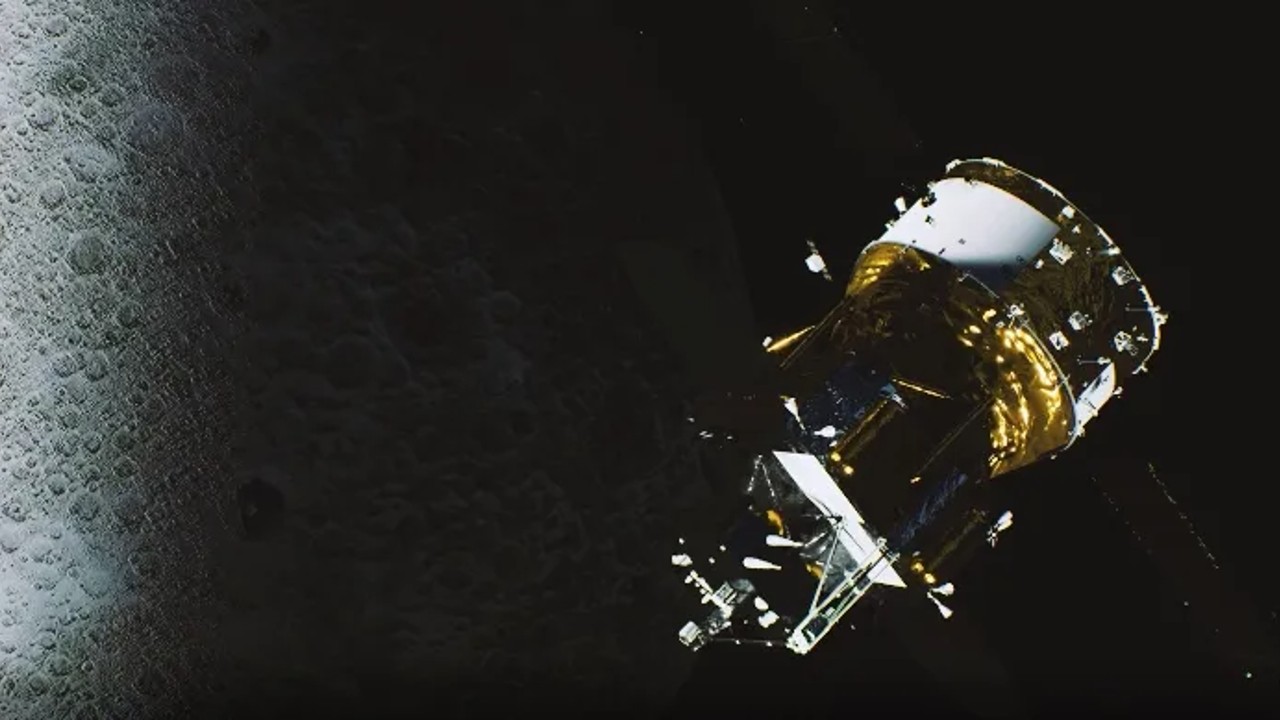
China's Chang'e-6 mission, currently on its way to retrieve a sample of material from the far side of the moon, will test theories of why the lunar near and far side are so different.
Having launched on May 3, Chang'e-6 is expected to land in early June within the Apollo double ring impact basin, which lies inside the even larger South Pole–Aitken basin (SPA). The immense SPA is the largest impact feature of its kind in the solar system, spanning 2,400 by 2,050 kilometers (1,490 by 1,270 miles) in area; it was formed some 4.3 billion years ago, which is very early in the history of the solar system. Though Apollo is younger, it is also the largest impact site to be superimposed on the SPA. Apollo sports a double-ringed structure, with its inner ring of mountain peaks having a diameter of 247 kilometers (153 miles) and an outer ring about 492 kilometers (305 miles) across.




