
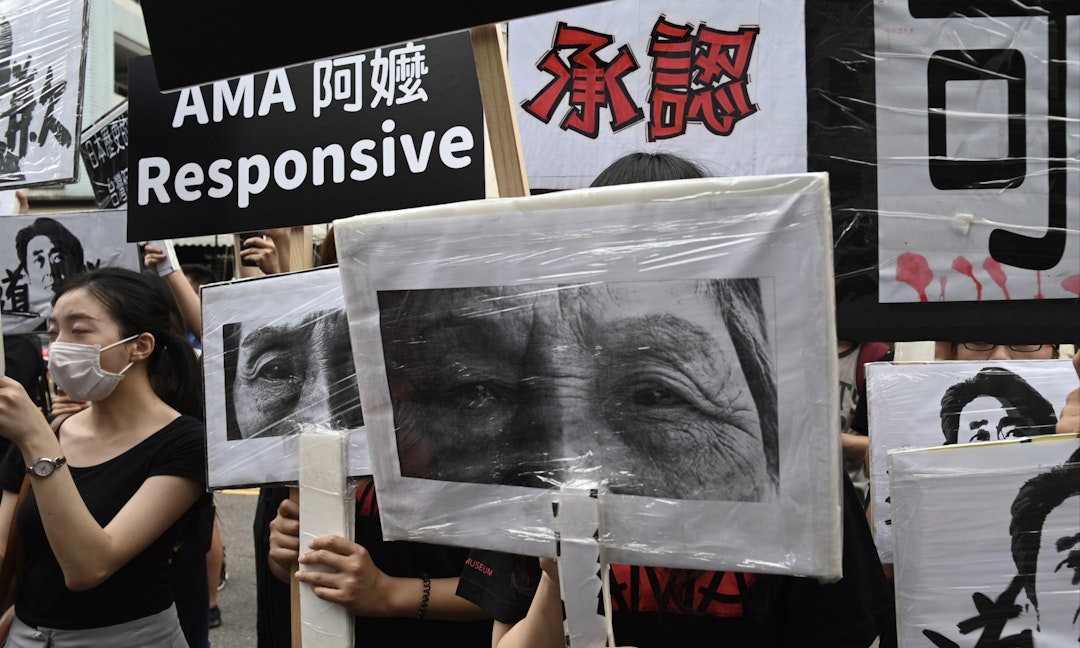
The comfort women controversy has dogged Tokyo–Seoul relations since the early 1990s, but Japan’s wartime network of “comfort stations” or military brothels was located mainly in China. Though the “Patriotic War of Resistance Against Japanese Aggression” has long been central to the Chinese Communist Party’s (CCP) patriotic education campaign, Beijing has proven comparatively hesitant and ambivalent on this issue.
Advocacy on behalf of comfort women emerged out of an upsurge of feminism in post-Cold War East Asia, sometimes intersecting awkwardly with anti-Japanese nationalism. Across the region, state-led modernisation came at the heavy cost of institutionalized discrimination against women. The fact that East Asia today boasts the world’s lowest fertility rates is attributable in part to female dissatisfaction with a developmental model and employment practices that depend on women’s unpaid labour.