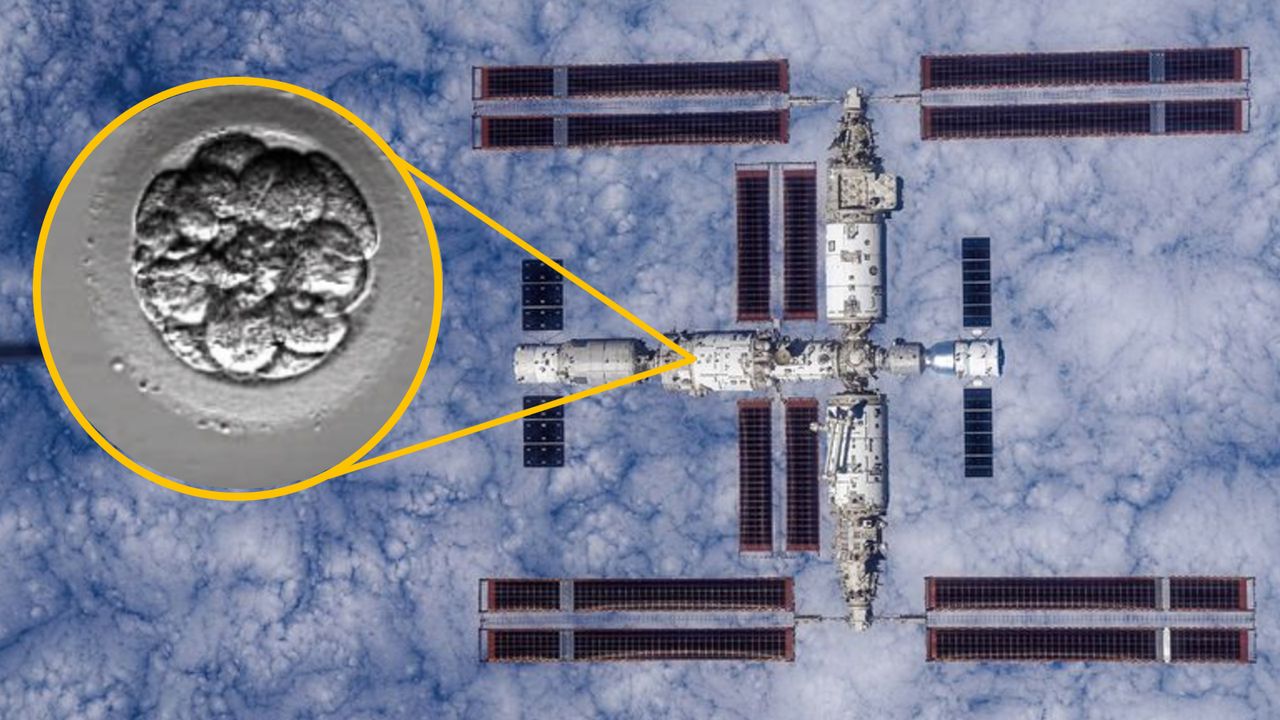
China has become the first nation to send "human artificial embryos" to space in a bid to better understand how microgravity and cosmic radiation may affect human reproduction. The results could have big implications for our ability to set up self-sustaining colonies on the moon and Mars.
The embryo-like structures, made from living human stem cells, arrived on the Tiangong ( "Heavenly Palace") space station in the early hours of May 11 as part of the Tianzhou-10 resupply mission, state officials revealed. The mission also delivered around 7 tons (6.3 metric tons) of cargo — including food, fuel, spacesuits and other scientific experiments — to the Chinese astronauts currently living on the station.