
Get all your news in one place.
100's of premium titles.
One app.
Start reading
Tom’s Hardware
Tom’s Hardware
Technology
Anton Shilov

China is considering export controls on AI technologies, including banning local companies from using TSMC, report claims — restrictions would also cover advanced AI models, training data, and overseas acquisitions

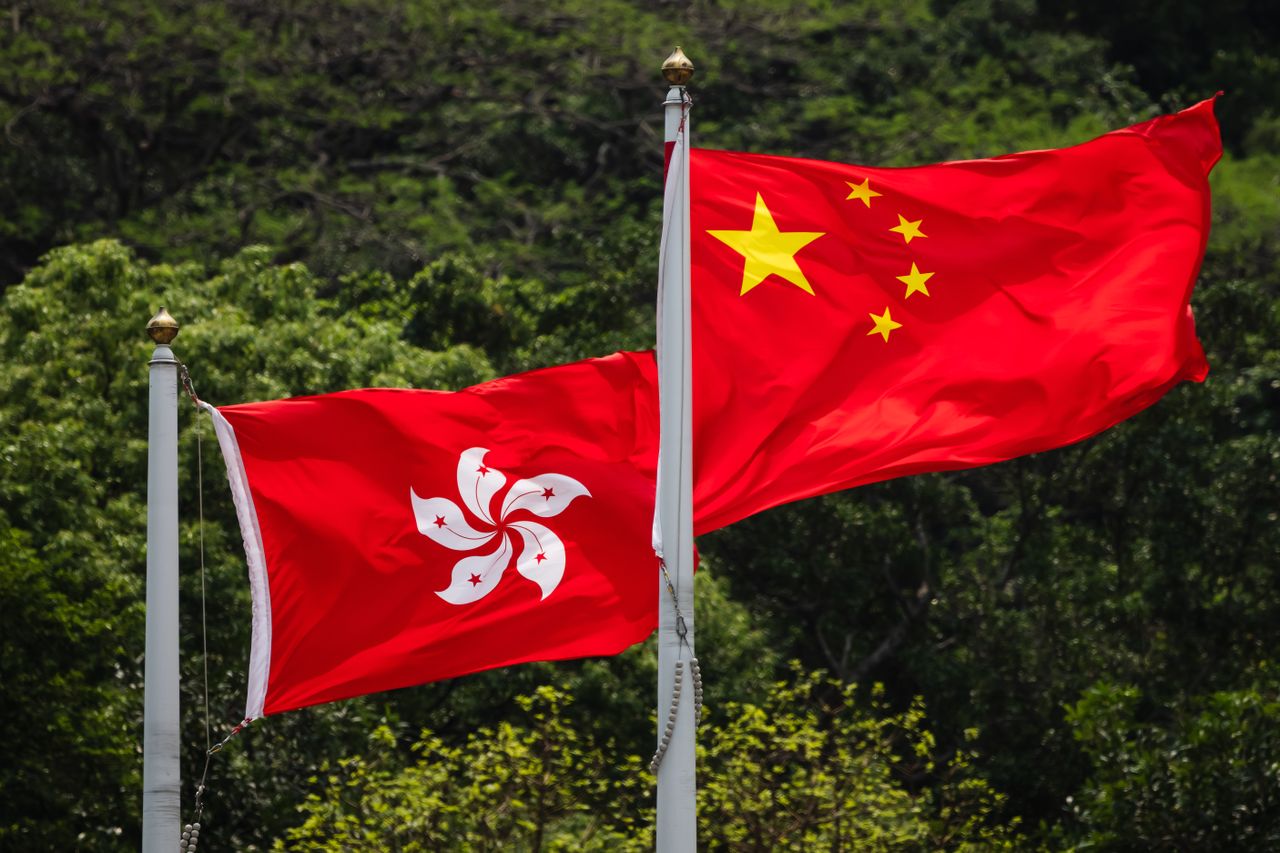
China.

China is considering a major expansion of its technology export restrictions that could cover advanced AI models, training data, and overseas acquisitions of strategically important technology companies, reports the Financial Times. In addition, the Chinese government is mulling over prohibiting local chip designers from making their chips at TSMC and other foreign chipmakers.

Go deeper with TH Premium: AI and data centers

(Image credit: Microsoft)

The measures would be designed to keep leading-edge AI developments in China as competition with the U.S. in frontier AI and hardware intensifies, but at the same time, they would slow down expansions of Chinese AI standards globally, which generally weakens the country's position.

China's Ministry of Commerce (MofCom) has consulted domestic AI and semiconductor companies about ways to keep critical technologies from transferring abroad or falling under Western control, reports Financial Times citing two people familiar with the talks. Regulators have talked with Alibaba, ByteDance, and Zhipu about potentially limiting transfers of important AI training data outside China and restricting foreign users from downloading model weights.

Overseas customers could still access Chinese AI services and models remotely, so Chinese companies can still monetize their work from foreign customers. However, restrictions on downloadable model weights could still have significant implications for China's AI industry. DeepSeek and Moonshot offer open-weight models that users can download, deploy on their own infrastructure, and modify for specific workloads. Meanwhile, flagship models from Anthropic and OpenAI remain closed, which means that Chinese companies have an edge over rivals that they are about to lose.

In addition, MofCom has reportedly asked for industry feedback on possible restrictions that would prevent overseas chipmakers like TSMC from producing advanced processors based on designs developed by Chinese companies such as Alibaba, ByteDance, and Huawei. This is perhaps the most controversial proposal, as TSMC is clearly ahead of SMIC when it comes to process technology leadership. On the one hand, the move ensures that SMIC will have enough orders to pay for its R&D and expansion. On the other hand, Chinese companies can get better hardware if it is produced by TSMC.

Separately, the Chinese government is considering tighter controls over foreign acquisitions of strategic technology companies, including firms that work on agentic AI technologies. The potential acquisition rules are intended in part to close what Beijing considers a regulatory loophole that enabled Meta to acquire Manus for $2 billion. Chinese authorities subsequently ordered the transaction to be undone.

The measures could be included in the next revision of China's catalogue of technologies prohibited or restricted from export. The catalogue already includes rare-earth materials, their processing technologies, and several lithium-ion battery production technologies.

Sign up to read this article
Read news from 100's of titles, curated specifically for you.
Already a member? Sign in here
Related Stories
Top stories on inkl right now
One subscription that gives you access to news from hundreds of sites
Already a member? Sign in here
Our Picks
Fourteen days free
Download the app
One app. One membership.
100+ trusted global sources.