Get all your news in one place.
100’s of premium titles.
One app.
Start reading
International Business Times
World

Chilling Similarities Between the US–Iran and the Vietnam War — Is History Repeating Itself?

As the war between the United States and Iran continues to intensify, historians and policy analysts are increasingly drawing comparisons with one of the most painful chapters in modern American history—the Vietnam War.

While the geography and political context are vastly different, some strategic patterns appear strikingly familiar. From unclear end goals to asymmetric warfare and regional spillovers, experts warn that the dynamics of the current confrontation risk echoing the same challenges that plagued the United States during its decades-long involvement in Vietnam.

Here are the similarities which analysts say deserve serious attention.

A War Without a Clear End

One of the defining features of the Vietnam War was the absence of a clearly defined victory condition. Over time, the conflict evolved into what many described as a 'forever war,' with no clear path to a decisive outcome despite years of military engagement by the United States.

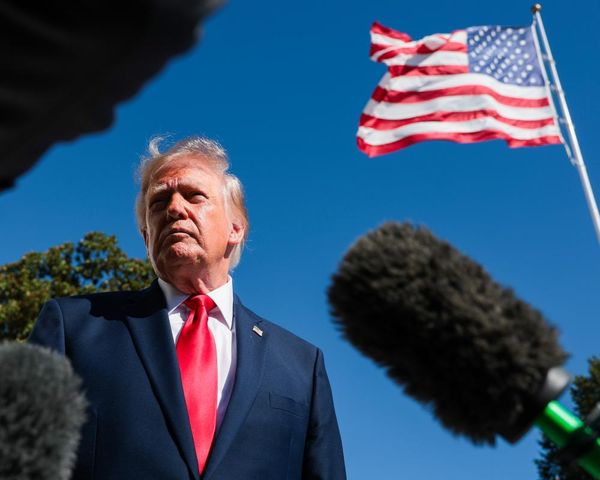
A similar concern is now emerging in the ongoing confrontation between Washington and Iran. Three days into the current military operation, US President Donald Trump has outlined several objectives — including destroying Iran's ballistic missile capabilities, weakening its navy, and halting its nuclear weapons development, yet the broader endgame remains unclear. While the administration initially framed the strikes as an effort to dismantle Iran's nuclear programme, shifting statements from officials have left analysts questioning what a final political outcome might look like once the conflict ends.

Asymmetric Warfare and Proxy Networks

During the Vietnam War, the United States faced the guerrilla tactics of the Viet Cong, which relied on unconventional warfare rather than direct military confrontation.

Analysts say Iran employs a comparable strategy through what is often described as the 'Axis of Resistance,' a network of allied groups across the Middle East. These include organisations such as Hezbollah in Lebanon and the Houthis in Yemen, allowing Tehran to exert influence without engaging in a traditional state-to-state war.

Supporting Fragile Allies

In Vietnam, Washington invested heavily in supporting the government of South Vietnam, which struggled with political instability and limited public support.

A similar criticism is sometimes levelled at US policy in parts of the Middle East, where backing regional partners has occasionally been seen by critics as aligning with governments facing domestic legitimacy challenges.

Misjudging the Opponent's Resolve

During the 1960s, American strategists often underestimated the determination of the North Vietnamese leadership and the nationalist motivation behind their campaign.

Some analysts believe Washington has, at times, similarly underestimated Iran's resilience and the strength of its ideological and national identity, particularly under external pressure. Iran's strategy has long focused on endurance and asymmetric resistance rather than direct conventional confrontation with the United States.

Experts note that Tehran often relies on long-term attrition, regional alliances, and internal mobilisation to absorb pressure and sustain conflict over time, a strategy designed to outlast more powerful adversaries.

The 'Fog of War' and Civilian Tragedies

Modern conflicts are frequently shaped by tragic mistakes made in the chaos of military operations.

A stark example occurred in 1988 when the US Navy cruiser USS Vincennes accidentally shot down Iran Air Flight 655, killing 290 civilians. More recently, in 2020, Iran mistakenly downed Ukraine International Airlines Flight 752 amid heightened tensions.

Such incidents echo the devastating civilian losses and controversial operations that marked the Vietnam War era.

The Exit Strategy Problem

Another major challenge in Vietnam was how to withdraw without triggering a collapse of US-backed institutions. The war ultimately ended with the dramatic fall of Saigon in 1975.

Strategists often warn that an ongoing large-scale confrontation with Iran would present similar dilemmas about disengagement and long-term regional stability.

Deep Political Divisions at Home

The Vietnam War triggered massive protests and deep political divisions across the United States, as public anger grew over a long and costly overseas conflict. Demonstrations spread through universities and major cities, reshaping the country's political landscape.

A similar divide is emerging during the ongoing confrontation between the United States and Iran. Recent surveys suggest that 52% of American voters oppose the decision to launch military strikes, while around 41% support the move. Opposition is particularly strong among younger voters and Black Americans, while support tends to be higher among older conservative voters. Within the Democratic Party, roughly three-quarters of supporters believe the military operation was the wrong decision, reflecting a broader war-weariness among parts of the American public.

High Costs With Uncertain Returns

The Vietnam War cost the United States enormous financial resources and more than 58,000 American lives, leaving deep social and political scars that shaped US foreign policy for decades.

Critics argue that decades of military engagement in the Middle East have also carried high costs while producing mixed strategic outcomes. In the current conflict involving Iran in 2026, at least six American soldiers have been reported killed in recent military exchanges, highlighting the human toll that even limited confrontations can quickly impose.

Is History Repeating Itself?

Most historians caution against drawing direct comparisons between different wars. The political landscape, military technology and global alliances of today are very different from those of the Cold War era.

However, the parallels highlight a recurring challenge in modern warfare: military power does not always translate into political success.

As the war between the United States and Iran continues to evolve, policymakers face a familiar dilemma: balancing deterrence with diplomacy in a region where the consequences of miscalculation could be felt far beyond the battlefield.

For many observers, the lesson of Vietnam remains clear: once a conflict begins to spiral, bringing it to an orderly end can prove far more difficult than expected.

Originally published on IBTimes UK

Sign up to read this article
Read news from 100’s of titles, curated specifically for you.
Already a member? Sign in here
Related Stories
Top stories on inkl right now
One subscription that gives you access to news from hundreds of sites
Already a member? Sign in here
Our Picks
Fourteen days free
Download the app
One app. One membership.
100+ trusted global sources.