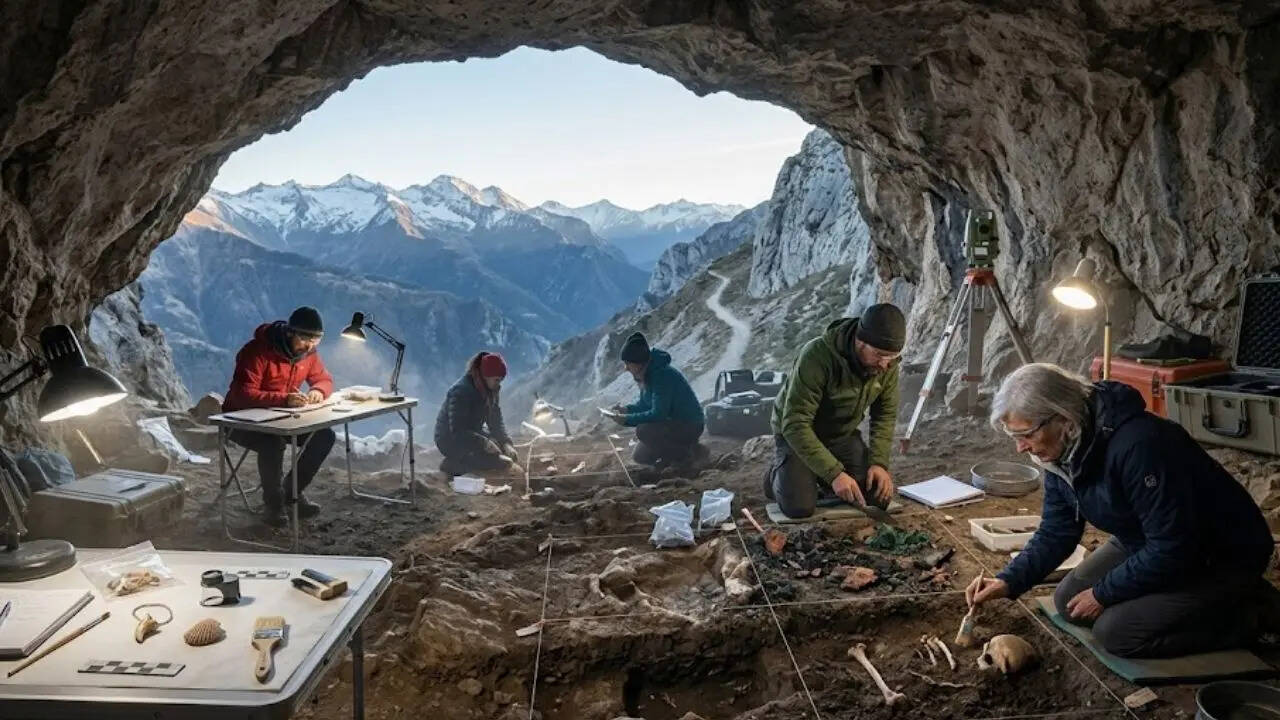
High in the Spanish Pyrenees at 2,235 meters, archaeologists made a paradigm-shifting discovery that challenges our view of prehistoric life in the mountains. In the remote Cova 338 cave, experts from the Autonomous University of Barcelona found the remains of an 11-year-old child with primitive metallurgical tools. This site dates back over five millennia and reveals that ancient humans did more than just pass through these rugged terrains. They engaged in complex metalwork.
The presence of copper-processing hearths at such a high elevation suggests a society with the organisation to manage both advanced mineral extraction and ceremonial burials. It highlights their ability to innovate for survival in one of Europe's harshest landscapes. This evidence redefines mountainous prehistory, proving that high-altitude environments hosted sophisticated industrial and ritual activity.