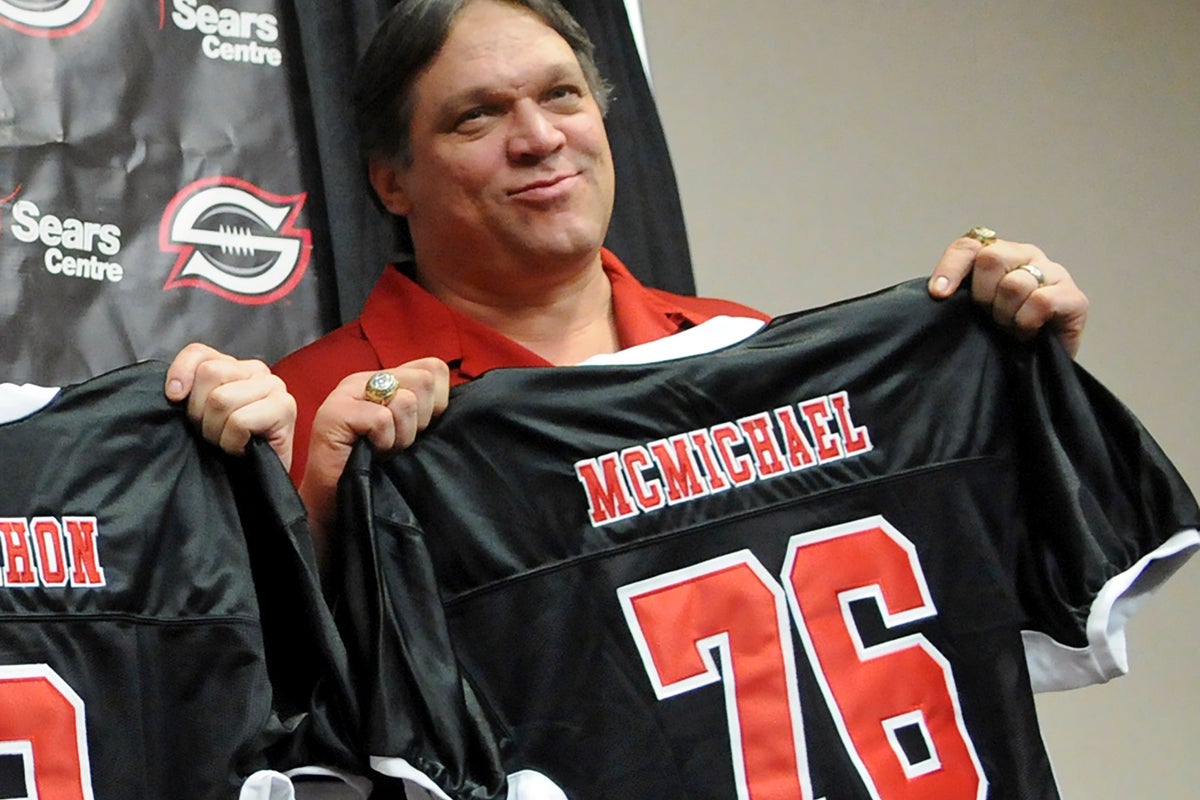
Steve McMichael, a pivotal member of the formidable defence that led the 1985 Chicago Bears to Super Bowl victory, has been posthumously diagnosed with chronic traumatic encephalopathy (CTE), the Concussion & CTE Foundation has confirmed.
McMichael, who passed away last year at the age of 67, had endured a five-year battle with amyotrophic lateral sclerosis (ALS).

His wife, Misty McMichael, highlighted the concerning trend among American football players.
"Too many NFL players are developing ALS during life and diagnosed with CTE after death," she stated in a release from the foundation. "I donated Steve’s brain to inspire new research into the link between them."
CTE is a degenerative brain condition identified in athletes from contact sports, combat veterans, and others subjected to repeated head trauma.
Its known symptoms include severe mood swings, impulsive behaviour, and depression, and it can only be definitively diagnosed after death.

Research from a 2021 study by Harvard Medical School and the Boston University CTE Center indicates that NFL players are more than four times as likely to develop ALS compared to other men.
Dr Ann McKee, director of the Boston University CTE Center, noted that approximately six per cent of individuals with CTE in the brain bank also suffer from ALS, commonly known as Lou Gehrig’s disease.
Dr McKee affirmed "there is strong evidence linking repetitive brain trauma and ALS."
Known affectionately as "Mongo" and "Ming The Merciless," McMichael was a two-time All-Pro and is set to be inducted into the Pro Football Hall of Fame in 2024.
He holds a franchise record for 191 consecutive games played between 1981 and 1993 and ranks second only to Richard Dent on the Bears’ career sacks list with 92½. After his final NFL season with Green Bay in 1994, McMichael embarked on a career in professional wrestling.
In 2021, McMichael publicly disclosed his ALS diagnosis, a condition that attacks nerve cells in the brain and spinal cord, leading to a loss of muscle control.
He closely followed the research exploring the connection between ALS and CTE and pledged his brain for study, according to Chris Nowinski, co-founder and CEO of the Concussion & CTE Foundation.
"Steve McMichael was known for his strength, toughness, and larger-than-life presence, but his final act was to give a piece of himself back to the sports community so that we might have a chance to save ourselves," Nowinski said.
He also expressed gratitude to former athletes, including many of McMichael’s 1985 Bears teammates, who are actively fundraising and volunteering for CTE research to foster a safer future for athletes globally.
One of NFL’s first female refs ‘considered cutting hair’ amid alleged discrimination
Former Premier League footballer Petter Rudi diagnosed with ALS
NFL star who went missing before Super Bowl over 20 years ago dies
Rams receiver Puka Nacua sued after being accused of antisemitism and biting a woman
Tom Brady reveals NFL’s response to his comeback idea
Super Bowl winner Lavonte David retires after 14 seasons with Tampa Bay Buccaneers