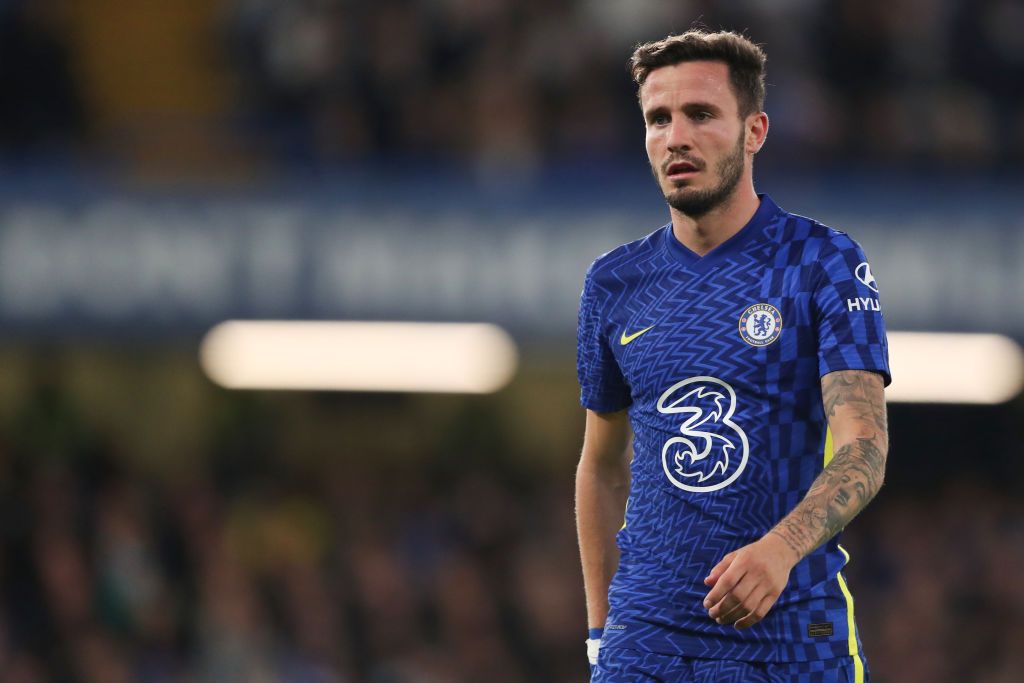
When Saul Niguez arrived on loan at Chelsea in August 2021, hopes were high at Stamford Bridge that the Blues had landed a genuine difference-maker.
During the previous decade, the midfielder had been one of Atletico Madrid’s best players, impressing on both the domestic and international fronts, not least in Atleti’s 2020/21 La Liga winning campaign.

But what followed was a season shaped by injury, illness and unprecedented events off the pitch for the west London side.
Niguez opens up on his Chelsea issues

“I wanted to learn English and experience the Premier League, just as Fernando Torres, my idol, had done,” the 19-time Spain international tells FourFourTwo when asked about how his loan move to Chelsea came about.
As well as wanting to follow in the footsteps of one of his most celebrated countrymen, Saul admits that there were also more practical reasons behind the transfer.

“At the same time, Atletico had made a huge financial effort to bring back Antoine Griezmann and I was encouraged to leave.
“Joining the reigning European champions felt like a good move to keep growing as a player, even though I knew how difficult it would be to earn a place in the team, with a coach who already trusted certain players,” he adds, knowing that competition for places would be fierce.
“I’d gone to London on loan with an optional £30 million purchase clause, which the club told me they intended to activate. Under Thomas Tuchel, I learned a lot and enjoyed playing with the team.”
As well as getting to play under the now-England boss, the 31-year-old also enjoyed early successes, not least winning the Club World Cup in February 2022. However, any personal momentum was quickly lost as circumstances proceeded to conspire against him.
“We made two domestic cup finals and won the Club World Cup,” he continues. “But COVID hit me, I got ill, lost my place, and due to Russia’s invasion of Ukraine and the sanctions imposed [because of Roman Abramovich’s ownership], the club weren’t able to sign me permanently.”

These geopolitical events would soon mark the end of the Abramovich era at Chelsea, closing the book on one of English football’s most seismic turning points.
And as well as ending Saul’s hopes of joining Chelsea permanently, they also affected daily life around the club, with one small detail a particularly telling sign of just how bizarre the situation was.
“Even my wife had to stop going to the club gym near Stamford Bridge as they could no longer pay the fees,” Saul adds.