Get all your news in one place.
100’s of premium titles.
One app.
Start reading
The Guardian - AU
The Guardian - AU
National
Josh Butler, Nino Bucci, Penry Buckley and Andrew Messenger

Cheaper medicines, rules for cash and new state laws: what will change in Australia on 1 January?

The next phase of Anthony Albanese’s government’s ‘cheaper medicines’ will see a $25 maximum cost for any prescription under the Pharmaceutical Benefits Scheme from 1 January
The next phase of Anthony Albanese’s government’s ‘cheaper medicines’ will see a $25 maximum cost for any prescription under the Pharmaceutical Benefits Scheme from 1 January. Photograph: Lukas Coch/AAP

Cheaper medicines on the PBS, a Medicare phone service and new laws mandating businesses to accept cash payments are just some of the major changes coming into effect in the first week of 2026.

Indexation increases to social security payments, changes to childcare settings and a new online mental health service will also kick in from the beginning of January.

Around Australia, other changes from 1 January include the the Victorian government expanding land taxes while making public transport free for children and Queensland’s government bringing in a child sex offender register.

National changes

New health programs

The next phase of the Labor government’s signature “cheaper medicines” will see a $25 maximum cost for any prescription under the Pharmaceutical Benefits Scheme (PBS) from 1 January. It’s a cut from the current $31.60 maximum, which Anthony Albanese claimed would save Australians more $200m each year.

Sign up: AU Breaking News email

“We’re cutting the cost of PBS medicines because Australians shouldn’t have to worry about whether they can afford to fill a script,” the prime minister said.

The cost for pensioners and those on concession cards will remain at $7.70 until 2030.

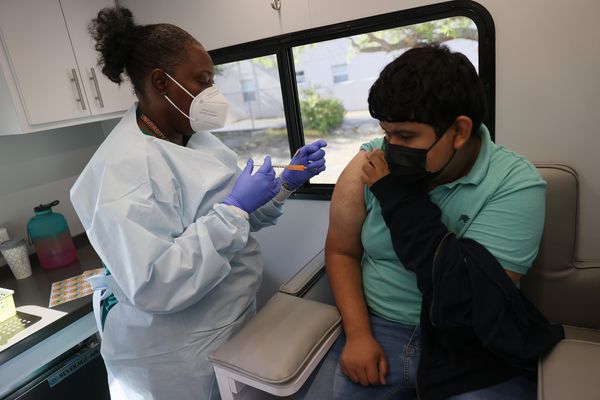
A nurse-staffed 1800 MEDICARE phone line – a 24/7 telephone service to connect patients with GPs, hospitals or urgent care clinics – will replace the current Healthdirect service.

A Medicare mental health check-in service will also launch in early January. The online portal, run by St Vincent’s Health, is geared toward early support for people experiencing mild mental health issues and will expand from late March to offer low-intensity cognitive behavioural therapy over the phone or video chat.

Social security indexation

People on a range of social security payments will see a slight bump in their allowances from 1 January, as part of regular indexation changes. The single rate of youth allowance will go up by $17.60 per fortnight, while Austudy will increase by $13.90 per fortnight. The carer allowance will tick up by $3.30 a fortnight.

Income thresholds will also be raised for student payments, as will the parental income test threshold for Youth Allowance and Abstudy. The full list of payment changes is available on the Department of Social Services website.

Mandating cash

New rules requiring grocery stores and petrol stations to accept cash will kick in from 1 January, mandating that cash must be accepted for transactions of $500 or less.

There are exemptions for small businesses with a turnover of less than $10m turnover.

Childcare changes

Families will get access to three days of government-subsidised childcare each week, as long-mooted changes to early education come into effect.

The “three-day guarantee” replaces the previous settings of an activity test, meaning all families will get access to three days of care, regardless of income or work habits of parents. The government claims 100,000 more families will now be eligible for more subsidised early education, the next step as Labor looks to a longer-term goal of universal childcare.

Changing battery rebates

Changes to the government’s popular home battery program will see more money put into the program but slight reductions in the rebates consumers get for installing batteries. As reported by Choice, estimated rebates will fall from $372 per kilowatt hour currently to $336 per kWh from January, as part of a gradual reduction in concessions as more people take up the scheme. The changes were announced in December in a bid to “secure the sustainability” of the program, with an extra $4.9bn put into the scheme at the same time as subsidies were altered.

New South Wales changes

In NSW, road toll users are being saddled with more quarterly rises. As some consolation, the government has announced it will permanently extend a weekly toll cap of $60, which was due to expire at the end of 2025.

Property developers will be able to claim a tax cut allowing them to claim a 50% reduction in land value from 2026 for eligible build-to-rent properties. But, in the City of Sydney, new developments will be required to install electric cookers and hobs, heaters and conditioners under a new electric standard – or “gas ban” – in the council area.

There are more changes coming into effect from the raft of legislation that was rushed through parliament after the Bondi attack, including gun control, hate speech and protest laws, some of which took immediate effect on 24 December.

They include limits on the number of firearms to four for recreational uses – and 10 for commercial uses, such as farming and pest control – although a grace period applies for existing owners until a national buyback scheme is established.

A law allowing the police commissioner to restrict protests after terrorist incidents also came into effect on Christmas Eve. A 14-day declaration preventing the authorisation of protests for much of metropolitan Sydney made the same day will last into the new year and could be extended to up to 90 days, or until the end of March, potentially affecting Invasion Day protests.

Victoria changes

Public transport will be free for everyone aged under 18 from 1 January. The Victorian government will also make it free for more than 650,000 seniors and close to 300,000 carers and disability support pensioners to catch a train, tram or bus on weekends.

Changes to the state’s congestion levy and vacant residential land tax (VRLT) will also come into effect on 1 January. The rate of the congestion levy will increase by more than 70% and apply to more parts of Melbourne. It applies to off-street private and public car parking spaces and is designed to encourage people to use public transport.

Residential land in metropolitan Melbourne that has remained undeveloped for at least five years may also attract the VRLT from 1 January onwards. This means residential land capable of development cannot remain undeveloped without attracting the tax.

Land that cannot be used or developed for residential purposes, or land that is “contiguous to the owner’s principal place of residence or holiday home”, is exempt.

Queensland changes

The Queensland government is bringing in several major law changes, with the state’s child sex offender register set go into effect.

Named Daniel’s Law for murder victim Daniel Morcombe, the laws are modelled after Western Australia’s public child sex offender register.

It will operate with three categories, with the first allowing allow the police commissioner to post images and “particular personal details” of offenders who have breached reporting requirements and whose whereabouts is unknown on a public website.

The second allows Queensland residents to apply to temporarily view facial images of reportable offenders living in their suburb or small town. Thirdly, parents and guardians can also ask the register if a person with unsupervised contact with their child is a convicted sexual offender.

Queensland has also rolled back rules against double jeopardy, the millenia-old legal principle preventing a person from being put on trial twice for the same offence.

The new laws make it clear that an error caused by the state’s DNA lab scandal would not prevent a person being charged again for the same offence. The laws only apply to 11 serious offences, including murder, rape and manslaughter, and went into effect this week.

The state has also amended its defamation laws to exempt publishers, such as news organisations, from being sued for comments posted on their social media pages by others. The change brings Queensland in line with every other state.

Sign up to read this article
Read news from 100’s of titles, curated specifically for you.
Already a member? Sign in here
Related Stories
Top stories on inkl right now
One subscription that gives you access to news from hundreds of sites
Already a member? Sign in here
Our Picks
Fourteen days free
Download the app
One app. One membership.
100+ trusted global sources.