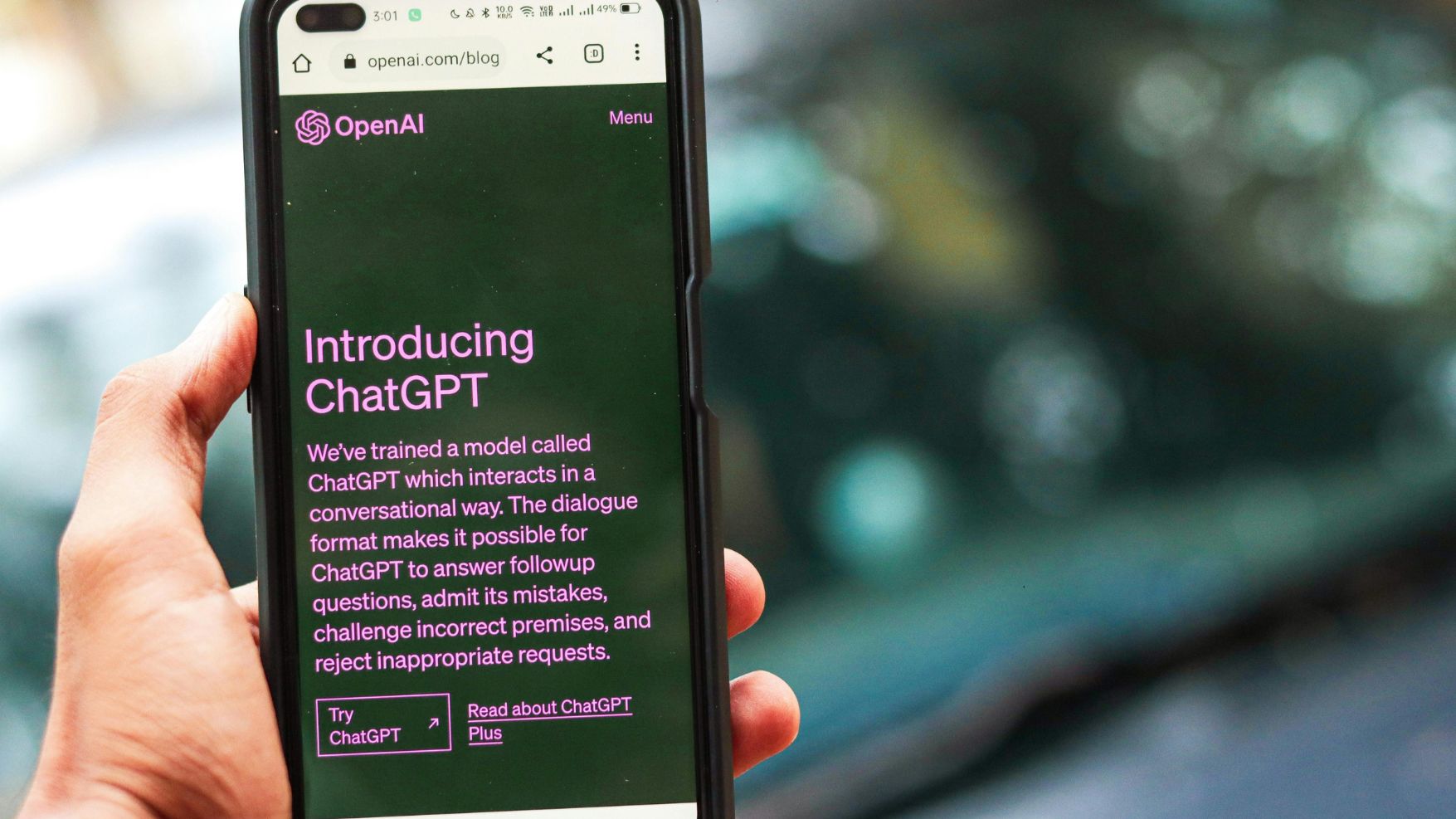
At the start of February 2026, OpenAI made an enormous announcement: ChatGPT is going commercial.
“Our goal is for ads to support broader access to more powerful ChatGPT features while maintaining the trust people place in ChatGPT for important and personal tasks,” the company said in its announcement.
Available only on its Free and Go subscription tiers, the company is starting to test ads for U.S. users. The Go subscription is new to the platform, announced in mid-January and available at $8 per month.
“95% of ChatGPT users are on the free tier,” Vincent Schmalbach, Freelance Full-Stack Developer & AI Engineer, says, explaining that ChatGPT is often used as a Google alternative. “They want quick answers, recipe ideas, homework help, settling arguments at dinner. For those users, ads make total sense. They already accept ads in Google Search and will likely also accept ads in ChatGPT.”
However, other subscription plans – Plus, Pro, Business, Enterprise and Education – will remain unaffected by advertisements – for now.
Kateryna Cherkas, CEO of WebHunter Studio, makes a valid point that could impact future advertising. “Proper targeting is critical. Higher-tier subscribers are often decision-makers, which means placements aimed at them may carry higher value — but they must remain highly relevant and non-intrusive,” she says.
In the meantime, ads on the free tier aren’t entirely unreasonable, explains Arthur Favier, CEO of Oppizi. “People understand the trade. Pay with money or pay with attention,” he says simply. “That logic has worked across media for years. The key is that the free tier should still feel usable and not like a degraded product designed to push upgrades.”
Siyar Isik, Software Developer and Founder of Eskritor, agrees. “Offering ad-supported access on lower subscription tiers is a reasonable commercial structure because it mirrors how many digital platforms balance cost and accessibility,” he says. “Users who prefer a clean interface can choose a paid plan, while others can still benefit from the technology at no cost. What matters is that the experience remains functional, accurate, and respectful regardless of tier.”
Still, not everyone is a fan.
The backlash started back in December 2025, when OpenAI suggested a Peloton app. It claimed that it was not an advertisement, but it did little to assuage consumer fears.
“From the user side,” says Cherkas of WebHunter Studio, “ads will always create some friction. However, in today’s digital environment, advertising is unavoidable.”
Now, with the actual addition of ads, many customers are left wondering about both legitimacy and impartiality. Will ChatGPT be influenced by ads?
OpenAI assures users that that is not the case. “Ads do not influence the answers ChatGPT gives you, and we keep your conversations with ChatGPT private from advertisers,” the company says.
“Clear limits are essential,” says Sira Masetti of Bias for Growth. “Advertising inside intelligent systems should be transparent, relevant and psychologically responsible. When people understand the mechanism, they stay empowered rather than influenced.”
The company says ads will be clearly identified as sponsored content and placed separately from organic content. While advertisements will not influence answers, OpenAI has said that ads may reflect the subjects users search for, such as hardware ads after searching for a DIY home project.
This is critical, says Isik of Eskritor. “A model should never alter its answers to favor an advertiser, and sponsored content must be clearly identified so users can distinguish between generated guidance and paid placement,” he says. “When those boundaries are enforced at the system level, ads can fund access without degrading trust or output quality.”
OpenAI says advertisers will not be able to access user data; only advertisement data related to its performance will be accessible. Users also have some power, with the ability to dismiss ads, adjust settings, share feedback and clear ad history.
This is critical, says Masetti. “Users should also have visibility and control over how ads are selected for them. When people understand the mechanism, they stay empowered rather than influenced.”
Additionally, there will be no advertisements for specific areas like health and politics. Users under 18 will not see ads.
“I see advertising in AI platforms as a question of intentional design rather than a simple yes or no,” shares Masetti. “When technology becomes part of how people think, plan, and make decisions, anything inserted into that environment carries psychological weight.”
“If ads are present, they should align with user goals, not compete with them for attention,” continues Masetti. “The moment promotion distracts from cognition or nudges behaviour in ways the user did not choose, it stops being helpful and starts being noise.
OpenAI assures consumers that ChatGPT will continue to remain objective and unaffected by this new advertising. However, consumers aren’t so sure. And is this what subscribers of higher tiers can expect in the future?
OpenAI justifies the addition of ads, saying that the revenue will support the platform's technological and operational costs.
“Advertising inside AI platforms does not bother me in principle because every scalable technology needs an economic engine behind it, and advertising has funded innovation for decades,” explains Favier of Oppizi. “If ads appear in a system as intelligent as a conversational model, they should be held to a higher performance standard than traditional digital placements. I would expect real attribution, clear performance data and proof that an ad delivered value rather than just impressions.”
For now, it appears that OpenAI is incorporating the right guardrails, which is the ultimate concern. And with the option to upgrade to higher tiers, users aren't stuck with ads if they don’t want to be.
“Segmenting ads into lower-priced tiers is a reasonable model because it respects different comfort levels with digital environments. Some people are happy to exchange attention for access, while others prefer a cleaner cognitive space and will pay for it,” says Masetti of Bias for Growth.
“Choice is what keeps that system fair. The key is that the free version should still support focus, learning, and progress rather than conditioning people to tolerate constant interruption,” says Masetti.
Only time will tell.