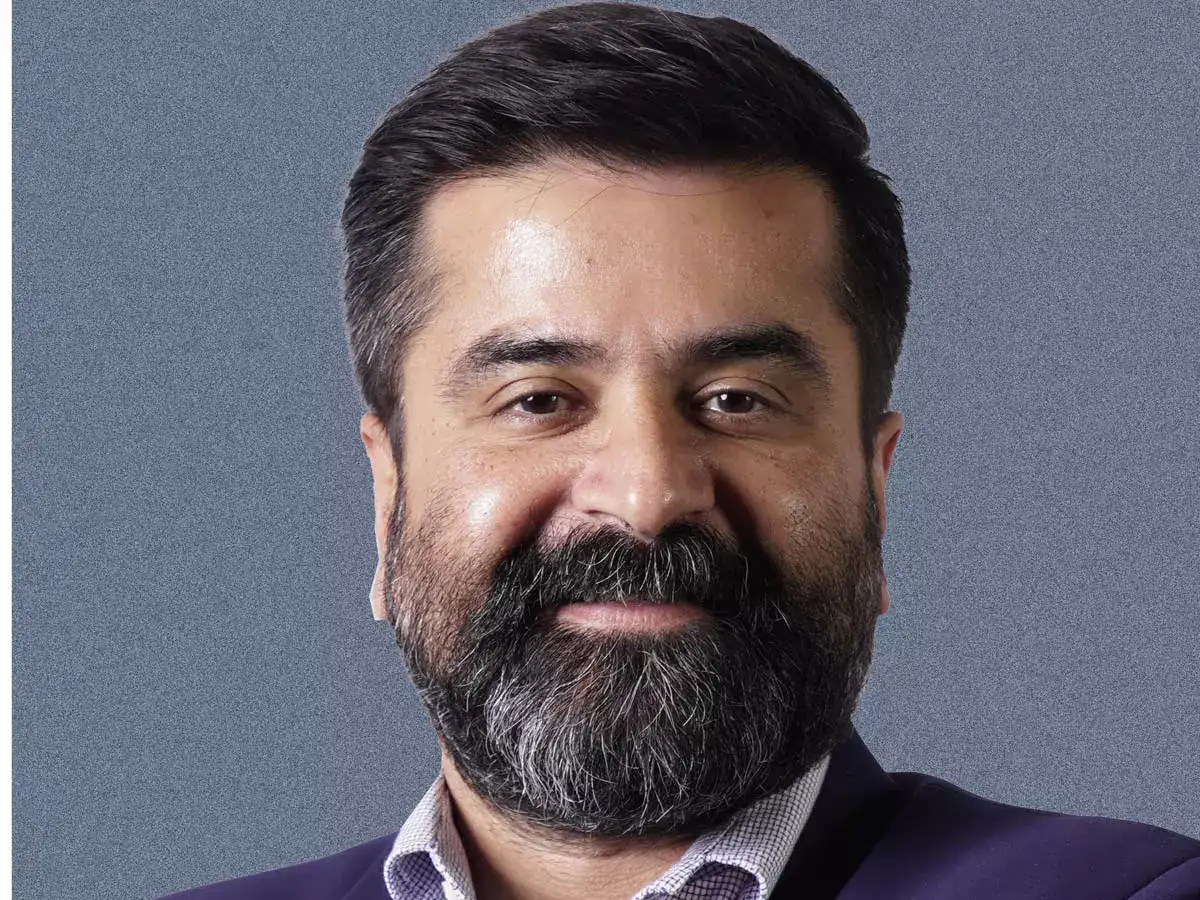
Dalal Street's top stock picker Aashish Somaiyaa, CEO of White Oak Capital, suggests the current market favors selective "bottom-up" stock picking over broad sectoral bets. While cautious of US markets hitting a "crescendo" after a 15-year run, he views India’s recent two-year flatline as a strategic entry point. For global seekers, he finds emerging markets and non-tech sectors more attractive than overextended US tech.
Edited excerpts from a chat on the sidelines of ZFunds Founders Summit:

How do you read the smallcap rally we are seeing since April? Were you surprised by the sudden jump?
While largecap companies related to oil and energy, banks, and IT are facing headwinds, the results in small and midcaps have been strong and have surprised investors.
The second reason for the rally is bottom-up stock picking after the crash we saw in the last 1.5–2 years. At its worst point, the smallcap index was down around 25% from its peak. Some stocks became cheap and there was some retracement in April.
It's not like we are seeing some big rally. It's more bottom-up, selective stock picking wherever the numbers are looking good. By and large, the numbers for March for small and midcap have been better than what people expected. We have to watch for one more quarter to see if it sustains.
Also Read | Goldman Sachs picks 12 alpha stocks amid record $22 billion FII exodus
How have you been reshuffling your portfolio since the West Asia war began?
Honestly, no major changes. In fact, our superior outperformance has come only when the markets didn't do too much. We launched our mutual fund business at the end of 2022. From the bottom in 2022 till 2024, everything with high beta — cyclicals, commodities — was flat.
That kind of polarized environment is difficult for us because we run blended, broad-based portfolios. We don't have any style or sector bias. We are ultimately running a portfolio to beat the index.
But when the index is very polarized — cyclicals working, defensives not, PSUs working but private left behind, smallcaps working but not largecaps — it becomes a headwind for someone like us who is managing a diversified, blended portfolio.
From 2024, when the market peaked, till now, we have had superior outperformance because that polarization has broken and there is no single dominant trend. It's a bottom-up opportunity where things are working selectively.
So from the peak of 2024 till now, it has been a period of relative outperformance for us and our strategy has worked well. We are not seeing any dramatic changes in our portfolio. This is a good environment for people like us who run blended, bottom-up strategies because this is when stock picking truly works.
We are almost fully invested in equity funds because we believe we should beat the equity index by being in equity, and that outperformance should come through stock selection.
Given the geopolitical headwinds, unfavourable crude and rupee, do you think we are not going to see any returns in Nifty this year?
The broader market will face challenges in the next 3–6 months due to the obvious impact of the war and energy-related headwinds. That said, people will also be watching the US market and economy, as their performance influences everyone. The US has been on a 15-year dream run even through high energy prices, a slowing economy, and rising inflation.
It's an odd situation — GDP growth is slowing, inflation is high, unemployment is rising, and bond yields remain tight. It's a tough situation to be in, and one should watch carefully for how it plays out.
To give an example, we had nothing to do with Silicon Valley Bank, but when it blew up, we were down 15%. So in the next 3–6 months, we have to watch energy prices, the war, and how global markets shape up.
The silver lining is that we have been flatlining for 2 years and didn't participate in any big rally, so we have less to lose. But I don't think we are out of the woods yet, as far as Nifty and the broader market are concerned.
Also Read | Beyond Nifty: The 10 smallcap stocks that doubled investor wealth in the first 25 sessions of FY27
Which sectors are you betting on at this stage and what’s your view on IT sector?
Honestly, we don't take any top-down sectoral or macro calls. We are very stock-specific, but not index agnostic.
What that means is that whatever our beliefs on IT may be, even if IT faces headwinds, we will still look for relative outperformance within it. For instance, if IT is 7% of the BSE 500, we may be at 4–5% or up to 9% — but we never go to 0% or 20%.
Not because we don't have a view, but because we believe outperformance should come from stock selection. I've heard of fund managers who had zero IT exposure over the last 2 years and generated a lot of alpha from that call. But if your alpha comes from a sector allocation bet, there will come a point when that sector bottoms out and swings back — and whatever alpha you gained by being absent will be lost when the sector recovers. That is allocation alpha, not selection alpha.
At White Oak, we don't try to generate alpha from allocation. We generate it from stock selection. So we won't make sectoral bets. We may be underweight or overweight, but bottom-up, we will always try to identify relative winners and outperformers.
India’s underperformance appears to be motivating some domestic investors to shift their portfolios abroad. Is this the right time to do that?
Personally, I was involved in launching a US equity fund all the way back in 2010. Since then, many of my peers and I have been advocating investing outside India. But pushing global investing now — after India has underperformed for more than 2 years and the US market has hit a crescendo — requires being mindful of the risks involved.
I'm not against investing outside India. But if you want to invest globally today, you should consider emerging markets beyond India as well. There are other interesting geographies — the Middle East, which is currently going through a downturn, Latin America, and non-tech Asia beyond just Taiwan and Korea.
Global diversification makes sense, but right now the opportunity looks more attractive in emerging markets than in the US. And even if you do invest in developed markets, sectors outside of tech may offer better value.