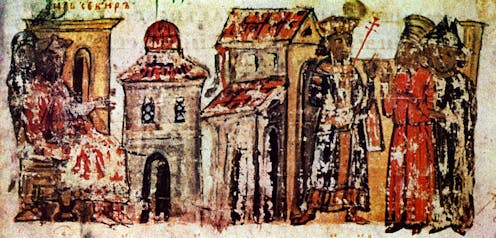
As with every humanities discipline, classics has responded to Black Lives Matter with justifiable introspection. As the study of the ancient world, and particularly that of the Mediterranean cultures, classics has a significant colonial legacy: British, French and Italian colonialists saw themselves as inheriting or continuing a “civilising mission” which they associated with the Romans. They assumed that the Romans shared their prejudices, particularly those associated with elitism and racism. When they thought about or represented Roman imperial history, they imagined it as dominated by White men, who were the political leaders and were responsible for cultural achievements.
This is a legacy that has proved tenacious. Although there is no evidence to suggest that Roman leaders, cultural and political, were uniformly White, classics and ancient history have been associated with whiteness. Many of my students have worried about a lack of representation that works on many levels in the classics. There are few lecturers of colour – that is changing, though much too slowly. But there is also alienation from what is being studied: the Romans are not seen by these students “as people like them”.