Get all your news in one place.
100's of premium titles.
One app.
Start reading
Medical Daily
Medical Daily
Health
Dorothy Brooks

CDC Records 72,093 Violent Deaths in 2023 as Suicides Make Up 62% and Firearms Are Involved in 58.6%

If you or someone you know is struggling or in crisis, call or text 988 to reach the 988 Suicide and Crisis Lifeline, available 24 hours a day.

A new CDC report counted 72,093 violent deaths in the 50 states and the District of Columbia in 2023. Suicides made up 62.4% of those deaths and homicides 28.5%, and firearms were involved in 58.6%, according to the CDC's Morbidity and Mortality Weekly Report surveillance summary published Oct. 1.
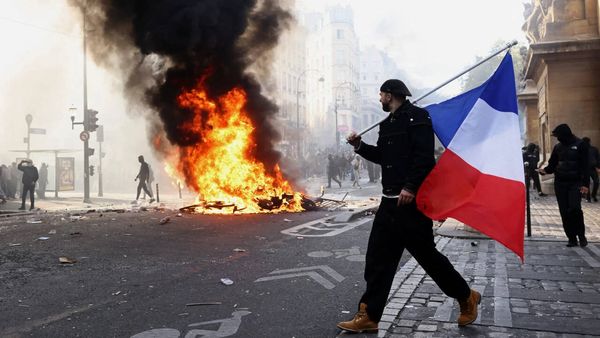
The numbers reflect lives lost across every age group and community, and they also show where prevention can help. "These injury-related deaths are preventable, and data can guide public health action," the authors wrote.

For families, a key message is that warning signs and risk factors are often present before a death. About half of people who died by suicide had a diagnosed mental health problem, and nearly a third were facing a recent or upcoming crisis, among those whose circumstances were known.


Inside the National Violent Death Reporting System

The data come from the National Violent Death Reporting System (NVDRS). It combines information from death certificates, coroner and medical examiner reports, and law enforcement reports to describe the circumstances around each death, such as relationship problems, health conditions, or a recent crisis.

The system tracks five types of deaths: suicides, homicides, deaths from police or other legal intervention, unintentional firearm deaths, and deaths of undetermined intent. In 2023, it covered all 50 states, the District of Columbia, and Puerto Rico, though California, Florida, and Texas provided data from only some counties.

The 2023 data captured 91.6% of all such deaths nationwide. The CDC cautions that "NVDRS data are not yet nationally representative," and that toxicology testing and the detail in investigative reports vary by jurisdiction.

Of the 72,093 deaths, 44,966 were suicides, and 20,540 were homicides. Another 4,962 were of undetermined intent, 1,083 involved legal intervention, and 542 were unintentional firearm deaths.

Deaths of undetermined intent are often linked to the overdose crisis. Poisoning was involved in 60.8% of those deaths, and 67.3% of people tested were positive for opioids. Legal intervention deaths were almost entirely among males, at 95.6%, and American Indian and Alaska Native males had the highest rate.

Puerto Rico's pattern differed from the states. Of its 730 violent deaths, 66.4% were homicides and 32.9% were suicides.


Suicide Risk Across Ages and Communities

The suicide rate was 14.7 per 100,000 people. The rate among males was nearly four times that of females, 23.5 versus 6.1 per 100,000.

The highest rate was among men 85 and older, at 53.0 per 100,000. American Indian and Alaska Native people also had a high rate, at 22.7 per 100,000. These differences point to groups that may benefit most from focused prevention efforts.

Among suicides with known circumstances, problems with an intimate partner were involved in 24.9% and physical health problems in 19.9%. Among those tested, 38.4% had alcohol in their system.

Firearms were involved in 54.5% of suicides, making them the most common method. The report states that "Creating protective environments by reducing access to lethal means among persons at risk can be an effective strategy to prevent suicide." Safe storage of medications and firearms during a crisis is one step families can discuss with a clinician.


Homicide and Intimate Partner Violence

The homicide rate was 6.7 per 100,000, and firearms were involved in 77.8% of homicides. Adults ages 20 to 24 had the highest homicide rate by age, at 14.1 per 100,000.

Black males had the highest homicide rate of any group, at 50.6 per 100,000, which was 28.1 times the rate for Asian males. The report does not attribute the gap to a single cause.

Intimate partner violence played a large role in deaths of women. About 46.5% of homicides of females were tied to intimate partner violence, compared with 8.2% of homicides of males. Among female victims whose suspected killer was known, about 53.4% of suspects were a current or former intimate partner.

The most common circumstance in homicides was an argument or conflict, in 39.4% of cases. Unintentional firearm deaths most often happened while someone was playing with a gun, and about 55% of those who died were 24 or younger.


How States Use the Data and Where to Get Help

States are already putting the data to work. In Connecticut, an Easterseals affiliate used it to find gaps in suicide prevention services for specific groups. In Michigan, after the state's veterans agency found that many suicides among current and former service members happened in natural areas, the CDC partnered with the state Department of Natural Resources to print the 988 Lifeline on hunting and fishing licenses issued to resident active-duty and fully disabled veterans. Maryland analyzed suicide patterns among men under 30 to guide statewide prevention efforts.

The report points to seven evidence-based strategies for suicide prevention: strengthening economic supports, creating protective environments, improving access to and delivery of suicide care, promoting healthy connections, teaching coping and problem-solving skills, identifying and supporting people at risk, and lessening harms and preventing future risk. MedicalDaily recently reported on a Maryland-led analysis of what helped people who survived suicidal crises, including pets, music, and hope for the future.

Readers can take several steps. Learn the warning signs of suicide, such as talk of being a burden or withdrawing from others, and ask directly if someone is thinking about suicide. Asking does not increase risk. Anyone experiencing domestic violence can reach the National Domestic Violence Hotline at 1-800-799-7233.

For immediate danger, call 911. For emotional crisis support, call or text 988, or use the chat option on the Lifeline's website. Veterans can reach the Veterans Crisis Line by dialing 988 and pressing 1. MedicalDaily will report the next NVDRS release and any changes in prevention funding.


Key Questions Answered

How many violent deaths did the CDC count in 2023? The CDC counted 72,093 violent deaths in the 50 states and DC, from 70,133 incidents.

What share were suicides? Suicides made up 62.4% of the deaths, and homicides made up 28.5%.

How often were firearms involved? Firearms were involved in 58.6% of all violent deaths, including 54.5% of suicides and 77.8% of homicides.

Who faces the highest risk? Men 85 and older had the highest suicide rate. Black males had the highest homicide rate, and many women were killed by current or former partners.

What does the NVDRS track? Suicides, homicides, legal intervention deaths, unintentional firearm deaths, and deaths of undetermined intent, using death certificates, coroner and medical examiner reports, and law enforcement records.

Where can someone get help now? Call or text 988 for the Suicide and Crisis Lifeline, or call 1-800-799-7233 for the National Domestic Violence Hotline. In an emergency, call 911.

Published by Medicaldaily.com

Sign up to read this article
Read news from 100's of titles, curated specifically for you.
Already a member? Sign in here
Related Stories
Top stories on inkl right now
One subscription that gives you access to news from hundreds of sites
Already a member? Sign in here
Our Picks
Fourteen days free
Download the app
One app. One membership.
100+ trusted global sources.