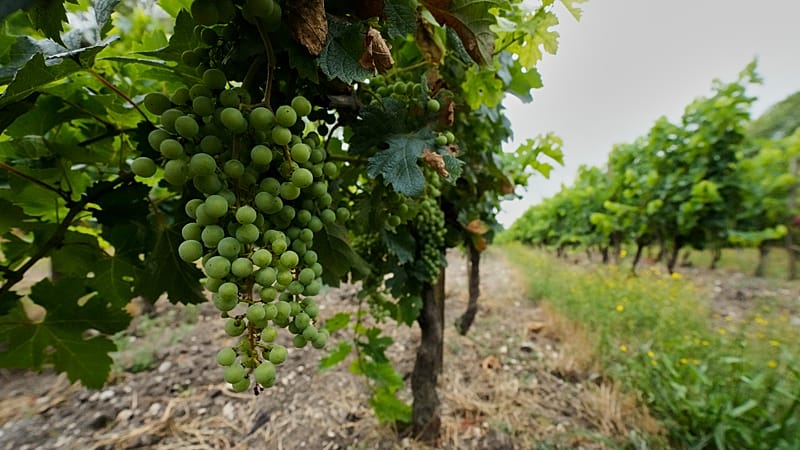
As the Cognac harvest draws to a close in southwestern France, winegrowers already know they face another difficult year.
Cognac makers are struggling. The 300-year-old amber brandy is only produced around the Charente River, but it has been caught in the trade wars between the EU and China, as well as by tensions with its top export market, the US.

For months, producers have watched largely powerless as access to both markets has been squeezed.
The industry has a historic connection to the EU. Jean Monnet, the French statesman regarded as one of the EU's founding fathers, came from a Cognac-producing family and worked in the family business.
Today, however, the sector is in disarray as sales plummet. Cognac is overwhelmingly dependent on foreign markets, with 98% of production exported outside the EU.
“Collateral damage” from trade wars
Ironically, this year's drought has helped bring supply closer to falling demand.
“We thought the harvest was going to be promising, but in the end the drought took its toll,” Matthieu Augier, a winegrower in Gondeville, told Euronews. “Compared with a typical year, we’re looking at a 30 to 40% reduction in the harvest in economic terms. You could say in a way that nature helps regulate our surpluses.”
Since 2023, Cognac sales have fallen from 230 million to 140 million bottles. The four main trading houses – Rémy Martin, Hennessy, Martell and Courvoisier – had to slash their orders from winegrowers in the region after clients cancelled contracts.
First, it was because of the trade war with China, the second-largest market after the US, which represents around 25% of Cognac’s exports.
“We have been collateral damage in the trade war which started in 2023 between Brussels and Beijing over Chinese electric vehicles (EVs), a symbolic product for the EU market,” Raphaël Delpech, Director of the National Interprofessional Cognac Bureau (BNIC), told Euronews.
France was among the strongest supporters of EU action against Chinese EVs over concerns that state subsidies were giving Chinese manufacturers an unfair advantage over European carmakers.
Beijing retaliated by targeting European brandy. In 2024, it imposed provisional duties of up to 34.8%, just days after the EU imposed tariffs of up to 35.3% on Chinese EVs.
China later confirmed its measures but exempted major Cognac producers that agreed to sell above undisclosed minimum prices. By then, however, the damage had been done, according to the industry.
“Once the Chinese government singled us out and associated us with an anti-Chinese European and French policy, consumers started to distance themselves,” Delpech added. “The distributors stopped buying our bottles and stopped putting our products on their shelves.”
Then came another blow, this time from the US, which accounts for around half of Cognac exports.
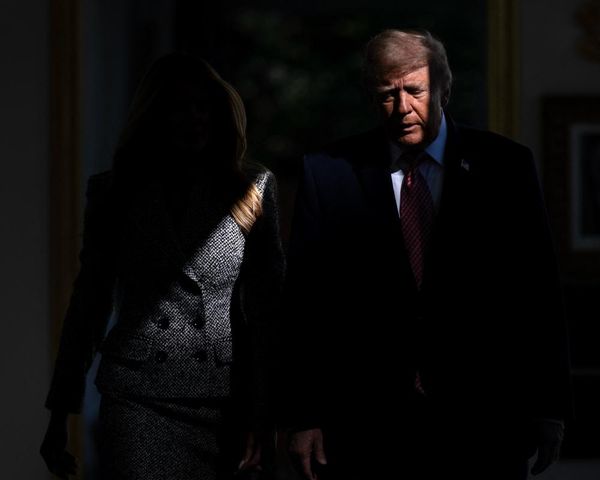
During Donald Trump's first administration, the US had already imposed tariffs on French Cognac as part of the long-running Boeing-Airbus trade dispute. The duties were later suspended under President Joe Biden.
But in April 2025, Trump imposed sweeping tariffs on US trading partners. In July, the EU and US reached a deal at Turnberry, Scotland, setting a 15% tariff on most European exports to the US, including Cognac.
Turnberry talks stall
The European wine and spirits industry has since lobbied hard for carve-outs from the 15% tariff.
But uncertainty continues to weigh on the US market, where inflation has also pushed up prices. Trump has repeatedly threatened much higher tariffs on French wines and spirits as part of wider political disputes.
“It created an extremely anxiety-inducing environment for all our importers in the US, who, just as in China, eventually came to the conclusion that it was better to bet on something safer than Cognac,” Delpech said.
After EU lawmakers agreed in July 2026 to remove the bloc's remaining tariffs on US goods covered by the Turnberry agreement, Washington agreed to reopen discussions on possible exemptions from the 15% tariff. So far, however, there has been little sign of progress for Cognac.
“I get the impression that not much is moving forward,” French MEP Eric Sargiacomo (S&D), deputy chair of the European Parliament’s intergroup on wines and spirits, told Euronews. “The only ones who have managed to make clear progress on this issue are the British.”
The UK secured the removal of US tariffs on whisky in May, while Irish whiskey received similar treatment in mid-September. French Cognac, however, remains subject to the tariff.
“For us, the recovery will only come through the US market. That’s obvious. China will come eventually, but it will be more complicated,” Delpech said.
The sector has written to European Commission President Ursula von der Leyen and held talks with the Commission's trade and agriculture departments.
“Everybody knows us in Brussels,” Delpech said.
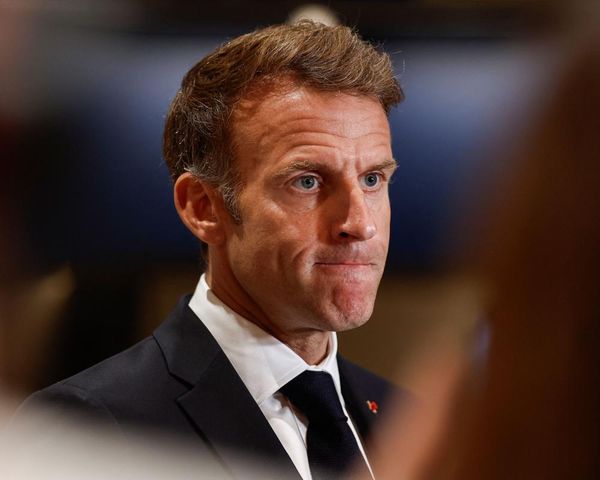
French President Emmanuel Macron also visited the region several times, and promised winegrowers they would be entitled to compensation. So far, however, none has arrived.
Cognac, 'a textbook case for Europe'
Delpech argues that the Cognac crisis raises a broader question about how the EU protects sectors hurt by retaliation against European trade measures.
“The European policy cannot be strong if it does not protect the industries that bear the brunt of these trade-offs,” he added. “So, when it is deliberately decided that in order to protect the EU automotive industry, Cognac will suffer by losing markets and being subject to sanctions from China, there needs to be a solidarity mechanism.”
To adapt to lower demand, the industry has launched two vine-grubbing schemes backed by financial support.
The first offers growers support to remove vines permanently, but take-up has been limited. Applications cover just 560 hectares out of the 96,000 hectares within the Cognac appellation.
“A vineyard is a means of production,” Augier said. “When you plant a vineyard, you’re planting it for at least 40 to 50 years. It’s a form of heritage.” The winegrower, who is only 40 years old, might instead choose the second type of vine-grubbing offered for some of its vines, which is temporary: he will not be able to replant them for five years, but he will keep his vineyard.
The slump is weighing on the wider regional economy. Cognac supports around 70,000 direct and indirect jobs in France. Alongside some 260 trading houses that age and sell the spirit, the industry sustains barrel and cask makers, still manufacturers, transport companies and agricultural contractors.
“Cognac is a textbook case for Europe,” Sargiacomo said. “I understand why other agricultural sectors are now questioning Europe’s ability to come to their aid if they were to face difficulties as a result of free-trade agreements, anti-dumping measures, or tariffs imposed from outside.”