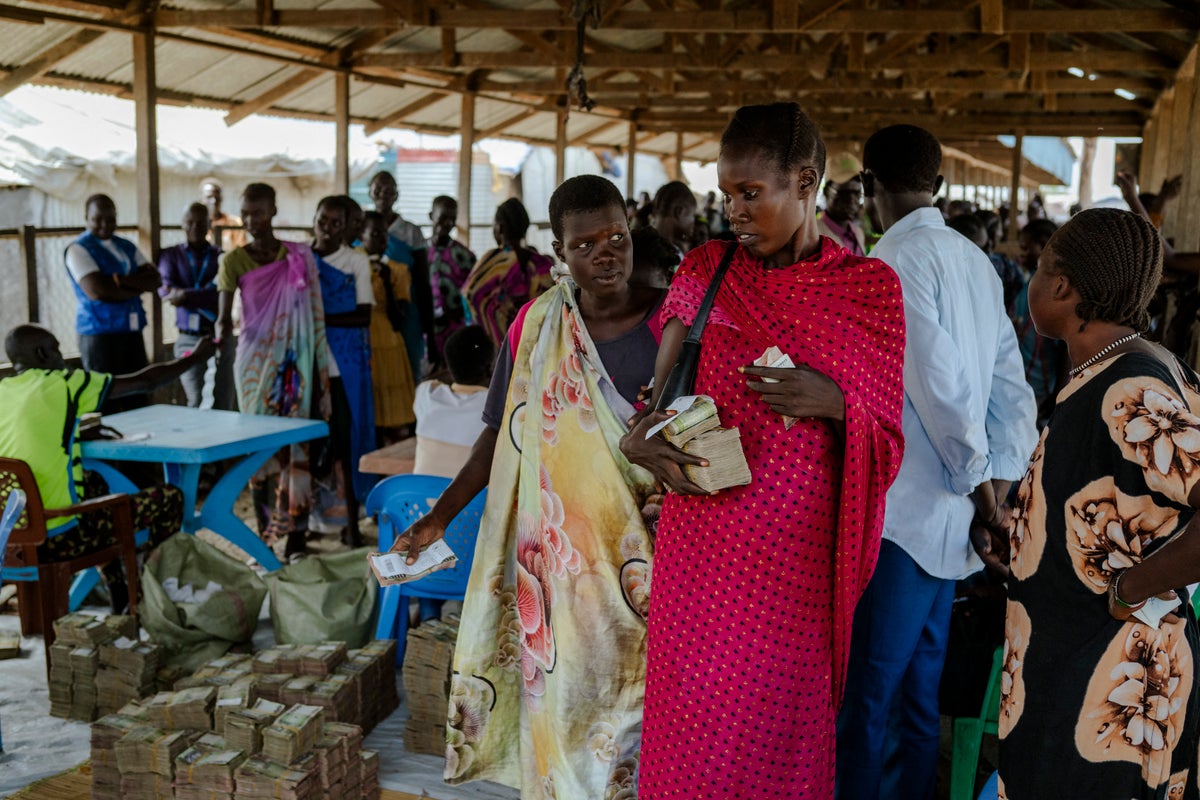
Direct transfers of money to those that need aid, as opposed to using aid to fund programmes such as food or water relief, could help make aid programmes more efficient in the era of aid cuts, a new report has found.
The analysis, which was commissioned by aid body the CALP Network, is based on an analysis of $11.4bn (£8.5bn) in aid spending across some 1,203 programmes, and has been published ahead of a landmark UK summit on the future of international development, The Global Partnerships Conference.

The authors of the report find that direct cash assistance, particularly when offered through local organisations and at significant scale, can help the humanitarian sector reach significantly more people within the shrinking pool of aid funding.
Specifically, they find that cash assistance can enable up to 38 per cent more aid to actually reach people in need, with the findings coming at a time when funding per person in need has fell 35 per cent between 2024 and 2025, the last available statistics.
“At a time when humanitarian needs are rising and aid budgets are under intense pressure, this is not a debate about efficiency for efficiency’s sake,” said Cate Turton, director of the CALP Network.
“Greater efficiency means more families receiving support, more dignity for crisis-affected people and fewer impossible trade-offs in humanitarian response.
“This report gives donors and agencies concrete evidence for reforms we already know work - prioritising cash assistance, investing in locally led delivery, and delivering cash at scale - so aid can reach more people within existing funding.”
Gideon Rabinowitz, director of advocacy at the NGO network Bond, added: "Today's report highlights that cash assistance works to meet humanitarian needs among communities impacted by conflict and crisis: and works best when led and delivered at scale by local organisations.
“As international aid budgets shrink, there is a need to consider how remaining funds can deliver the best value for marginalised communities worldwide, and for taxpayers.

“Donors including the UK government should now heed the report's evidence and take action to implement reforms that will facilitate locally led cash assistance delivery, and make every penny of international aid count - and reach the people who need it most."
Direct cash transfers have increasingly been used by NGOs in humanitarian contexts, with the World Food Programme (WFP) – a UN agency, and the world’s largest humanitarian organisation – doing so as part of its ‘Anticipatory Action’ programme.
In Ethiopia, for example, WFP has been offering cash transfers to pastoral communities ahead of periods of drought, which enable families to purchase food and animal feed, and also to cultivate crops, instead of being largely helpless as their animals succumb to the climate shock.
“The goal is really to reduce the impact on vulnerable populations by saving lives and protecting livelihoods ahead of the shock,” Robert Ackatia-Armah, acting deputy country director for WFP Ethiopia, has previously told The Independent.
“The idea is that we cannot prevent the shock from happening, but we can prevent the humanitarian cost and caseload by intervening in advance,” he added.
There is currently a risk, though, that these programmes are deprioritised as NGOs are forced to cut back on everything except the most critical humanitarian work, such as food relief in famine-prone areas.
Last month, WFP in the Democratic Republic of the Congo (DRC) confirmed to The Independent that cash assistance has been cut back in the DRC as the agency has been forced to focus on more other kinds of life-saving humanitarian work.
This article has been produced as part of The Independent’s Rethinking Global Aid project
Latest militant attacks on schools in Nigeria leave more than 80 children missing, officials say
We live in a deeply volatile world. How we help others has to change
Ukraine war live: Drone attack kills four in Russia after Zelensky vows response
How the climate crisis brutally compromises aid to Tanzania: ‘It impacts everything’
What we know about latest Ebola outbreak and rare Bundibugyo strain
Sudanese students accuse UK of ‘punishment’ after visas refused