
Get all your news in one place.
100's of premium titles.
One app.
Start reading
The Conversation
The Conversation
Marie-Louise Crawley, Assistant Professor in Dance and Cultural Engagement, Coventry University

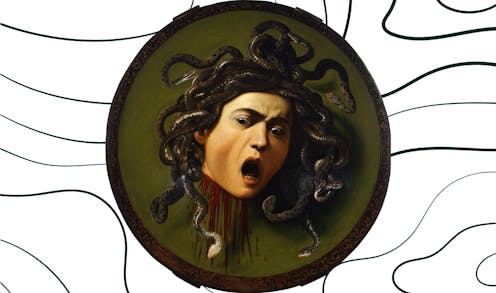
Caravaggio’s Medusa: why we need to look the Gorgon in the eye

Caravaggio's Medusa (1597-1598). Uffizi Gallery/Canva

The image is stark and shocking. A decapitated head, her eyes open, her mouth agape in a silent scream, her hair a nest of still-hissing snakes. Blood pours out from her severed neck. She is not quite alive, but she is not yet dead either.

Michelangelo Merisi da Caravaggio’s Head of Medusa (1597) remains one of the most memorable images of Italian baroque art. Now in Florence’s Uffizi gallery, it tells the story of the “monster” Medusa, the snake-headed Gorgon whose stare turns whoever dares look at her to stone.

Sign up to read this article
Read news from 100's of titles, curated specifically for you.
Already a member? Sign in here
Related Stories
Top stories on inkl right now
One subscription that gives you access to news from hundreds of sites
Already a member? Sign in here
Our Picks
Fourteen days free
Download the app
One app. One membership.
100+ trusted global sources.







