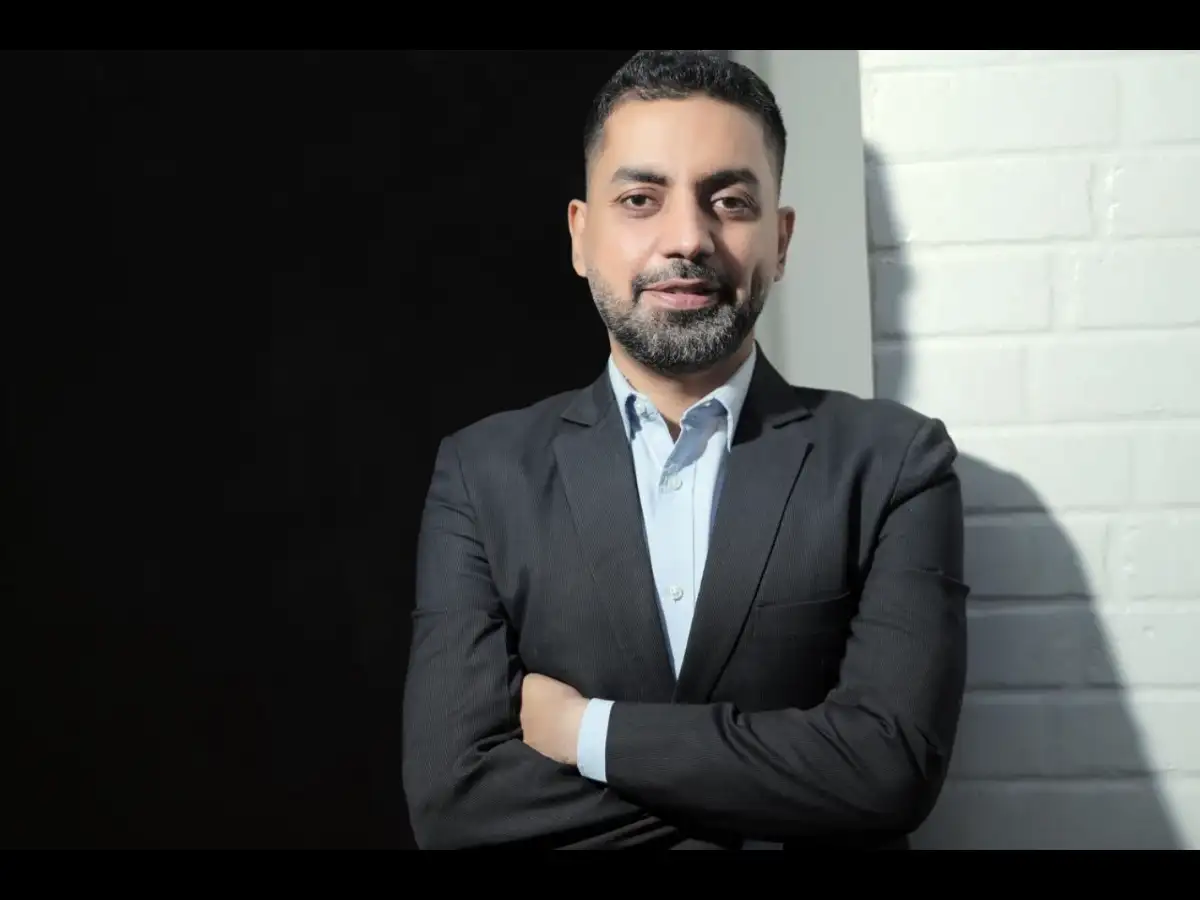
Reliable power is essential for industrial manufacturers, going beyond mere operational needs. In a conversation with ET Digital, Raman Chopra, CEO & Whole-time Director of Caparo Power Limited, talks about building a gas-based group captive power business in Bawal, scaling capacity from 26 MW to 35.73 MW, and serving over 30 industrial customers. Chopra also talks about the company's expansion plans, the evolving role of gas in India's energy transition, and how the increasing demand for continuous power from manufacturing units and data centres might create new business opportunities. Edited excerpts.
The Economic Times (ET): What was the reason behind starting Caparo Power? Looking back after more than a decade, how has that original vision evolved? What have been the biggest milestones in scaling from a 26 MW plant to a 35.73 MW operation serving over 30 industrial customers?

Raman Chopra (RC): We started with a simple belief that Indian manufacturers were doing serious work, and they deserved serious power infrastructure to match. Bawal was growing fast. But power reliability wasn't keeping pace with the ambition of the businesses operating there. We saw that gap and decided to close it.
A decade later, we have grown from 26 MW to 35.73 MW, and we serve over 30 industrial customers, many of them among India's most demanding manufacturers. But the milestone I value most is not the capacity addition. It's that we haven't lost the trust of a single anchor customer along the way. That, for me, is the real measure of what we have built.
ET: Can you give us a sense of Caparo Power's business today in terms of annual revenue, growth over the last three to five years, profitability and capacity utilisation? Which metrics do you believe best reflect the company's operational and financial health?
RC: We have grown steadily and deliberately over the last three to five years. The three things I watch most closely are uptime, delivered cost per unit, and customer retention. When those are right, revenue and margins take care of themselves. All three are in good shape today. Capacity utilisation has been consistently high, and the demand we are seeing, from existing customers expanding and new customers coming in, gives us real confidence going forward.
ET: The Bawal facility already delivers over 99.6% uptime with transmission losses below 2%. Is the plant operating at full capacity today, and what does your current customer pipeline or order book look like? Are you seeing demand outpace your available generation capacity?
RC: Yes, demand is running ahead of what our current capacity can serve. And honestly, that's the clearest validation of what we have built here.
Those uptime and loss numbers don't happen automatically. They are the result of years of disciplined, unglamorous operational work-the kind that doesn't make headlines but makes all the difference to a factory running three shifts. That reputation now precedes us. Customers come to us because they know we take reliability seriously.
The pipeline is healthy. And the natural answer to demand outpacing supply is thoughtful, well-planned expansion, which is exactly where our energy is focused right now.
ET: Caparo Power serves several leading automotive and engineering companies through the Group Captive model. How large is your market share within the Bawal industrial cluster, and what competitive advantages have enabled you to retain customers in an increasingly competitive power market?
RC: We hold a strong position in the Bawal cluster, but I would describe our real advantage as earned trust rather than market share.
Our customers run precision manufacturing operations where a power disruption isn't just an inconvenience; it affects real production, real people, actual costs. They need a partner who genuinely understands that. Over many years, we have shown them we do.
The group captive model also lets us offer competitive pricing while keeping the operation lean. But beyond the economics, we know our customers, their load patterns, their seasonal demands, their growth plans. Those relationships take years to build and are very difficult to replicate. That's our moat, if you want to call it that.
ET: The company has spoken about replicating the Bawal model across other industrial clusters in India. Which geographies are you evaluating, what level of investment would such expansion require, and what timelines have you set for your next phase of growth?
RC: We are looking at clusters in northern and western India-places with strong manufacturing density, growing power demand, and the kind of grid challenges where our model creates the most value.
A new cluster isn't just a plant. It's infrastructure, customer relationships, and long-term demand, all of which take time and care to get right. Bawal has taught us exactly what that process looks like. We know what works.
Our goal is to open the next facility within three years, and we have progressed significantly with evaluations in a few locations. We want to grow, but grow in a way that doesn't compromise the reliability our customers have come to expect from us. That's non-negotiable.
ET: Natural gas is increasingly being viewed as a transition fuel in India's decarbonisation journey. At a time of volatile global LNG prices, how do you balance cost competitiveness with reliability, and what procurement strategies have helped Caparo Power ensure uninterrupted fuel availability?
RC: Fuel price volatility is real, and managing it thoughtfully is a core part of what we do. We work with a blend of longer-term contracts for stability and spot purchases for flexibility, adjusting as market conditions evolve. The goal is simple: our customers should never feel the turbulence of the fuel market. That's our responsibility to absorb.
What gives us confidence is that gas-based power carries something renewable sources currently cannot fully offer industrial users dispatchability. A factory running round the clock needs power that shows up on demand, every time. Our customers understand that value deeply, and it anchors the relationship even when costs move.
ET: Industrial consumers today are under pressure to reduce emissions while maintaining operational efficiency. How are conversations with customers changing around ESG, carbon reporting and cleaner energy, and do you see sustainability becoming as important a buying criterion as cost and reliability?
RC: The shift has been real and quite rapid. A few years ago, sustainability sat at the edges of our conversations. Today it's often where they begin.
The reason is straightforward. Many of our customers supply global manufacturers who have their own net-zero commitments. Those expectations travel down the supply chain, and our customers' power choices are increasingly visible to their own customers.
Gas is already meaningfully cleaner than the alternatives many of them relied on before, and that matters. But we also know the journey doesn't stop there. We're actively looking at our own decarbonisation pathway and how cleaner options fit into our model over time. Sustainability is no longer a parallel conversation, it sits alongside cost and reliability as a genuine criterion. We're engaging with that seriously.
ET: India is witnessing a rapid growth in manufacturing, data centres and industrial parks, all of which require dependable 24x7 power. From your perspective, what policy reforms or regulatory changes would accelerate the adoption of group captive power, and where do you see Caparo Power's biggest business opportunity over the next five years?
RC: The open access framework is the right foundation. It just needs simpler, more consistent implementation across states. Open access approvals, wheeling charges, cross-subsidy surcharges-these create friction that slows adoption of models that are genuinely good for Indian industry. If the country is serious about its manufacturing ambitions, removing that friction is a meaningful lever.
The opportunity that genuinely excites me is data centres. India's digital infrastructure is growing faster than the grid can keep up with, and data centres have a fundamental requirement-the power cannot go off. That makes our model a natural fit. They're being built in corridors where we operate, they need exactly what we provide, and the sector is only accelerating. That convergence feels significant, and we are positioning ourselves to be part of it.
ET: With AI-driven workloads accelerating the growth of data centres, operators are looking for power solutions that combine reliability, cost efficiency, and lower emissions. How do you see the role of gas-based group captive power evolving in meeting these requirements over the coming years?
RC: For a data centre, the power going off is simply not an option. That single requirement shapes everything, and it is where gas-based captive power has a clear and enduring role.
Renewables will rightly have a growing place in the energy mix. But they need firm, reliable backup power that's available at midnight when the cooling load peaks, not just when the sun is shining. Gas provides exactly that.
What I see coming is a natural combination: gas as the dependable foundation, renewables layered in to bring emissions intensity down. The group captive structure accommodates that evolution well. For data centre operators who need to be both always-on and increasingly responsible about their footprint, that combination is a genuinely compelling answer. We think it's one of the most interesting opportunities in Indian power right now and we intend to be part of shaping it.