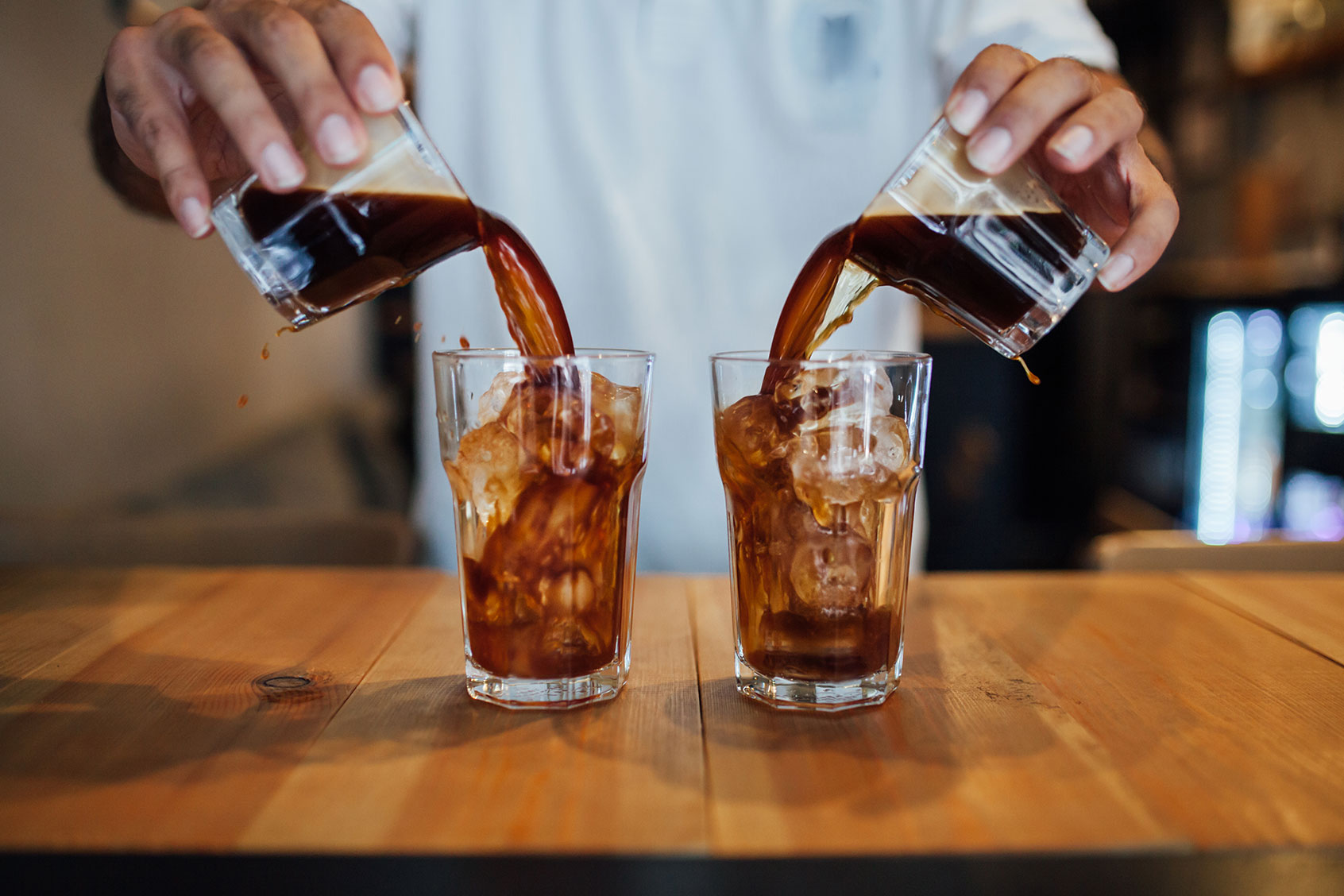
When not canned, cold brew has a high approval rating among my coffee-drinking peers. As its name suggests, the beverage is brewed cold, a process that typically involves soaking coarsely ground coffee in water, steeping the mixture overnight and then finely straining it. When brewed cold, coffee extracts slower, meaning it takes longer for the beans’ flavorful compounds to dissolve into water. The process impacts coffee’s flavor and chemical makeup, ultimately producing a beverage many describe as “smoother” than traditional, hot-brewed coffee.
Although cold brew has been around since the 1600s (it originated in Japan), the beverage was not widely distributed in ready-to-drink packaging until recently. In fact, canned cold coffee of any kind didn’t exist until 1969, when Japan’s Ueshima Coffee Company launched its canned, milk coffee product. Per Coffee Intelligence, the first shelf-stable, ready-to-drink canned cold brew sold in the United States was made by High Brew—a company founded in 2013. And by 2014, coffee stalwarts Starbucks, Chameleon and La Colombe had conquered the market.