
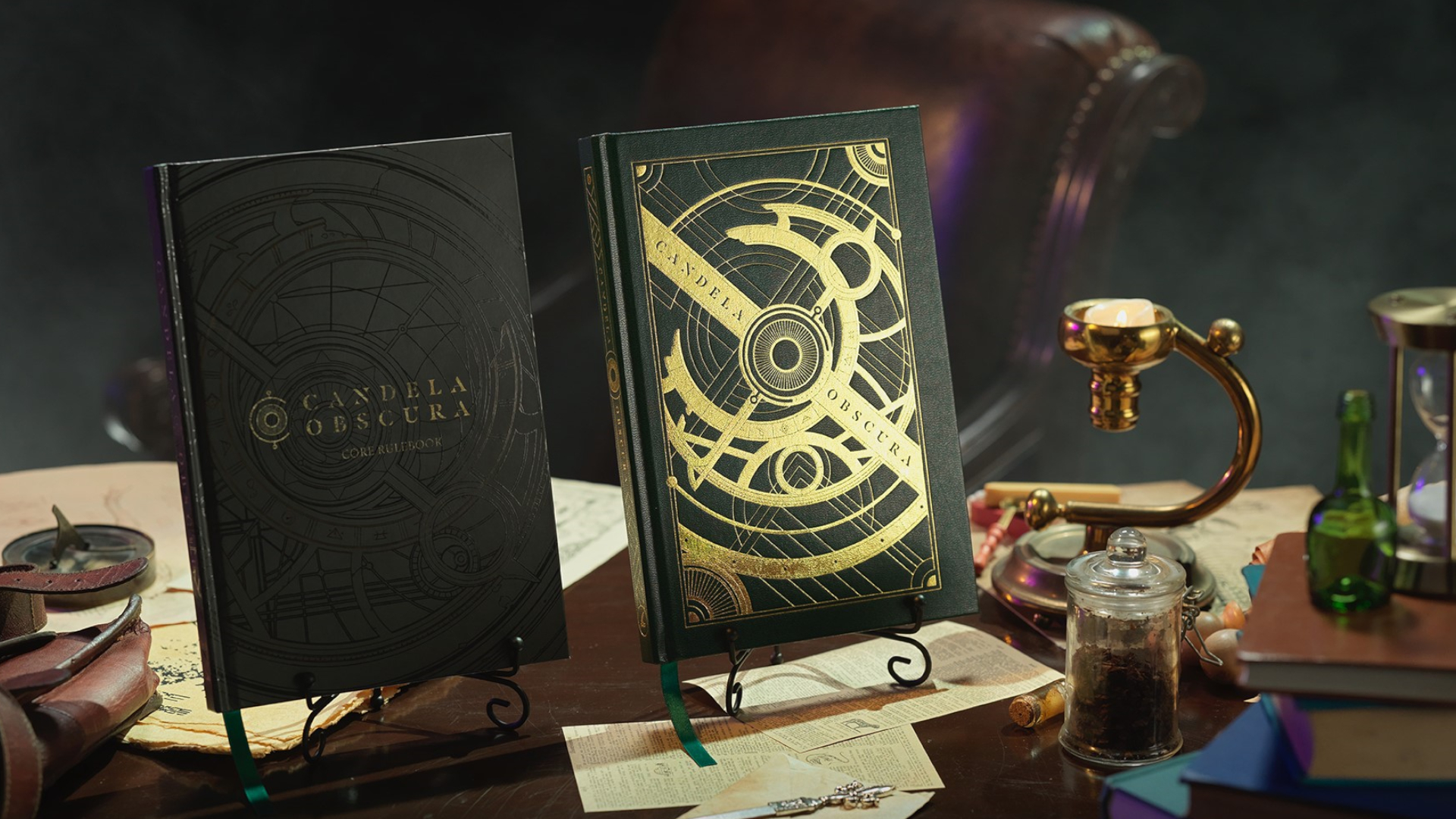
People don't always make sense, and Candela Obscura gets that. Actually, I'd argue this is its greatest strength. Making a convincing world isn't just about creating monsters to fight or nations for a map; it's about the little things. Superstitions. Old habits. Odd beliefs. These help a setting feel real, and lived-in.
"I think people, maybe from the outside, tend to think that [mechanics and lore] can be developed separately," Spenser Starke tells me when I catch up with him and Candela Obscura co-designer Rowan Hall about the game's rulebook. "Even as we started the project, I was like, okay, Rowan can work on some of the lore. And I'll work on some mechanical stuff. And we very quickly realized that for this game in particular, the mechanics had to integrate so much into the lore. And the lore itself is built out to be enough that you get the foundation for what you might be using for a session, or enough that it feels like there's good bones, but not so much that you have to learn every word of every page, in order to be able to just run a session."