Get all your news in one place.
100’s of premium titles.
One app.
Start reading
Tom’s Guide
Tom’s Guide
Technology
Eve Davies

Can you really 'bank sleep' to see you through times when you know you won't be sleeping as much? Experts shed some light

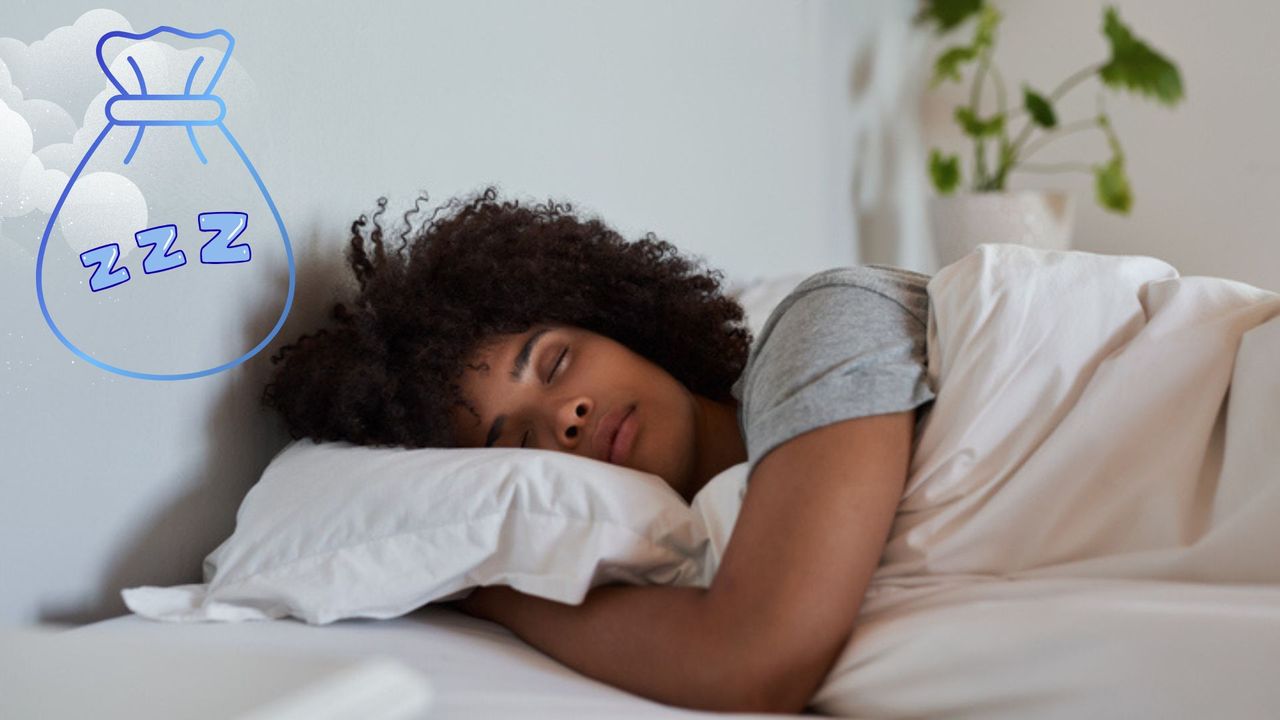
A woman with afro hair sleeping on her side in bed with white sheets and a plant in the background.

What I'm about to say pains me as a sleep writer and general sleep-lover, but sleep isn't always a priority at this time of year. With festive social activities and a generally busy calendar, a solid eight hours every night simply isn't happening.

Therefore, I've been searching for ways to optimize the rest I have so I feel recharged enough to get through said activities. From using the best sleep trackers to stay as consistent as possible and the best sunrise alarm clocks to wake up with energy in the mornings, there are certainly products that can help.

But there's also trending sleep methods like sleep banking. But what exactly does that entail? And can it really help you? I spoke to Dr. Maria Knöbel, the Medical Director and Co-Founder of Medical Cert UK, and Dr. Lamees Hamdan, integrative medical doctor and longevity expert, to find out what the experts recommend.

Meet the experts

What is sleep banking?

Sleep banking is essentially when you squirrel away hours of sleep ahead of a period of time where you know your not going to be able to hit the recommended eight hours, be that due to social plans, night shifts or travelling.

It means you sleep a little longer each night in the lead up to anticipated sleep loss, or supplement sleep with daytime naps. It is based on the idea that this can help negate the effects of sleep deprivation.

Dr. Hamdan calls it "the practice of giving your body a “reserve” of rest before a period when you know sleep will be disrupted."

(Image credit: Getty Images)

She says you should "think of it as proactively filling your internal energy well so you are more resilient to stress, travel, late nights, or hormonal fluctuations."

"Sleep banking entails saving up additional rest before sleep becomes limited. Part of this rebalancing is stored in your body and provides a buffer to the brain fog and fatigue that tend to occur when you are in a sleep debt." Dr. Knöbel explains.

"Before you make withdrawals you are loading up your neurological account," she adds.

Consistent sleep is the ultimate goal

Before we delve into the benefits of sleep banking, experts want you to know that sleep consistency should always be the ultimate goal.

Eight hours has long been taken as the golden daily dose of sleep. However, research shows sleep consistency (going to sleep and waking up at the same time night-in night-out) is more important than sleep duration when it comes to getting quality sleep and feeling refreshed.

(Image credit: Getty Images)

This is because following a regular sleep routine helps regulate your circadian rhythm so your body becomes efficient at falling asleep fast, staying asleep through the night and waking up easily come morning.

Sleep banking can be used as a way to manage through a busy periods here and there, but shouldn't be relied upon long term.

As Dr. Hamdan warns, "Sleep banking is not a substitute for good sleep. Sleep banking is just trying to make a bad situation a little less bad" — a sentiment echoed by Dr. Knöbel.

How sleep banking can help

Warnings noted, research shows sleep banking can be effective, especially during busy weeks where your usual sleep schedule is thrown off. Here are the main benefits...

1. Improved alertness

Think of your body like a fuel tank. The fuller it is the longer it will run. With a solid foundation of sleep, your mind and body can stay more responsive for longer.

"When sleep is cut short, your motor skills and spatial sense get hampered," says Dr. Knöbel. But extra hours of sleep in the bank can help you power through that drowsiness.

Dr. Knöbel explains that the sleep stored in your body "provides a buffer to the brain fog and fatigue that tend to occur when you are in a sleep debt." So, with sleep in the bank, you have more chance of feeling somewhat alert and functional on days after poor sleep.

(Image credit: Getty Images)

2. Better mood

If you're anything like me, you become overly emotional the day after a poor night's sleep. Honestly, anything from someone saying something in the wrong tone to spilling a coffee can have me in tears when I'm tired.

This is because poor sleep disrupts brain chemistry, over-activating the emotion center called the amygdala and reducing resilience against stress.

Sleep loss also impacts happiness hormones like serotonin and dopamine, leading to heightened negative emotions and irritability.

But sleep banking can help by warding off those early signs of sleep deprivation, research says.

3. Faster recovery

Alongside emotion, sleep and physical performance go hand-in-hand, too. The body relies on sleep for physical and cognitive recovery.

In deep sleep stages, your body produces the growth hormone that supports muscle repair. Deep sleep is also essential for keeping the immune system strong, which is pivotal at this time of year as colds and flus circulate.

Your immune system is stronger

Meanwhile REM sleep is responsible for cognitive recovery, acting as the brain's sorting and healing phase where it consolidates memories, processes emotions and strengthens neural pathways.

Ultimately, snippets of sleep or preloading sleep are better than no sleep, so sleep banking can aid physical and cognitive recovery when you need it.

Dr. Knöbel says "your immune system is stronger" when you sleep bank. "Individuals who plan ahead... avoid the winter colds that put out their unsuspecting workmates," she observes.

(Image credit: Getty Images)

How to bank sleep

Sleep banking is a subjective matter that depends on your individual sleep needs and schedule. However, if you've decided to give sleep banking a go to see you through this festive season, Dr. Knöbel offers very specific advice.

"Increase 45 to 75 minutes in a night and do this precisely on four nights before sleep limitation begins," She says. "Four nights is the ideal between defence and rhythmic disturbance," the doctor explains.

She also notes how important it is to make sure the sleep you are banking is of good quality by optimizing your sleep environment.

"Turn your bedroom 17 degrees cool [62 F] and turn off all the lights when you are banking at night since quality is better than time," she advises.

Ultimately, while sleep banking can help you through short periods of poor sleep, experts main advise is not to do it all the time. Instead, prioritize getting at least seven hours of quality sleep a night.

Sign up to read this article
Read news from 100’s of titles, curated specifically for you.
Already a member? Sign in here
Related Stories
Top stories on inkl right now
Our Picks
Fourteen days free
Download the app
One app. One membership.
100+ trusted global sources.