Get all your news in one place.
100's of premium titles.
One app.
Start reading
Bangkok Post
Bangkok Post
Comment

Can we maintain the art of healing?

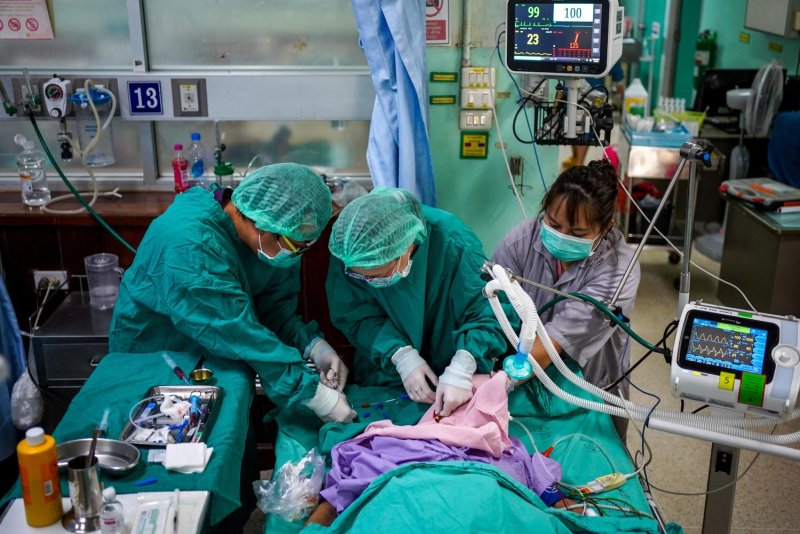
Doctors and nurses treat a refugee from Myanmar inside Mae La refugee camp at Tha Song Yang district, Tak province, on Feb 4, 2025. (Photo: Reuters)

A thousand years ago, the Chinese poet Su Shi -- also known as Su Dongpo -- wrote a short poem about music. Its question was simple, almost playful. If the music lies inside the lute, why does the lute not sing when locked in its case? If the music lies inside the fingers, why can we not hear it from the fingertips alone?

The poem is usually read as a meditation on art, skill and interdependence. Yet today, it speaks unexpectedly to one of Thailand's most urgent questions: how should we produce enough doctors for the whole country without sacrificing the quality of medical care?
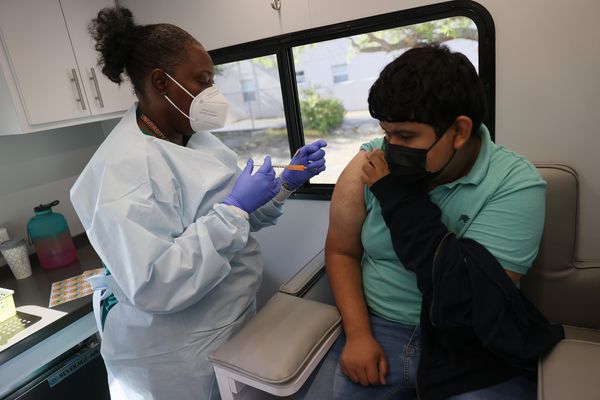
The current debate over whether Rajabhat universities should be allowed to open medical schools has stirred strong feelings. Supporters argue that Thailand urgently needs more doctors, especially in rural and remote areas. Critics warn that medicine cannot be expanded like a factory line. They fear that if new medical schools are opened without adequate teachers, clinical exposure and supervision, the country may gain more graduates but not more true physicians.

Both sides have a point. But both sides are also incomplete.

Su Shi's poem may help us see the issue more clearly. In this debate, I would like to compare the lute as the medical school. It includes the curriculum, laboratories, simulation centres, libraries, wards, outpatient clinics, operating theatres and accreditation systems. A medical school is a serious instrument. If well-built and well-tuned, it can produce generations of competent doctors. But a lute locked in a case makes no sound. A medical faculty without enough clinical cases, experienced teachers and proper supervision is only a building carrying a prestigious name.

The fingers are the teachers: the senior physicians, nurses, clinical instructors and mentors who train students not only to remember facts, but to think, decide and care. They teach at the bedside, correct dangerous assumptions, model humility and show young doctors how to speak to frightened families. Yet fingers alone cannot produce music without a sound instrument. Even the best teachers need a functioning school, a real hospital environment and a system that allows time for teaching.

The music is the healer we hope to produce. Not merely a licence holder, not merely a degree holder, but a doctor who can stand in a district hospital at two o'clock in the morning, assess a seriously ill child, stabilise a trauma patient, recognise a stroke, deliver bad news honestly and know when referral is necessary.

Thailand's real question is therefore not simply: "Should we open more medical schools?" The better question is: can we build the lute, train the fingers and preserve if not enhance the quality of music?

The shortage of medical doctors in Thailand is real. Yet the problem is not only a matter of number and supply of medical doctors. Pressing issues are about. It is also a matter of workload, morale and retention. We might not see these problems in Bangkok and large urban centres. In many provinces, patients travel long distances, district hospitals are overstretched, and young doctors carry responsibilities that would intimidate many specialists in better-equipped centres.

Thai governments have not ignored this problem. The Collaborative Project to Increase Production of Rural Doctors, a state recruitment known as CPIRD, was created in 1994 by the Ministry of Public Health to recruit and train students with rural service in mind. It has shown that community-oriented medical education is possible. But the persistence of rural shortages tells us that one programme alone is not enough. The problem is structural and continuing.

This is where Rajabhat universities enter the discussion. Their historical mission has been regional development and teacher training. Rajabhat universities are rooted in the provinces. In principle, that local identity could be an advantage. A local university that understands its region may be well placed to help produce doctors who understand local people, local illnesses and local constraints.

But good intention is not accreditation. Regional mission is not a substitute for clinical competence. If Rajabhat medical schools are to be created, they must not be political trophies or shortcuts to prestige. They must be built carefully, transparently and under strict national standards.

There is a useful analogy from music education. Yamaha Music Schools have made piano lessons widely accessible and persuaded many parents to start their children early. That achievement should not be dismissed. Early musical training can give children discipline, sensitivity and a lifelong appreciation of art.

Yet we also know the outcome. Many children begin piano. Fewer continue into adolescence. Only a tiny minority become professional musicians. Branches, pianos and parental enthusiasm create opportunity, but they do not automatically create musicians. Whether that opportunity becomes real music depends on teachers, practice, correction, perseverance, examinations, performance experience and years of disciplined growth.

Medical education is similar, but far more serious. A child who stops piano after a few grades may still gain a love of music. Yet, a medical graduate who is only half prepared may endanger patients. Therefore, opening Rajabhat medical schools must not be treated as a matter of buildings, branding or regional pride. The central question is whether each school can sustain the long apprenticeship needed to produce safe, competent and humane doctors.

First, any new medical school must be linked to strong teaching and trainings at hospitals. Students cannot learn medicine from lectures alone. They must see patients, follow disease over time, learn emergency judgement and observe how real teams function. A school without adequate clinical exposure is a silent lute.

Second, Thailand must address the teaching crisis before expanding student numbers. Medical education depends on teachers who have time, skill and moral authority. A tired clinician forced to see too many patients cannot automatically become a good educator. Rajabhat universities know the culture of teacher training; this may become their strength if they are humble enough to learn medicine from established faculties and disciplined enough to train medical teachers systematically.

Third, rural training must be built into the curriculum early. Students destined to serve rural Thailand should meet rural Thailand before graduation, not as tourists, but as supervised learners. They should understand district hospitals, health volunteers, village networks, delayed referrals, limited imaging, limited blood supply and the dignity of patients who cannot easily travel to tertiary hospitals.

Fourth, retention must be based on incentives, not merely coercion. Compulsory service may place doctors in rural hospitals temporarily, but it does not necessarily build lasting commitment. Young doctors need fair pay, safe and sufficiently good housing, humane working hours, mentorship, professional respect and credible pathways to postgraduate training. A nation cannot ask for devotion while offering only exhaustion.

Fifth, technology should be used wisely. Artificial Intelligence, telemedicine and digital health can support rural doctors. They can help with documentation, triage, continuing education, decision support and specialist consultation. But technology must remain a bridge, not a crutch. AI can suggest; it cannot take responsibility. A screen can transmit an image; it cannot hold a dying patient's hand. Medicine must remain human before it becomes digital.

The debate should therefore move beyond the slogan of "more doctors" and the counter-slogan of "lower quality". Thailand needs more doctors, but not poorly trained doctors. Thailand needs high standards, but not standards used as a wall to protect institutional privilege. The ethical middle path is expansion with safeguards.

Open new paths, but do not lower the gate. Allow regional universities to contribute, but require them to meet serious standards. Pair them with established medical faculties. Strengthen provincial teaching hospitals. Train the teachers. Audit outcomes. Follow graduates after deployment. Ask not only how many doctors are produced, but where they serve, how well they perform and whether patients are safer.

Su Shi's poem teaches us that music belongs neither to the lute nor to the fingers alone. It is born from their meeting.

So it is with medical education. The school does not heal by itself. The teacher does not heal alone. Technology does not heal. Policy does not heal. Healing begins when sound education, wise mentorship, social duty and human compassion meet in one person.

Thailand should build more lutes if they are needed. But it must also train the fingers. And above all, it must listen carefully to the music it is trying to create.

That music is not institutional prestige. It is not political applause. It is the quiet trust of a patient in a rural hospital who finally finds, at the hour of need, a doctor who is ready.

Dr Watcharin Ariyaprakai, MD, is a senior urologist at Bumrungrad International Hospital.

Sign up to read this article
Read news from 100's of titles, curated specifically for you.
Already a member? Sign in here
Related Stories
Top stories on inkl right now
One subscription that gives you access to news from hundreds of sites
Already a member? Sign in here
Our Picks
Fourteen days free
Download the app
One app. One membership.
100+ trusted global sources.