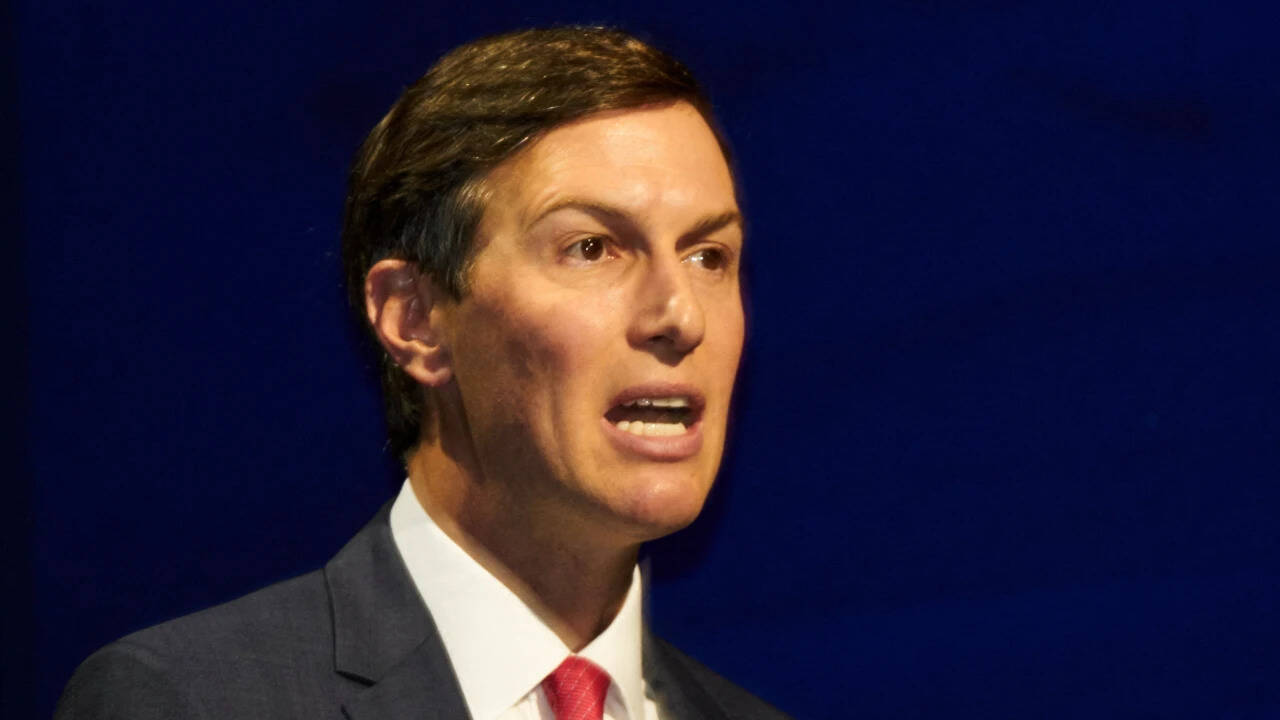
Jared Kushner has emerged as an important figure in the Trump administration’s efforts to negotiate an end to the Gaza war. At the same time, his private equity firm, Affinity Partners, is the biggest shareholder in an Israeli financial company that has invested in businesses supplying equipment to Israel’s military, a CNN investigation has found.
Get breaking news anytime, anywhere. Download the TOI app now!

Affinity’s investment is in Phoenix Financial, a major Tel Aviv-based financial firm. CNN traced Phoenix’s investments using Israeli financial disclosure records and found that it has put hundreds of millions of dollars into Elbit Systems, Israel’s largest arms manufacturer, as well as at least eight other companies that supply equipment to the Israeli military.
The businesses identified include companies involved in drones, warships, tank equipment and machinery used for demolition.
Affinity does not directly own shares in those nine military-linked companies. However, because it owns a large stake in Phoenix, it can benefit financially if Phoenix profits from those investments.
All nine companies identified by CNN saw their stock prices rise last year. Several also said the war in Gaza had increased demand for their products. Phoenix’s holdings in the nine companies were worth more than $456 million, according to CNN’s investigation.
Kushner’s investment grew as he entered diplomacy
Affinity first bought a stake in Phoenix in July 2024. In January 2025, shortly before Donald Trump returned to the White House, the investment firm doubled its stake, making it Phoenix’s largest shareholder.
By October 2025, Kushner was deeply involved in the administration’s Middle East diplomacy. He had been involved in negotiations between Israel and Hamas and appeared in Tel Aviv following the release of hostages.
This created an unusual situation in which Kushner was involved in efforts to negotiate an end to a war while his investment firm continued to hold a major financial interest in an Israeli company whose investments included businesses connected to the military campaign.
CNN found no evidence that Kushner directly influenced Phoenix’s investment decisions in the companies linked to Israel’s military.
Kushner’s lawyer said he is not on Phoenix’s board, has never held a management position there and does not decide where the company invests. However, CNN reported that Kushner previously said he had regular discussions with Phoenix executives and met with the company’s team every few weeks.
His lawyer said Kushner has reduced his contact with Phoenix management since becoming more involved in public service and diplomatic work.
Affinity has made a substantial return
Kushner’s firm has already made significant money from its Phoenix investment. In July this year, Affinity sold around a quarter of its Phoenix stake for more than $340 million. CNN reported that this represented a return of more than five times the firm's original investment.
Affinity remained Phoenix’s largest shareholder, with a 7.4% stake worth more than $1 billion at the time.
Kushner has openly defended his approach of combining business and diplomacy. He has argued that economic cooperation can help bring Israelis and Arabs together and ultimately contribute to peace.
“When you get an Arab and Israeli together and they start talking about a business opportunity, they forget about everything else and then they realize that there’s a lot of similarities,” Kushner told the “No Priors” podcast in September last year.
“My investors from the Middle East are now looking at Israel, and they’re saying, ‘Wait a minute, maybe there’s a benefit to having these wars done,’” he added.
Critics question the overlap
The combination of Kushner’s private investments and his role in Middle East diplomacy has prompted criticism from government ethics experts.
Cynthia Brown, chief ethics counsel for Citizens for Responsibility and Ethics in Washington, said people who stand to benefit financially from government policy should not also be involved in making those policy decisions.
“There are always people who profit from war or government policies. The difference is that the people profiting should not be the people making the decisions to make that policy. And that is what is happening here,” she said.
Kushner has operated as a volunteer envoy rather than taking a formal government position. CNN’s investigation says this has meant his finances have not been subject to the same disclosure requirements that would apply to someone holding an official government job.
The White House has said Kushner’s personal business activities have no connection to his diplomatic work. Phoenix Financial also declined to answer CNN’s questions, but said it is a regulated company and that shareholder value comes primarily from its operating performance rather than investment returns.