Comment: Three years ago I wrote about the state of our voting system and asked where the action was on improving it. Back then, the Independent Electoral Review had just handed down interim recommendations: a lower threshold, a look at four-year terms, tidier electoral finance rules, and a stronger nod to Te Tiriti o Waitangi. My worry was that, as with the 2012 review before it, those recommendations would gather dust unless politicians wanted to improve the system rather than simply protect their own position in it.
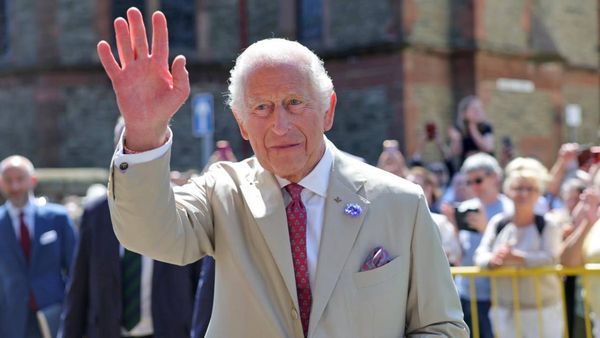
This week, Prime Minister Christopher Luxon gave his answer. Rather than picking up the 2023 review’s sensible, incremental suggestions, he has floated something far bigger: a referendum on the future of MMP itself. It is worth being clear-eyed about why that is the wrong question to be asking, and why the right one, the one I was asking three years ago, is still sitting there unanswered.
Why we have MMP in the first place
New Zealand did not stumble into MMP by accident. We used first past the post (FPP) for many decades, and by the 1980s the flaws had become obvious. In both 1978 and 1981, National won more seats than Labour while getting fewer votes overall, while the Social Credit Party received over 20 percent of the vote in 1981 and received just two seats. A system that can hand government to the party the country voted against, twice in a row, is not a minor quirk.
The 1986 Royal Commission on the Electoral System looked hard at the problem and recommended proportional representation. New Zealanders voted for change in a 1992 indicative referendum and confirmed it in 1993, with MMP first used in 1996. The whole point was to stop large slices of the electorate being shut out of Parliament simply because their preferred party did not come first in enough electorates.
What MMP actually delivered
By that measure, MMP has done its job. Parliament today looks far more like the country it represents than it ever did under FPP. Women made up only about a fifth of MPs in 1993; by 2022 they held half the seats. Māori, Pacific and other non-Pākehā representation has climbed steadily too, moving from a handful of MPs in the early 1990s to a Parliament where those communities have a real, ongoing voice rather than an occasional token seat.
MMP also changed how governments are built. Under FPP, results were known on election night and one party ran the show, regardless of how narrow its actual support was. Under MMP, government formation takes longer because it has to: coalition and confidence-and-supply arrangements force parties to negotiate rather than assume a mandate they did not earn.
A referendum framed around whether smaller parties have too much say is not really a question about electoral design. It is a question about who gets to hold power without having to negotiate for it.
That is not dysfunction. That is the system doing what proportional representation is meant to do: making sure governing requires broader support than roughly a third of the vote.
None of this means MMP is perfect. New parties still struggle to clear the 5 percent threshold, a bar higher than either the 1986 Royal Commission or the 2012 review recommended. Party finance rules remain patchy. Term length is still argued over election after election. These are the genuine, fixable problems the 2023 review was set up to address, and they are exactly the sort of thing a process of reform, not a referendum on the system’s existence, should be sorting out.
Who actually benefits from reopening this debate
It is not a coincidence that the loudest call to reconsider MMP altogether is coming from the leader of the one party that would gain most from scrapping it. First past the post rewarded whichever of the two largest parties came out with more electorate seats, without needing to share power with anyone.
National has spent this term working with Act and New Zealand First, and Luxon has been unusually candid about the frustration that involves, talking about not wanting “some yahoo or numpty” from another party at the Cabinet table. That frustration is understandable politically, but not a good reason to unpick an electoral system that exists precisely to stop one party governing alone on a minority of the vote.
Winston Peters, whose own party owes its parliamentary life to MMP, called the move a “power grab.” He is hardly a neutral voice either, but the underlying point stands: a referendum framed around whether smaller parties have too much say is not really a question about electoral design. It is a question about who gets to hold power without having to negotiate for it.
Improve it, don’t relitigate it
None of this means the system is beyond question, and New Zealanders are entitled to revisit big constitutional settings from time to time. But there is a real difference between refining MMP, adjusting the threshold, sorting out term length, tightening finance rules, and holding a referendum that puts proportional representation itself back on the table. The first is maintenance. The second risks handing us back a system we deliberately, and for good reason, walked away from three decades ago.
Three years ago the question was why nothing was happening on the 2023 review’s recommendations. The Prime Minister’s proposal does not answer that question, it sidesteps it completely.
Dr Michael Swanson is an Honorary Research Fellow in the Politics Programme at the University of Otago