Get all your news in one place.
100's of premium titles.
One app.
Start reading
The Economic Times
The Economic Times
Team Global

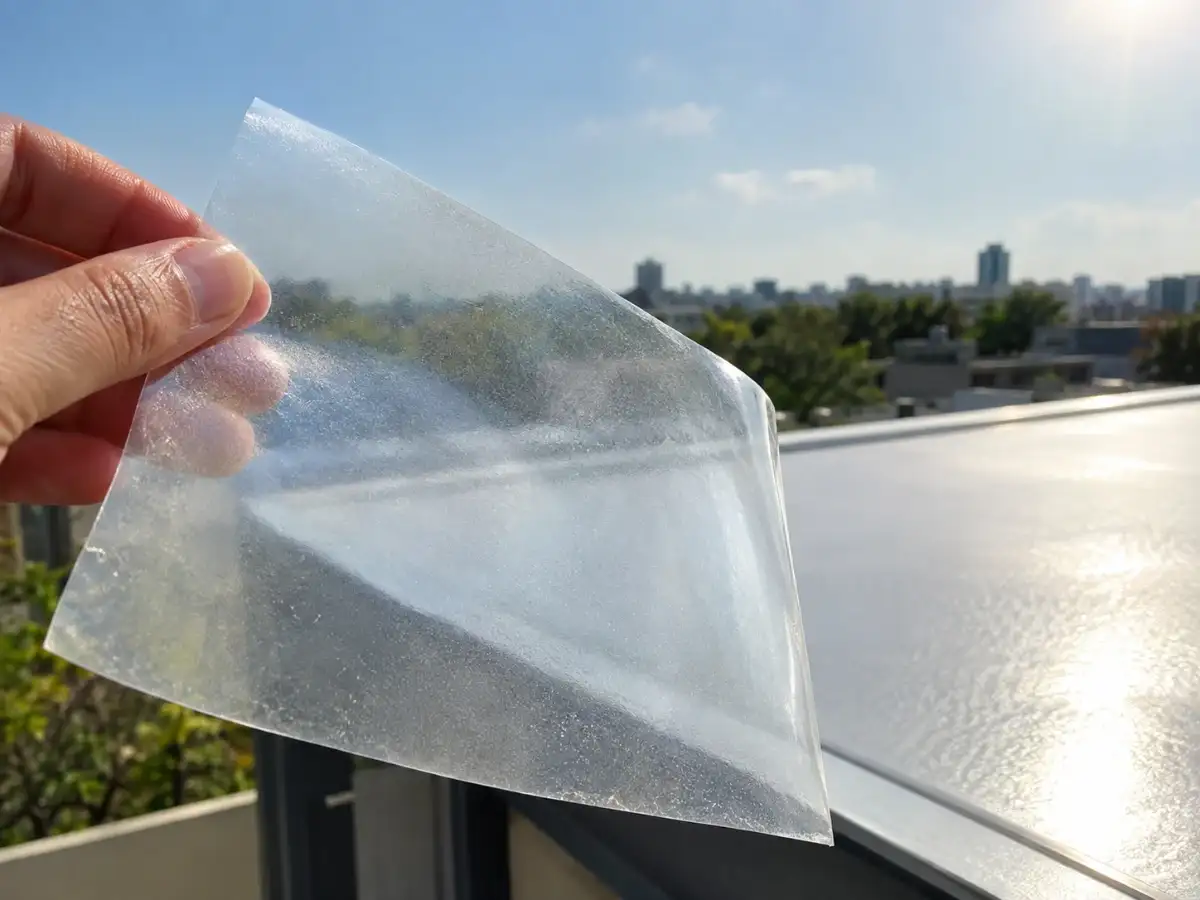
Cambridge researchers made cellulose acetate films that absorbed less than 5% of sunlight; coated surfaces stayed about 5°C below the surrounding air without power

Summer afternoons can turn roofs, cars and other outdoor surfaces into heat traps that absorb and retain heat well after sunset. Even air conditioning, although effective, comes with added costs and extra strain on the electricity network. Researchers from the University of Cambridge and their collaborators set out to address that gap in a joint project. The solution, reported in the journal Advanced Science, came from a familiar material: cellulose acetate. This thin, porous film is made by chemically modifying wood pulp and is already used in products such as eyeglass frames and cigarette filters; it absorbed less than 5% of incoming sunlight.

That figure is important because limiting solar absorption helps reduce the amount of heat the material gains from sunlight. The researchers also tested the films outdoors, where surfaces coated with the material reached temperatures about 5°C below the surrounding air under suitable conditions.
How does the film keep its cool without using electricity?

The film cools itself through its structure rather than through a special coating. The cellulose acetate is processed into a porous film with many tiny air spaces. Light entering the material is scattered by these pores rather than simply being absorbed and turned into heat. In addition, the material can emit infrared heat to the atmosphere through a process known as radiative cooling.

The research team designed two films: one about 30 microns thick and another about 300 microns thick, roughly the thickness of a few sheets of paper stacked together. The thinner film offered greater light transmission and could therefore be considered for applications where some light needs to pass through, while the thicker film was more suitable as a standalone layer over a surface. The paper found that surfaces coated with the film stayed about 5°C cooler than the surrounding air without fans, compressors, or electricity. The authors said earlier cellulose-based attempts were difficult to make because of complex preparation methods or unavailable materials.

Sign up to read this article
Read news from 100's of titles, curated specifically for you.
Already a member? Sign in here
Related Stories
Top stories on inkl right now
One subscription that gives you access to news from hundreds of sites
Already a member? Sign in here
Our Picks
Fourteen days free
Download the app
One app. One membership.
100+ trusted global sources.