PHNOM PENH - Cambodia said on Tuesday it has informed the United Nations and Thailand that it has launched a compulsory conciliation process under international law aimed at resolving a long-running maritime boundary dispute with Bangkok.
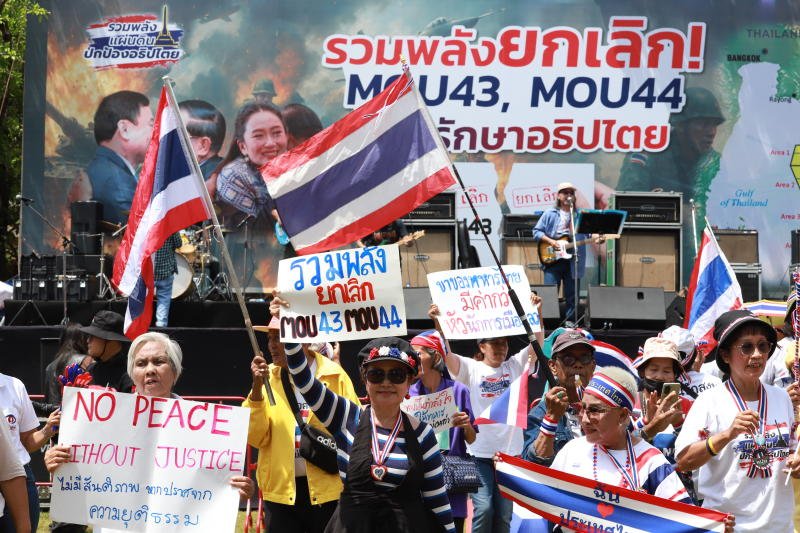
The move follows a Thai government decision last month to unilaterally terminate a 2001 agreement with Cambodia that provided a framework for negotiations over the disputed area in the Gulf of Thailand where the two countries’ maritime claims overlap.
“We have taken this step to protect Cambodia’s sovereignty and maritime rights in accordance with international law,” Cambodian Prime Minister Hun Manet said.
Thailand’s cancellation was part of a campaign pledge by Prime Minister Anutin Charnvirakul, who won re-election in February on a wave of nationalistic sentiment after two rounds of deadly military clashes between the countries last year along their disputed border.
Under the United Nations Convention on the Law of the Sea (Unclos), a compulsory conciliation process allows a panel of independent experts to examine a dispute and make recommendations, although its findings are not legally binding on either party.
Mr Anutin on Tuesday brushed aside concerns over Cambodia’s move, saying Thailand would use its own approach while safeguarding national sovereignty and security.
He said he was not aware of any new problems arising from the MoU 44 withdrawal and stressed that Cambodia had been informed of Thailand’s decision during the recent Asean Summit.
The document signed in 2001 (2544 in the Buddhist calendar) was intended to pave the way to jointly develop offshore areas believed to be rich in natural gas, following the successful model used by Thailand and Malaysia.
But Thailand cited the lack of any progress ever since the agreement came into force as the main reason for its abolition, and said that it too would use the Unclos process in any future negotiations.
Mr Anutin said on Tuesday that Thailand would cite the lack of any progress on the issue ever since the agreement came into force as a reason for its abolition once the new government takes office.
Border activity defended
In a related development, the Royal Thai Army rejected claims that past military operations against targets near Chong Sangam in Si Sa Ket province were less intensive than actions carried out in other Thai-Cambodian border areas last year.
Responding to online reports and public speculation about activities near the checkpoint in Phu Sing district, army spokesman Maj Gen Winthai Suvaree said on Tuesday that the area across the border had previously been used as a support base for military operations that affected Thai civilians and security personnel.
As a result, Thai forces had carried out military strikes against the location during hostilities last year, causing damage to a number of structures in the area, he said.
Critics have claimed that Thai army operations targeting suspected scammer and call-centre gang bases near Chong Sangam were less forceful than those conducted elsewhere along the border.
An army source said the extent of the damage could not be fully assessed because the sites were located inside Cambodian territory and could not be inspected directly.
Many of the targeted structures, particularly casino buildings and large reinforced-concrete complexes, were built to withstand significant impact, the source said.
Although some appeared largely intact from the outside, the source said, extensive damage had been inflicted internally by artillery bombardments and air strikes.
The army said the attacks successfully degraded the opposing force’s ability to use the area as an operational base before the Dec 27 ceasefire came into effect, stressing that all actions had been carried out in accordance with military plans and national security objectives.