
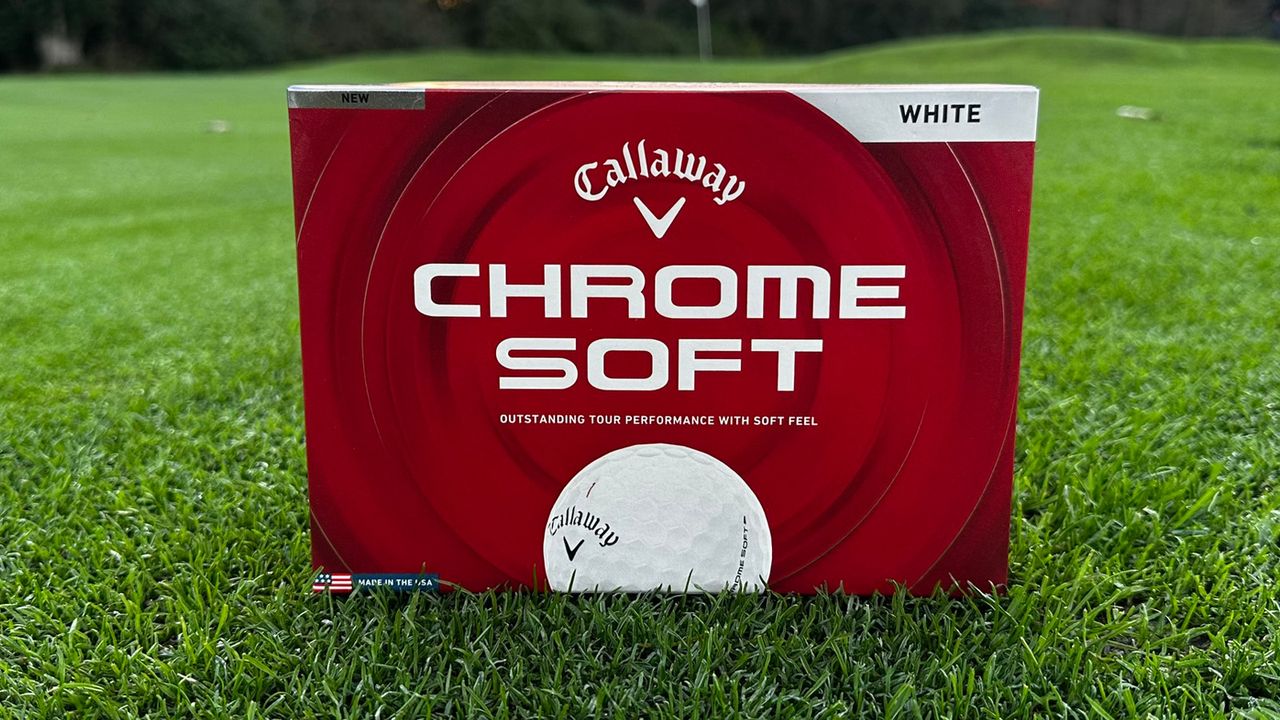
The reputation of Callaway’s premium balls shifted with the introduction of the Chrome Tour family a couple of years ago, but thanks to new technology promising more speed and consistency, the 2026 lineup looks set to take things to a whole new level and compete with some of the best golf balls on the market.
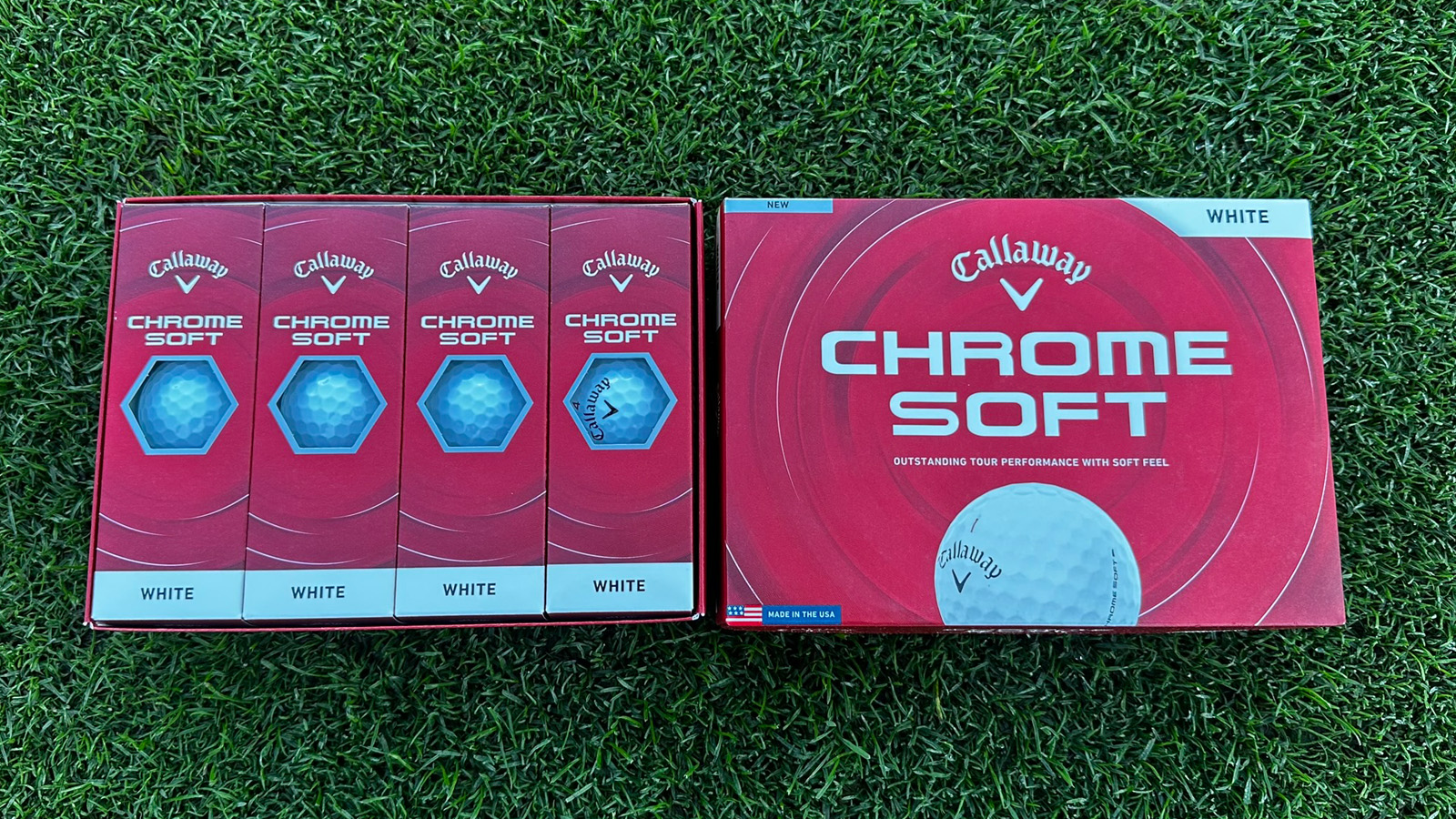

While we have seen the arrival of the new Chrome Tour and Chrome Tour X - four-piece, tour-level offerings currently in the bags of staffers like Jon Rahm, Xander Schauffele and Sam Burns - the Callaway Chrome Soft remains a crucial pillar in the premium ball lineup.
As the third sibling in this high-performance family, the Chrome Soft is designed for a specific type of player who prioritizes a soft golf ball, offering a high ball flight and fast ball speeds, yet perhaps doesn't generate the extreme swing speeds required to fully compress the Tour or the Tour X.

Under the hood, so to speak, Callaway has implemented some significant changes to justify the new release - the first of those and the headline addition is the revolutionary Tour Fast Mantle. This layer is created to increase ball speed by acting like a stiffer spring at impact, with Callaway claiming this material is 16 percent more responsive than previous iterations, essentially serving as a high-flex modulus engine for the ball.
I first tested the Chrome Soft indoors using a Foresight GC3 launch monitor to see how these technological claims translated to raw data and in doing so, compared this ball to another three-piece, urethane-covered ball in the TaylorMade Tour Response. Despite both of these balls being constructed using three layers, the Chrome Soft is priced the same as its siblings at $57/£49 per dozen, whereas the Tour Response is more affordable at $42/£37.

Upon first strike, the ball performed largely as expected given the nomenclature and felt incredibly soft through impact. While many players chase this sensation, I actually find it to be a double-edged sword due to the fact that the ball feels as though it springs off the face. While I understand the satisfaction of this on full shots, I find it makes wedge and distance control with the putter slightly more difficult.
When looking at the numbers, the Chrome Soft produced a mixed bag of results that will suit specific players perfectly while alienating others, but this is almost the case with every golf ball on the market.
With the driver, I was seeing ball speeds around the 167mph mark, which is very competitive against the Chrome Tour and Chrome Tour X. However, the spin was a little higher than I would typically want to see, hovering around 2700 rpm. While this helps keep the ball in the air for moderate swing speeds, faster swingers might find it climbs a little too much, especially those who play in windy conditions.


Where this ball really came alive was in the iron game. It produced extremely good distance with a 7-iron, and while it overspun a little with the driver, it was actually a little under where I would look for with this club. I was seeing spin rates around 5700 rpm - for context, I typically look for that number to be around the 6500 mark for optimal control.
If you are a player who struggles to get distance out of your irons, this lower spin profile, combined with the fast mantle, will likely add a few yards to your game, so it could be worth testing.

As always, I like to see how the ball performs outside as I feel that’s where you get a full idea of the aerodynamics package and how it performs downrange in regards to the ball's dispersion. While it was a little chilly during testing (6°c/42°f ), thanks to a slight breeze coming in from the north, I saw the Chrome Soft perform pretty well on my test driving set.
The Tour Response was also reliable in this area it must be said, but as a whole, I would have to say I saw a slightly more consistent trajectory windows with the Chrome Soft. While it looked as though the ball tended to hold its flight a touch better than the Tour Response, the graphic below shows there wasn't much in it.

The reason the Chrome Soft performed ever so slightly favourably outside was likely down to the new Advanced Seamless Tour Aero design. This is an optimized Hybrid Aero Pattern designed to stabilize ball flight and maximize distance consistency. This package is wrapped in a Precision Tour urethane cover - the same as the other balls in the Chrome family - and is produced using Callaway’s Precision Technology to ensure every ball performs identically to the last.
The trade-off for that iron distance and driver performance became apparent with the wedges. On a standard 50-yard pitch shot, I struggled to generate the high-checking spin required to attack tight pins. The ball lacked a little stopping power compared to its Chrome Tour siblings, releasing out more than I would like, and that’s without the greens getting as firm as they might come the middle of the season.

Overall, the Chrome Soft golf ball could be a great addition to a golfer's bag if they prioritize yardage with their irons and consistency or height from the tee. You may want to turn your attention to the Chrome Tour X if you’re after a little more spin around the greens.
At $10 less per dozen, the Tour Response produced pretty similar results to the Chrome Soft and actually provided a little extra spin and control with the wedges, so if you’re not brand-agnostic and don't prioritise a very soft feel, this may be where you want to turn your attention.