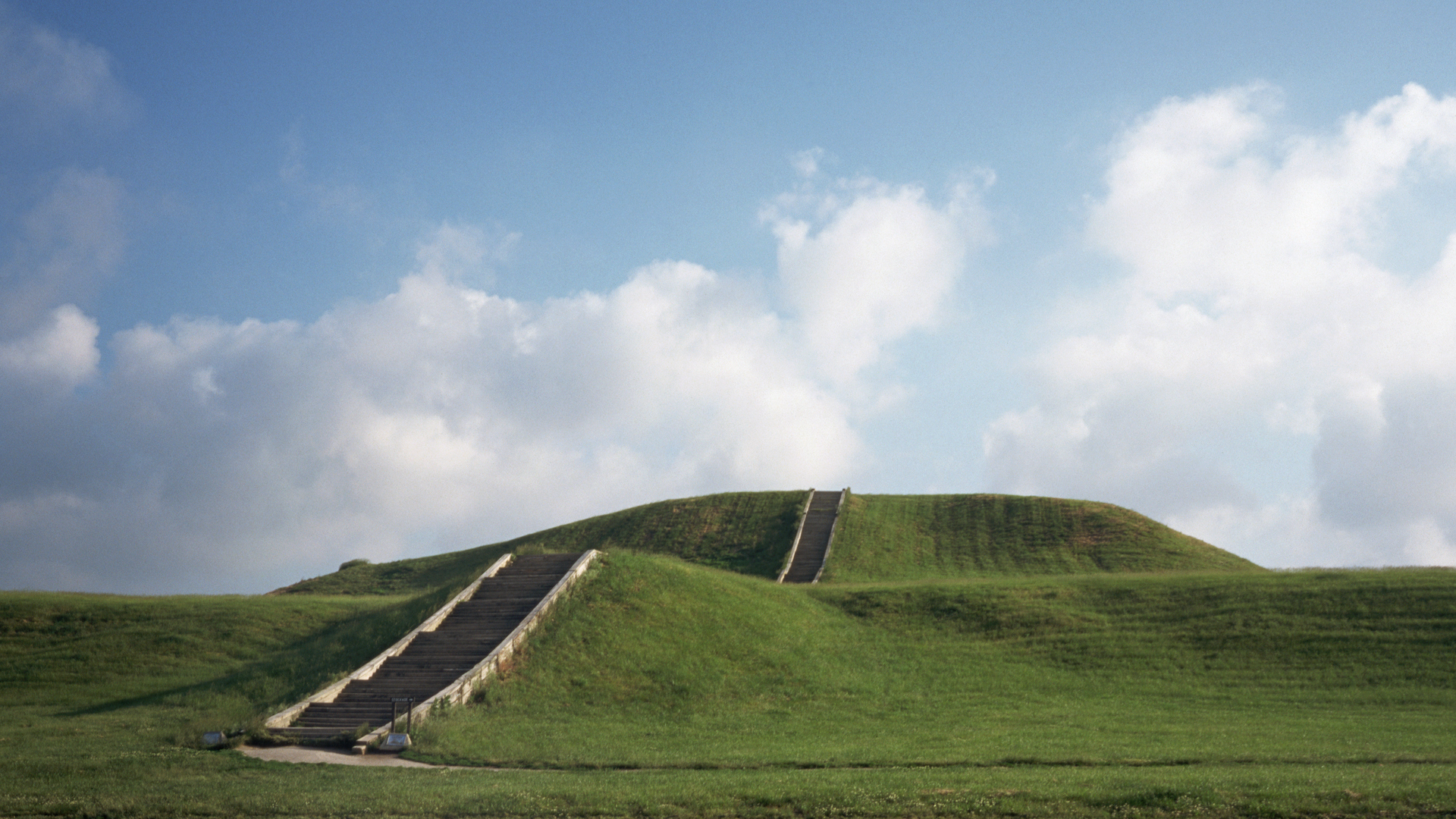
Cahokia was a city that, at its peak from A.D. 1050 to 1200, was larger than many European cities, including London. The city was spread out over 6 square miles (16 square kilometers), encompassed at least 120 mounds, and had a population of 10,000 to 20,000.
Located across the Mississippi River from modern-day St. Louis, Cahokia was the largest pre-Columbian city north of Mexico. The inhabitants of Cahokia did not use a writing system, and researchers today rely heavily on archaeology to interpret it. The name of the people who built the mounds is lost to time, so the city was named for the Cahokia Indigenous people who lived in the area during the 17th century, but who are not related to its original inhabitants, according to the Oklahoma Historical Society.