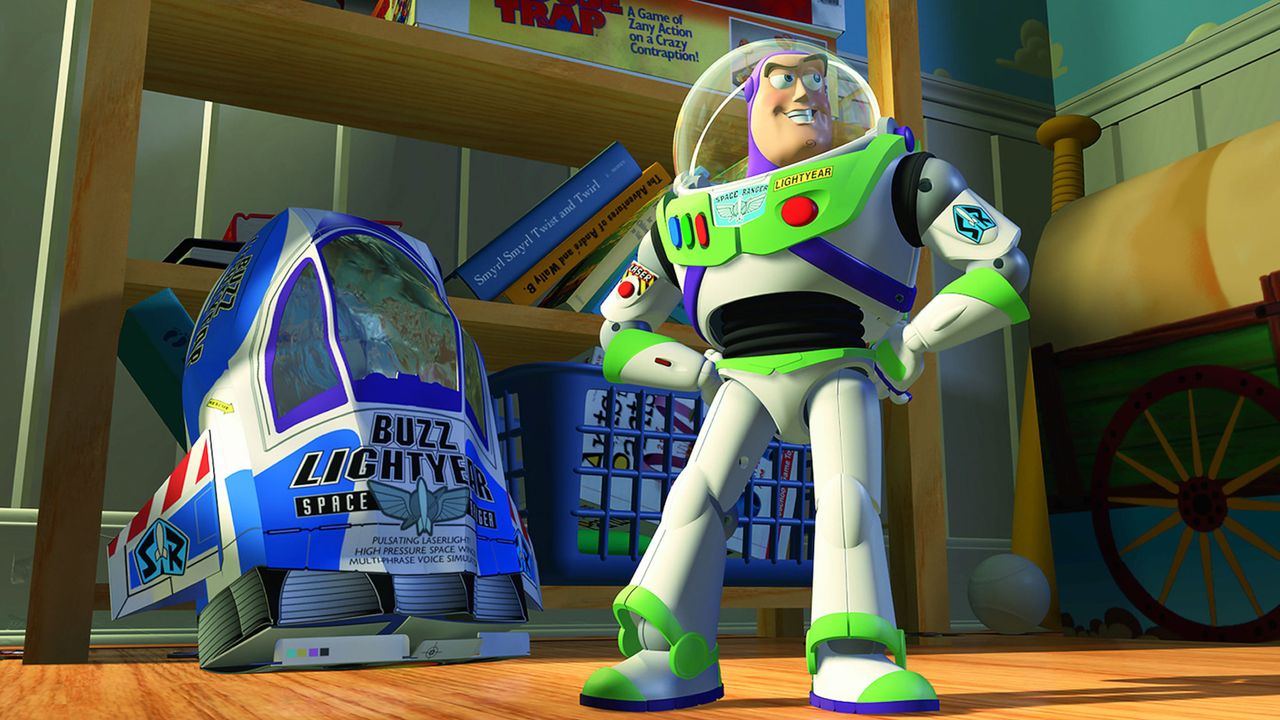
Al Jolson talking out loud in "The Jazz Singer", Dorothy going Technicolor in "The Wizard of Oz", Neo slowing down bullets in "The Matrix"… As the first-ever entirely computer-generated movie, "Toy Story"'s place among cinema's gamechangers would have been assured, even if it had been a critical and commercial dud back in 1995. It was anything but, of course, and within a few short years, pixel-based animation was well on its way to easing out its two-dimensional ancestor, as traditional hand-drawn cartoons started to look like yesterday's news in the new world shaped by Pixar's innovation.1
But the medium isn't the only reason "Toy Story" broke the die-cast mould. Although Disney (who'd signed on to distribute the movie) had achieved plenty of recent box-office success by resurrecting the fairytale formula popularized by "Snow White", "Cinderella," and "Sleeping Beauty" and the rest, Pixar took a different approach. In stark contrast to "The Little Mermaid", "Beauty and the Beast" and "Aladdin", they opted to tell an entirely new story, populated by an ensemble of memorable characters who never break into song — Randy Newman's soundtrack is resolutely non-diegetic.