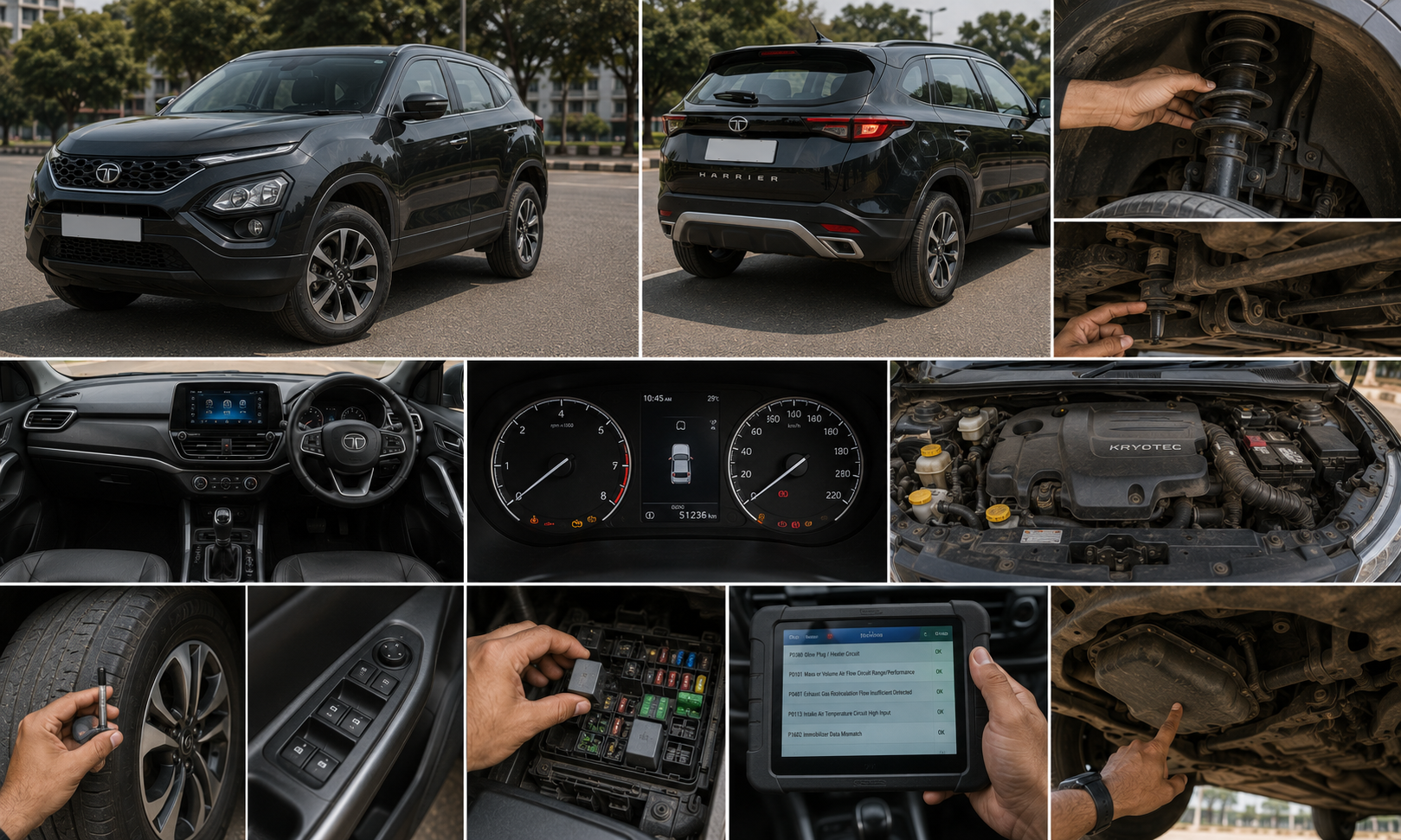
The Tata Harrier is one of the more significant cars in Tata's modern lineup, a mid-size SUV built on the OMEGARC platform, which is derived from the same Land Rover D8 architecture that underpins the Discovery Sport. That pedigree is genuine, and it shows in the way the Harrier rides and handles. In the pre-owned market, the Harrier is an interesting proposition: you're getting genuine large-SUV engineering at significantly below new-car prices. But the nuances of buying a used Harrier require specific knowledge, because this is a more complex car than its Indian price point might suggest. If you are looking at a Tata Harrier second hand listing, the guidance below is specific to this model, though many of the inspection principles apply to used Tata cars more broadly.
Engine and Transmission Health
The engine is a 2.0-litre Kryotec diesel, the FCA-sourced Multijet II unit, the same engine used in the Jeep Compass, tuned to produce 170ps in the Harrier. It's a refined, torque-rich engine that feels at home at highway speeds. What it requires, however, is proper maintenance, specifically, timely oil changes with the correct specification oil (check the owner's manual, as the Kryotec requires 5W30 fully synthetic), regular diesel filter replacement, and periodic EGR system cleaning on high-mileage examples.
The turbocharger on this engine has a variable geometry mechanism that can accumulate carbon deposits if the car is used predominantly for short city trips where the engine never fully reaches operating temperature. Carbon accumulation in the VGT mechanism causes boost delivery to become inconsistent, the car surges or hesitates under acceleration. An OBD scan will show boost pressure irregularities as fault codes. If you spot this symptom on a test drive, it needs professional attention before you commit.
The transmission options are a 6-speed manual and a 6-speed Hyundai-sourced torque converter automatic. The automatic is smooth and well-calibrated, but the fluid should be changed every 40,000-60,000 km, check this specifically. The manual has a slightly notchy feel when cold that improves with warmup, which is normal; what's not normal is difficulty engaging first gear cleanly or excessive play in the gear selector.
Suspension, Electricals, and the Sunroof
Suspension on the Harrier, pseudo-McPherson strut front, semi-independent twist-beam rear with Frequency Selective Dampers, offers a firm ride that early units sometimes drew criticism for. Tata updated the damper tuning over the production run, and post-2021 cars are more composed. On older units (2019-2020 build), check the front strut mounts for wear, as some high-mileage examples have shown premature bushing degradation.
Electrical system reliability is the area most discussed by Harrier owners in community forums. Early production units had some issues with the infotainment system (freezing, slow boot times), the TPMS system displaying warnings intermittently, and the connected car features being inconsistent. Tata has issued OTA updates that addressed many of these, check that the car's software is on a recent version. The 2023 facelift Harrier addressed most of these concerns at the hardware level.
When looking at a Tata Harrier second hand listing, insist on a professional inspection that specifically covers the VGT turbo health, the EGR system, the transmission fluid condition, and an electrical sweep of the main systems. This car rewards thorough pre-purchase diligence.
One more area specific to the Harrier that used car buyers should evaluate is the panoramic sunroof, present on the Harrier XZ and XZ+ trims. The Harrier's panoramic sunroof is large and a significant selling point, but early units had some reports of drainage channel blockages that led to water ingress into the cabin in heavy rain. Tata addressed this through a dealer service advisory, but if you're buying an early-production Harrier (2019-2020) with a sunroof, verify that the drainage channels have been cleaned and are flowing freely. Run your hand along the headliner around the sunroof frame during the inspection, any soft spots or discolouration indicate prior water ingress.
The broader context of used Tata cars includes the Nexon, Safari, and Punch across different price points, each with its own strengths. But for buyers who want a proper mid-size SUV experience at pre-owned prices, the Harrier is one of the more compelling options in the segment, as long as you buy the right example.
The Harrier's ground clearance of 200mm is one of its genuine practical advantages over many of its competitors, and it's a figure that's been useful to Harrier owners dealing with Mumbai, Bengaluru, and Hyderabad's occasional waterlogging. The all-terrain capability the platform was designed for, even though the production Harrier is a 2WD front-wheel drive vehicle, translates into a composed, unflustered ride quality that most buyers note positively even in purely urban use.