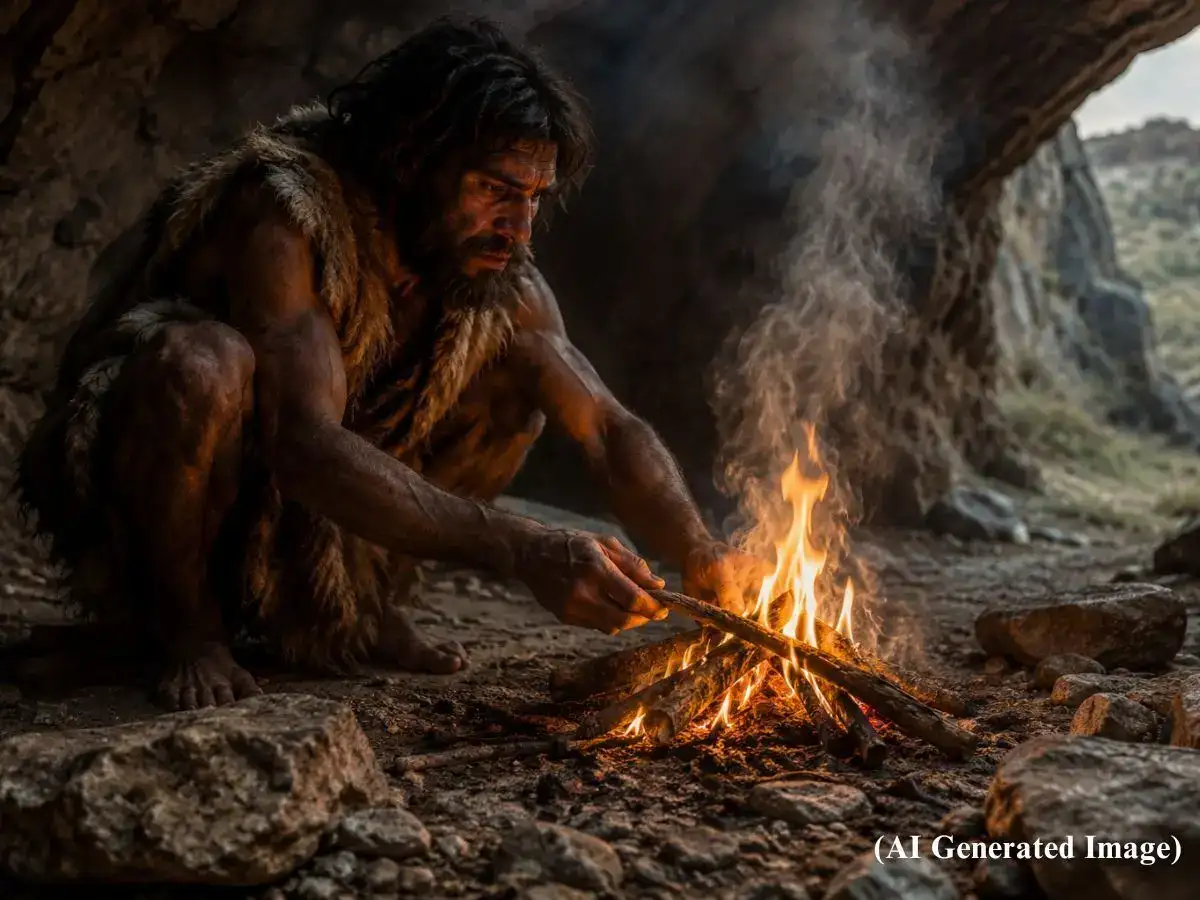
Long before cities, agriculture or even written language, one discovery changed the course of human history.
Fire.
Now, researchers say that moment may have happened much earlier than scientists once believed.
A new study has identified burnt animal bones in South Africa's Wonderwerk Cave that date back between 1.07 million and 1.79 million years. If confirmed as evidence of human-controlled fire, the finding would push back the timeline of fire use by hundreds of thousands of years.
The research was published in the journal PLOS One .
What did scientists discover inside Wonderwerk Cave?
The discovery was made while researchers were studying one of the older layers of Wonderwerk Cave, known as Stratum 11.There, they found animal bone fragments that showed signs of having been exposed to fire.
The age of the remains surprised even the researchers.
The burnt bones were dated to as far back as 1.8 million years ago, making them potentially the oldest evidence of human fire use ever found.
Wonderwerk Cave is already one of the world's most important prehistoric sites. Over the years, it has yielded stone tools, ancient artefacts and other clues about early human life.
The newly identified bones add another piece to that puzzle.
How did researchers determine that the bones had been burned?
To find out whether the bones had actually been exposed to fire, researchers used a technique called bone luminescence.The process involves shining high-energy blue light onto bone samples under a microscope. Burnt bones react differently from unburnt ones and can be identified through the glow they produce when viewed through specific filters.
The results suggested the bones had indeed been heated.
Researchers also noted that the remains were found roughly 100 feet inside the cave rather than near its entrance.
That detail is important because it makes a natural wildfire a less likely explanation for the burning.
Why is this discovery important for understanding human evolution?
The ability to control fire is widely regarded as one of the most significant developments in human history.Fire provided warmth during cold periods, protection from predators and additional hours of light after sunset.
It also allowed early humans to cook food, making some plants and meat easier to eat and digest.
Many scientists believe the development played a major role in shaping human societies and may even have contributed to changes in brain development over time.
If humans were using fire nearly 1.8 million years ago, it would mean this transformation began much earlier than previously thought.
How old was the previous evidence of human fire use?
Before this discovery, the oldest widely recognised evidence of fire use at Wonderwerk Cave dated to around one million years ago.That evidence included burnt bones, heat-altered tools and traces of burnt sediment.
The newly discovered remains could extend that record by several hundred thousand years, significantly changing the timeline researchers use to understand the emergence of early human technology.
Does this prove that early humans were cooking food 1.8 million years ago?
Not necessarily.The researchers caution that the discovery points to repeated fire use within the cave, but it does not provide direct evidence of routine cooking or advanced fire-making techniques.
In other words, the findings suggest that fire was present and being used, but they do not yet reveal exactly how early humans created, managed or relied on it in daily life.
Those questions remain open for future research.
What could this discovery tell us about the first humans who used fire?
For scientists, the significance of the discovery goes beyond burnt bones.Each fragment offers a glimpse into a period when early humans were beginning to interact with their environment in new ways.
Researchers say the findings could help refine our understanding of when fire became part of human life, why it mattered and how it may have influenced the behaviour of some of the earliest members of the human family.
The answers may still be buried in the layers of Wonderwerk Cave.
But with every new discovery, the story of how humans first learned to harness fire is becoming a little clearer.