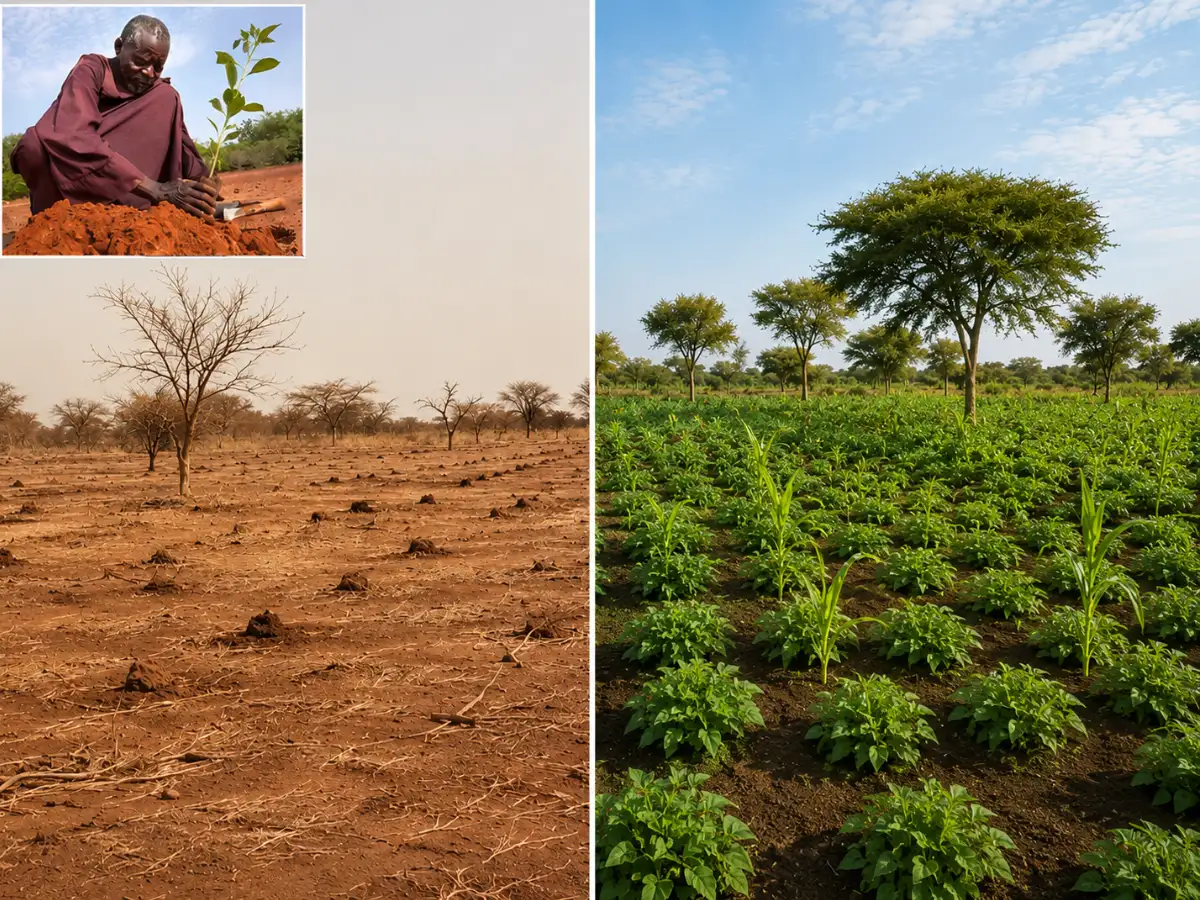
If you've spent any time on climate TikTok, you probably know the feeling: the earth is warming, and it feels like there’s nothing one person can do. Yacouba Sawadogo, a farmer in northern Burkina Faso, never received that memo. He had a hoe, compost, and an old technique that most of his neighbors had abandoned. Beginning around 1980, he spent the next four decades turning a dead, cracked plateau into a forest of nearly 40 hectares with more than 60 species of trees and bushes.
In the peer-reviewed study, ‘Soil and Water Conservation in Burkina Faso, West Africa,’ published in the journal Sustainability, the low-tech farming method Sawadogo revived has been documented across Burkina Faso to increase crop yields by more than 100% on restored land, even in years of poor rainfall. That’s the scientific backbone of this story, and it’s worth understanding why the stubbornness of one farmer became a case that scientists are still studying today.