
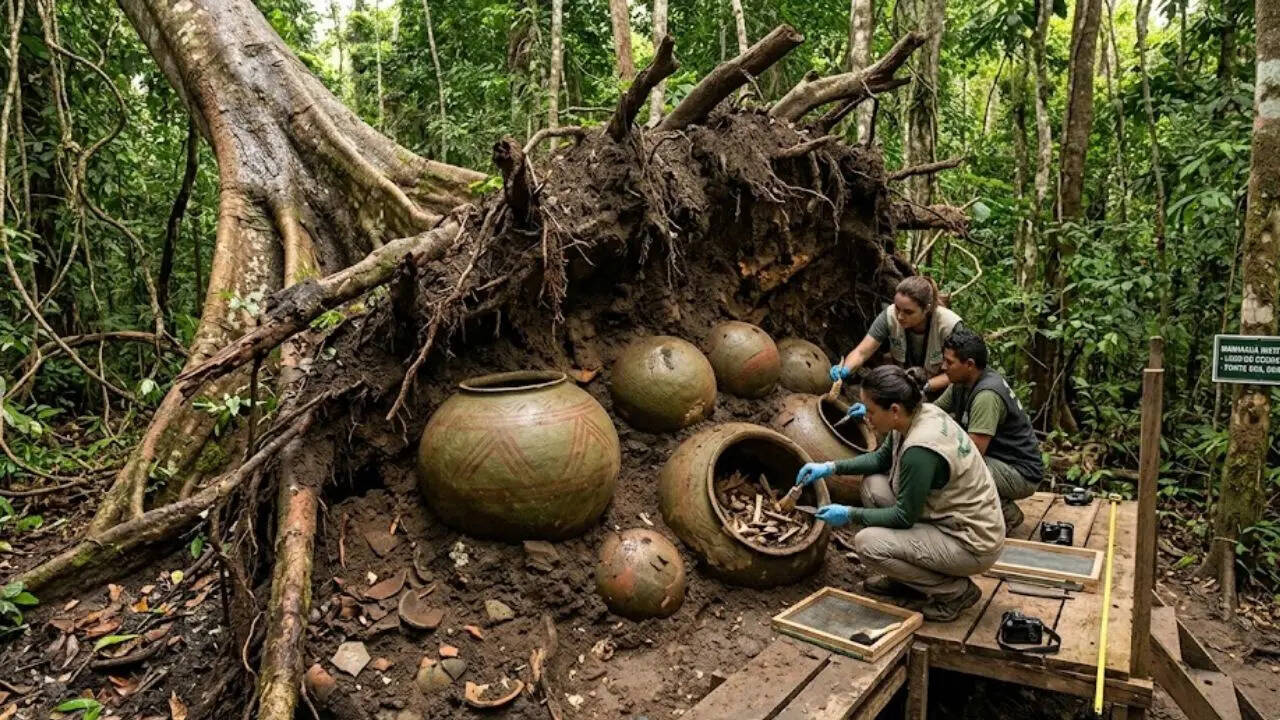
A significant archaeological recovery occurred in Amazonas, the Brazilian state, when the uprooting of a paricarana tree at Lago do Cochila uncovered seven prehistoric funeral urns in its roots. The round ceramic vessels were discovered near Fonte Boa, Brazil and provide a unique look into the engineered landscapes of ancient indigenous culture in the Middle Solimões region. They contained an unusual combination of human and animal remains, and this finding has impacted the understanding of the burial practices of ancient Amazonian societies.
The excavated urns were part of an effort by the Mamirauá Institute to reveal how these communities used artificial islands as an environment for living and practising their traditions during seasonal floods. This evidence represents an important aspect of the history of these resilient cultures that were hidden under the rainforest for a very long time. The rare inclusion of intermingled species suggests a spiritual cosmology where the boundaries between human and animal existence were fluid.














