Get all your news in one place.
100's of premium titles.
One app.
Start reading
The Guardian - UK
The Guardian - UK
Environment
Karen McVeigh and KA Shaji in Thiruvananthapuram, Kerala

Buoyant, the size of a lentil and almost impossible to recover: how nurdles are polluting the oceans

A hand holds a fish with a mouth full of small translucent balls
A dead fish full of the ‘nurdles’ that are plastic’s raw material; sea creatures eat them thinking they are eggs. Photograph: Chamila Karunarathne/EPA

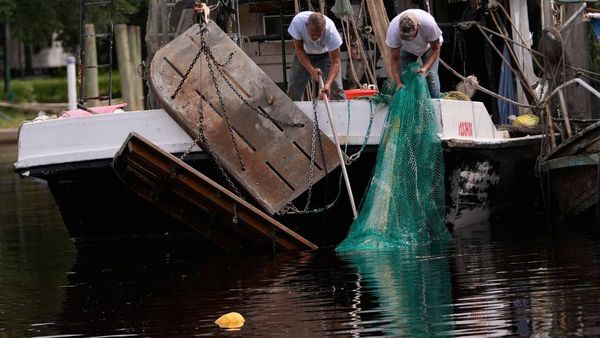
When a Liberian-flagged container ship, the MSC Elsa 3, capsized and sank 13 miles off the coast of Kerala, in India, on 25 May, a state-wide disaster was quickly declared. A long oil slick from the 184-metre vessel, which was carrying hazardous cargo, was partially tackled by aircraft-borne dispersants, while a salvage operation sealed tanks to prevent leaks.

But almost three months later, a more insidious and persistent environmental catastrophe is continuing along the ecologically fragile coast of the Arabian Sea. Among the 643 containers onboard were 71,500 sacks of tiny plastic pellets known as nurdles. By July, only 7,920 were reportedly recovered.
Sign up to read this article
Read news from 100's of titles, curated specifically for you.
Already a member? Sign in here
Related Stories
Top stories on inkl right now
One subscription that gives you access to news from hundreds of sites
Already a member? Sign in here
Our Picks
Fourteen days free
Download the app
One app. One membership.
100+ trusted global sources.