
Get all your news in one place.
100's of premium titles.
One app.
Start reading
Tom’s Hardware
Tom’s Hardware
Technology
Hassam Nasir

British cryptographer Adam Back is the secret creator of Bitcoin, claims new report — Back refutes investigation, says parallels to Satoshi are just a coincidence

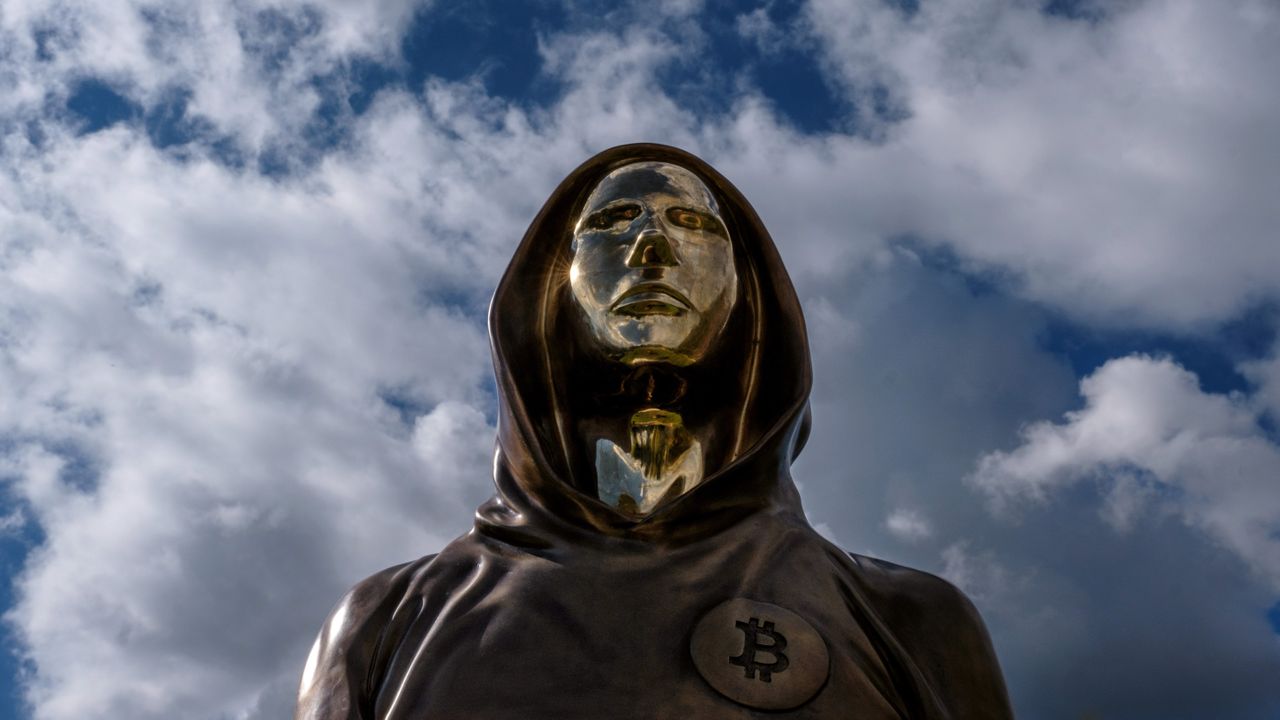
A statue of Satoshi Nakamoto, a presumed pseudonym used by the inventor of Bitcoin, is displayed in Graphisoft Park on September 22, 2021 in Budapest, Hungary.

On October 31, 2008, Bitcoin was born in a white paper published under the pseudonym Satoshi Nakamoto, who went on to mine its genesis block a few months later. Since then, the mystery behind Satoshi's true identity has grown second only to Bitcoin's own meteoric rise. Now, a recent NYT investigation points toward recurring candidate Adam Back as the man behind the blockchain.

The 40-page-long report was published by journalist John Carreyrou — who previously exposed Theranos — piecing together evidence in an 18-month-long investigation. The article starts with several mailing lists tied to the Cypherpunk movement of the 1990s and 2000s, which Back was a regular part of. His politics aligned with those of cryptographic liberation, using code to circumvent government censorship.

Satoshi invented Bitcoin with the same ideology, a decentralized system that couldn't be controlled by any state or bank. Back even emailed community members about making an electronic cash system in the 90s that would be free from legislative oversight. He later created Hashcash to fight spam emails, but suggested combining it with another e-cash idea called "b-money" to formalize his lifelong vision.

Back is the only person cited in the original Bitcoin white paper for a technical contribution through Hashcash. A 2024 court case in the UK revealed a series of emails in which Satoshi shared an early draft of the white paper with Back, who then told him to check out b-money. Carreyrou implies these emails "exchanges" were fabricated to create the illusion of two different people.

The reporter argues that even Back's career has followed in parallel to Satoshi's, as both are experts in computer-distributed systems; Back has a doctorate in the field, and the blockchain is an example of one. When Bitcoin was created, Back was mysteriously absent from any of those early circles despite being an intense advocate of the concept, but conveniently reemerged as soon as Satoshi went silent a few years later.

Beyond his online activity, Back co-founded Blockstream in 2014, which has been critical in shaping the development of Bitcoin over the past decade or so. The company has funded key developers in the crypto scene throughout the years as well. In this context, Blockstream can be looked at as the house Satoshi built (if you assume Back is Satoshi) to give Bitcoin a corporate face and protect it in the real world.

Coming back to those mailing lists, Carreyrou says Back's writing style showed striking similarities to Satoshi's in the way they both used British spellings and incorrect hyphenation. For instance, Satoshi would switch between "optimize" and "optimise," or "check" and "cheque" in his writing. He would also conflate "it's" with "its" while merging words such as "bug fix" into just "bugfix."

Satoshi often referred to proof of work as "proof-of-work," which is a fundamental building block of crypto governed by the same concept first described in Hashcash. Through AI-driven textual analysis with fellow reporter Dylan Freedman, Carrey found out Back was the only person who matched all these linguistic quirks out of hundreds of people in the emails.

Adam Back's response

After months of gathering all the proof, Carreyrou was able to meet with Back at a hotel in El Salvador, where he was attending a conference. When presented with the mountain of evidence, the Satoshi-to-be simply refuted it, chalking it all up to coincidence and later calling it "confirmation bias" on X. The confrontation mostly lacked assimilation, as the journalist claims Back was defensive throughout.

Addressing his timely absence during Bitcoin's inception, Back couldn't come up with any convincing reply and said he was busy with work. Same with the textual analysis; Back told Carreyrou, "it’s not me, but I take what you’re saying that this is what the A.I. said with the data, but it’s still not me.” Furthermore, Back insisted he couldn't be Satoshi because he didn't even know how wallet addresses worked at the time.

Back agreed, however, that his background and skillset lined up with who Satoshi would be. It was sensible to deduce that a computer scientist obsessed with techno anarchism would come up with Bitcoin, but Back reiterated, "clearly I’m not Satoshi, that’s my position." That already felt like an admission, but it was actually what came after the interview that led Carreyrou to believe he was right all along.

At home, in New York, he listened back to the hotel recordings and came across a potential slip-up that might've sealed the deal. The journalist had brought up Satoshi's famous "I'm better with code than with words" quote, with Back when he interrupted and said, "I did a lot of talking though for somebody... I sure did a lot of yakking on these lists actually."

By saying "I did a lot of talking though," he is subconsciously admitting to being the person who said that quote — to being Satoshi. Carreyrou even emailed Back about this, but he denied that it was a mistake and asserted he was "just responding conversationally." The article ends with the reporter claiming he had no doubt left in his mind anymore that it was, in fact, Satoshi in that hotel room.

Carreyrou's reporting doesn't have a smoking gun, only a lot of circumstantial evidence that no court would find convincing. But that's the point. The hunt for Satoshi is an entirely heuristic pursuit devoid of any malicious animus, so it doesn't require the urgency of a criminal investigation.

As you can see, Back, for his part, fervently denies he is Satoshi, claiming as much in a series of tweets responding to the story, which you can read above.

Sign up to read this article
Read news from 100's of titles, curated specifically for you.
Already a member? Sign in here
Related Stories
Top stories on inkl right now
One subscription that gives you access to news from hundreds of sites
Already a member? Sign in here
Our Picks
Fourteen days free
Download the app
One app. One membership.
100+ trusted global sources.







