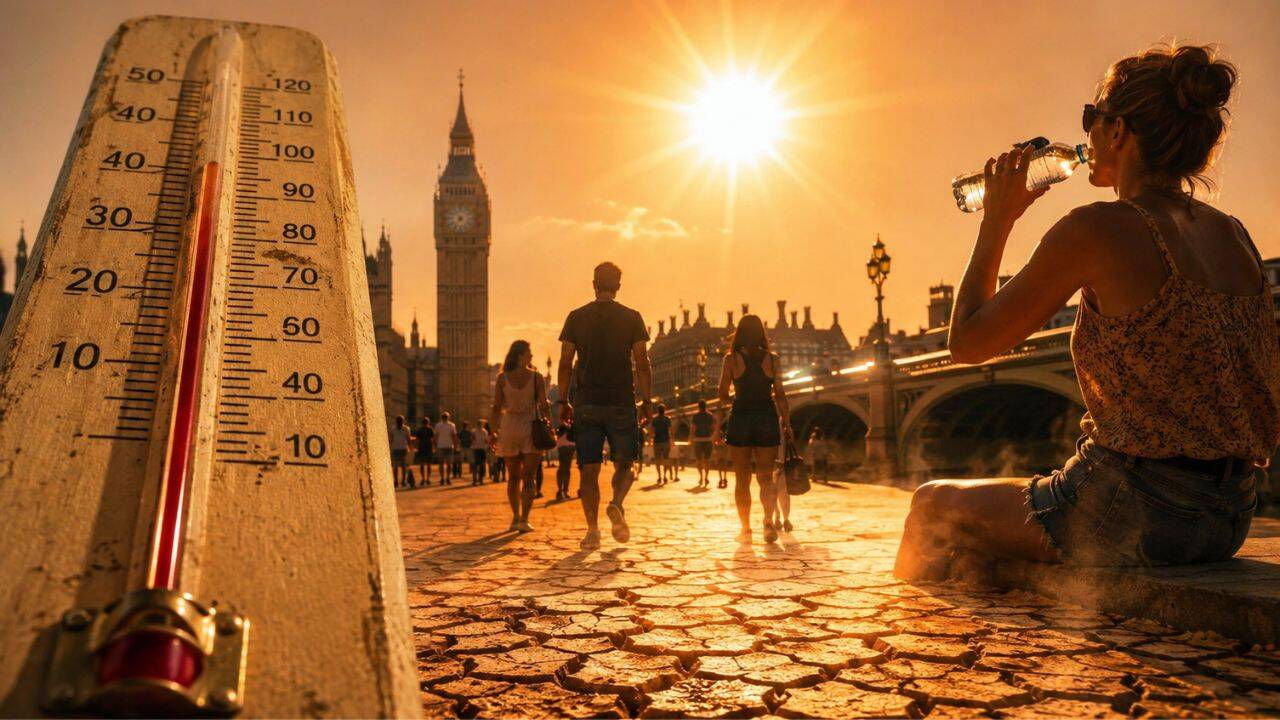
For decades, the summer of 1976 has occupied a special place in British weather history. It has been the season people return to whenever prolonged heat or dry conditions become part of the conversation. This year, however, the comparison has shifted. Reportedly, the figures recorded at the University of Reading suggest that 2026 has already edged beyond that long-standing reference point in one important measure. While individual heatwaves are nothing new, the persistence of high temperatures through late spring and into summer has drawn attention from climate scientists, particularly because it has been accompanied by an extended lack of rainfall. Meteorologists note that prolonged warm and dry conditions can have effects that extend well beyond daily weather records. Rivers, reservoirs and soils may come under increasing pressure, while ecosystems, farming activities and urban infrastructure can face growing challenges as unusually dry periods continue.
The combination is raising fresh questions about how often such summers are likely to occur in the future and what that could mean for water supplies, agriculture and public health across parts of England and Wales.