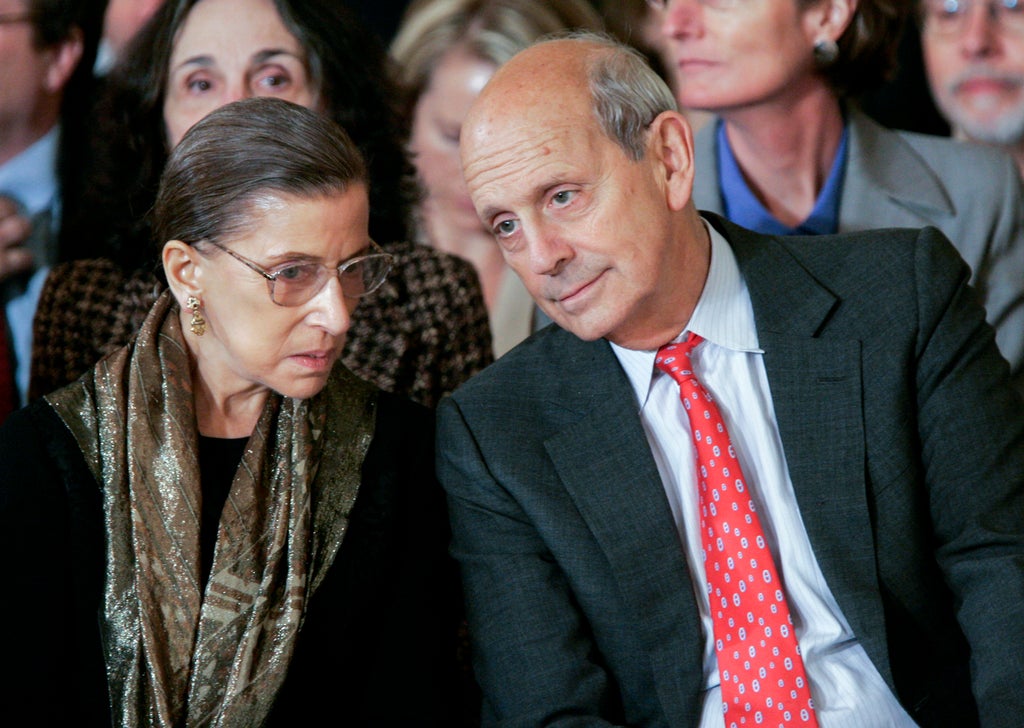
Supreme Court Justice Stephen Breyer has the air of an absent-minded professor, once joking in court that his wife put directions in his pocket to keep him from getting lost. He concocts outlandish hypothetical questions to try to get answers to difficult questions, often to the frustration of lawyers with limited time to make their arguments.
But if Breyer cultivates such an image, it does not mask a razor-sharp intellect, a sunny disposition or a relentlessly pragmatic approach to the law that often finds him searching for a middle ground or grasping for an outcome he can live with on an increasingly conservative court.