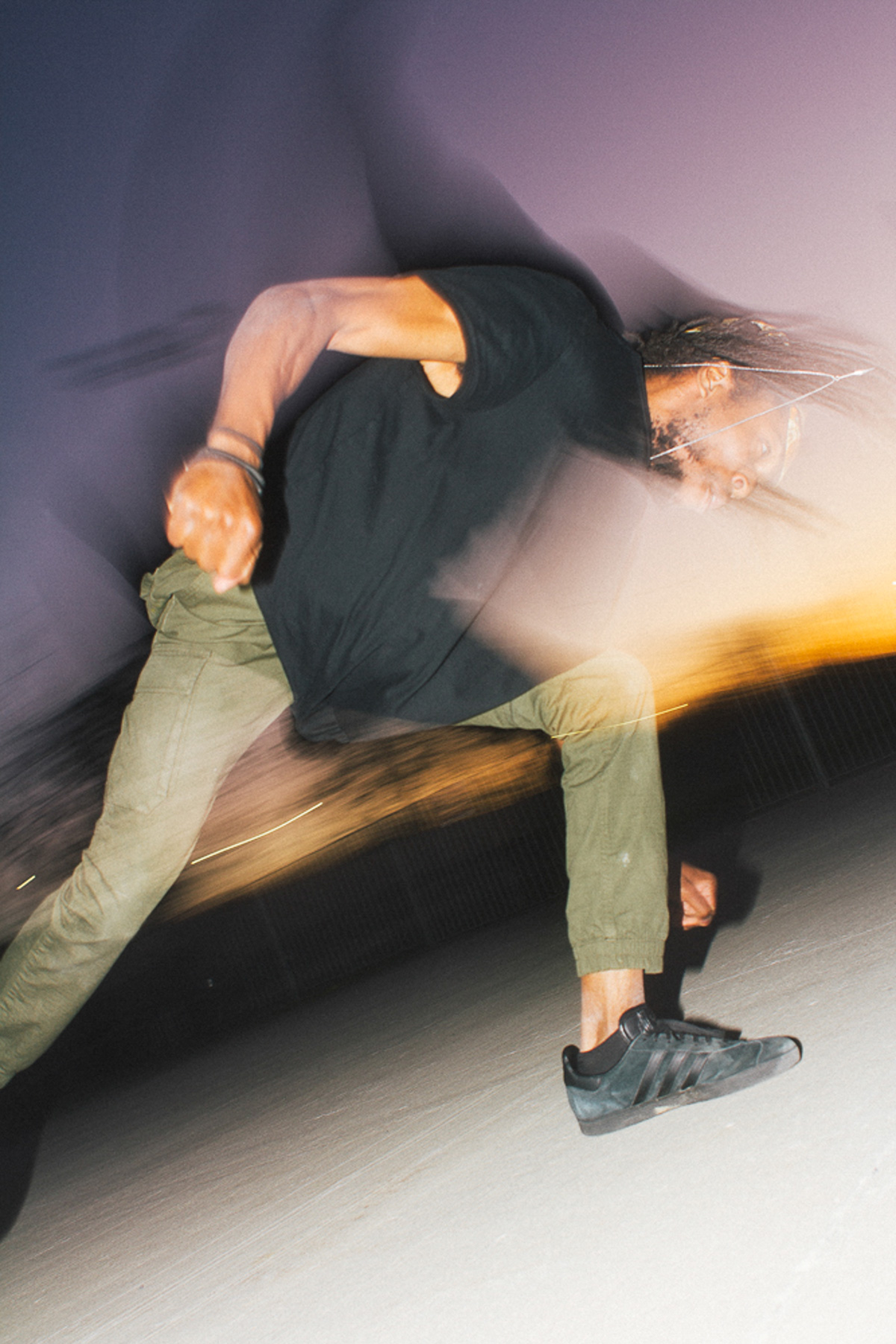
It was the early 2000s, and Frankie Perez was living in Queens, New York, crammed into his grandmother’s home with about a dozen members of his extended family. He was twelve or thirteen and had seen the inside of an airplane just a few times, always to visit family in the Dominican Republic. One spring afternoon, an older boy, a neighbour from across the street whom Perez looked up to, introduced him to the thing that would eventually, once he got the hang of it, put him on more planes than he could count: breaking. “That day, all of my cousins and I started breaking, right on our block,” Perez says. “We would lay down some cardboard on the concrete, right in front of our stoop, and that’s where we learned some of the generic breaking moves.”
By the 2000s, hip hop, freshly emerged from its supposed golden age, had bled outside the lines of its musical form to influence basically everything else, from fashion to visual art to television. New programs like America’s Got Talent, So You Think You Can Dance, and America’s Best Dance Crew seemed to exhume from history’s basement an artform Perez says some viewers likely thought had died in the late 1980s, around the time rap became the mainstream expression of hip hop. “If you ask the average person on the street about breaking,” Perez says, “they’ll probably think about it as a fad—as something that used to happen.” (And it is called breaking: breakdancing is a catchall term invented by journalists who, in their early reporting on the scene, used it to incorrectly group together disparate forms of street dance.) But those who know better know that breaking never left the sun-beaten streets or humid subway stations, that it was a global phenomenon long before it was approved for the 2024 Olympic Games, in Paris.