
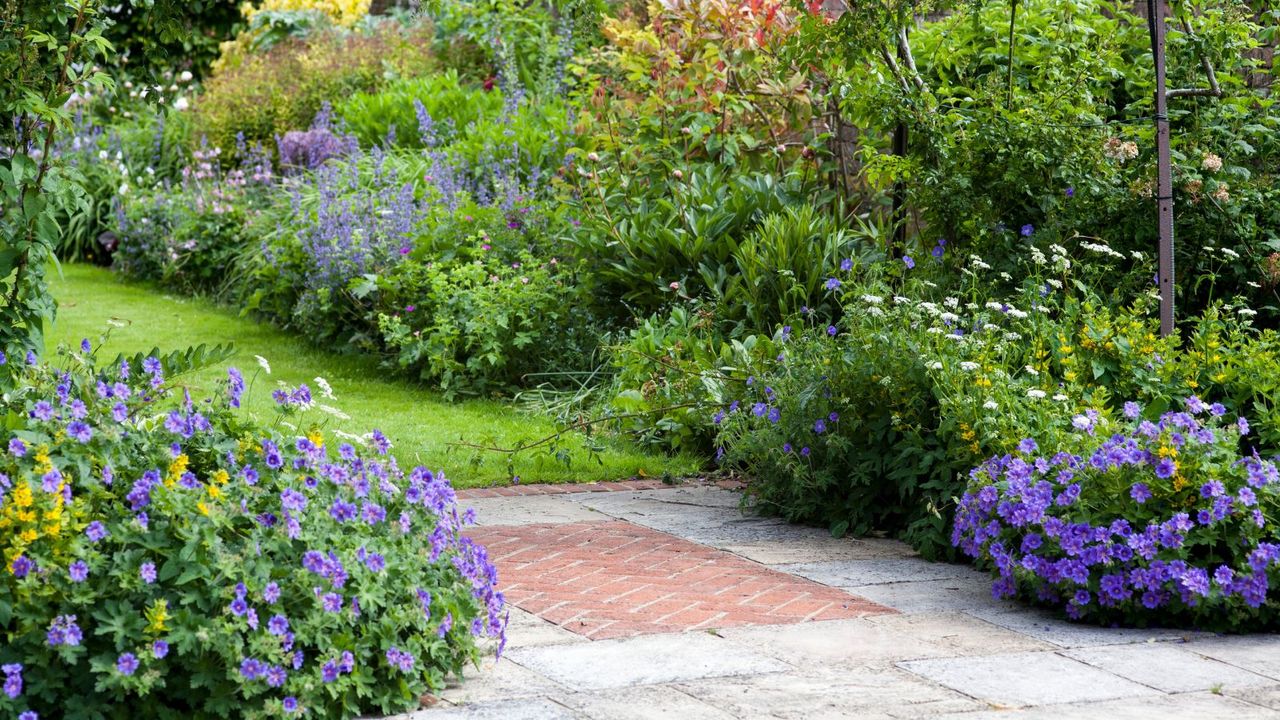
If you're gearing up to add lots of new plants to your garden this spring, there's one important thing you need to first: loosen compacted soil. Failing to do so sets new and existing plants up for struggle, as compacted soil has poor drainage, risks nutrient deficiency, and can suffocate roots.
Early spring in particular is a good time to assess soil health in your yard. The wet conditions and freeze-thaw cycles of winter can cause compaction and leave your soil in a less-than-ideal state to support healthy plant growth. Luckily, it's quite easy to loosen compacted soil, though you need to know how to do it properly to maintain strong soil structure – getting yourself an aerating tool from Amazon is a good place to start.

Here, with insights from a gardening pro, I talk through why it's important to loosen compacted soil, how to do it, and the best tools to use to make this job easy.
Why Loosen Compacted Soil?

No matter your soil type, it's important to maintain good soil structure with plenty of drainage and nutrients for plant growth. If you aren't sure about the state of your garden soil, you can use this Amazon lab soil test to find out more.
This goes for potting soil and raised bed soil, too, which needs to remain loose for successful growing.
'Compacted soil has reduced pore space (the small air and water channels between soil particles). In winter, rainfall and foot traffic compress soil particles together, limiting the movement of air into soil and also reducing water infiltration, which creates water surface run-off,' explains gardening and composting expert, Lauren Click.
'Loosening soil restores structure, improves drainage, and increases biological activity,' she explains.
It's something to put right at the top of your spring gardening checklist, right as plant roots are beginning to grow and require oxygen for energy.
'Soil microbial activity is also increasing as temperatures rise. Microbes drive nutrient cycling, which is the conversion of organic matter into plant-available nutrients,' Lauren says.
'Correcting compaction before peak growing season prevents structural limitations on root expansion,' she adds.
Ignoring compacted soil can result in shallow root growth, making plants more drought-sensitive as they can't reach moisture reserves lower in the soil.
'You may also experience water surface run-off, erosion, and topsoil loss,' Lauren adds.
'Plus, oxygen deficiency in the root zone can lead to anaerobic conditions, which stress roots and reduce nutrient uptake,' she says.
Not only this but beneficial insects and soil organisms are likely to decline in compacted soil.
'Earthworms and aerobic microbes require oxygenated soils,' Lauren explains.
How to Loosen Compacted Soil

There are a few different methods to loosen compacted soil. Here are three to get you started, including no-dig gardening methods recommended by Lauren:
Manually Loosen Soil
The most obvious way to loosen compacted soil (and the quickest) is by using essential gardening tools.
There are a whole range to choose from for this job. For example, this Lowe's tiller can be used to break up and aerate large areas of compacted soil, while this Burpee hand fork can be used in raised beds.
You can also use a lawn aerator tool (like this from Amazon) and a hollow tine aerator for dense, waterlogged soil (like this from Amazon).
Whatever the case, all of these tools are designed to loosen soil by creating holes and air passaes, allowing oxygen in and providing room for roots to breathe.
When you loosen compacted soil around existing plants, take care not to damage shallow roots.
'I also advise against excessive tilling. Over-tilling destroys soil aggregates and microbial networks, leading to repeated compaction cycles,' Lauren warns. For this reason, you should only disrupt soil where necessary.
This lawn aerator tool is ideal for manual aerating. Simply insert it into soil to loosen compaction and improve soil structure.
This hand tiller allows more control when aerating soil, ideal for smaller patches like flower beds.
Add Organic Matter
If you make your own compost, this is a great method to loosen compacted soil.
'Add 1-3 inches of high-quality compost and gently incorporate into the top 6-8 inches,' Lauren advises.
'Organic matter improves aggregation (binding soil particles into stable clusters), increases water-holding capacity, and stimulates microbial communities that naturally restructure soil over time,' she adds.
You can do this both in spring and as part of your fall gardening checklist, improving your garden soil's structure and the essential plant nutrients available.
Plant Deep-Rooted Cover Crops
'I recommend planting deep-rooted cover crops like daikon radish or clover. Their roots act as biological tillers (natural soil breakers), penetrating dense layers and leaving channels when they decompose,' Lauren says.
'This improves long-term soil porosity without mechanical disturbance,' she adds.
The bonus of this is it helps to cover bare soil in winter.
FAQs
How Do You Aerate a Waterlogged Lawn?
To fix a waterlogged lawn, it is best to aerate it with a hollow tine aerator (like this from Amazon) which punches deep holes in the soil and improves drainage. Keeping on top of seasonal lawn care going forward can help prevent this becoming a future issue.
Once you loosen compacted soil in your yard, you can turn to other jobs on your spring to-do list. This includes overseeding a lawn in spring.
Love inspiring garden ideas, outdoor advice, and the latest news? Sign up for our newsletter and get the latest features delivered straight to your inbox.
Shop Gardening Accessories
These bypass pruning shears are ideal for essential pruning tasks. They cut up to 1" in diameter.
This beautiful canvas garden apron has multiple pockets to carry your tools. It has a neck and waist tie for a comfortable fit.
These long-sleeved gardening gloves have a gorgeous floral pattern. They protect hands and arms when tending to the garden.
This soil moisture meter can help you avoid watering mistakes. Simply insert the probe and it will identify how wet the soil is.