
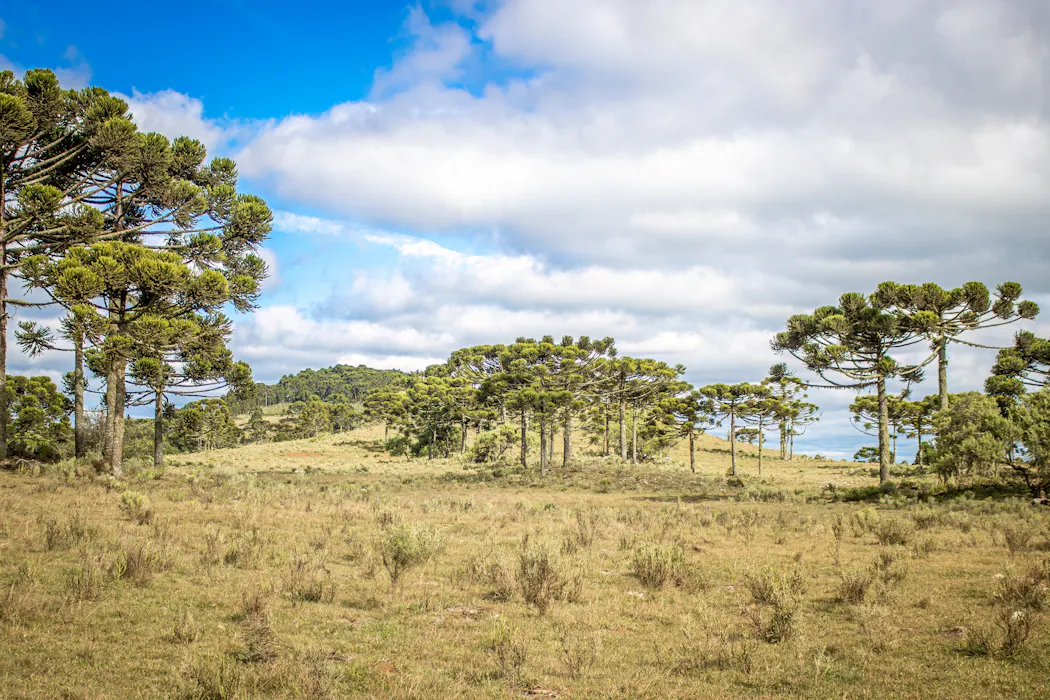
When you think of a South American rainforest, you probably don’t imagine biting winds, heavy frosts and freezing temperatures. But in the mountains of southern Brazil, that’s exactly what you can find. On this highland plateau, far from Amazonia in the country’s coldest region, grows one of the world’s most intriguing ecosystems.
For millions of years, this region has been home to a biodiverse patchwork of Araucaria forests and campos grasslands. The Araucaria trees which characterise this region are closely related to the monkey puzzle trees widely cultivated in Britain, and their relatives once fed dinosaurs around the world. In the present, though, this landscape is in trouble – 150 years of logging and agricultural expansion has destroyed most of the forest-grassland mosaic, and the cool, wet conditions it needs are now rapidly disappearing.














