HOUSTON, Texas — Past the match day experiences, beyond the sampling of local cuisine and on top of all the cultural exchange that normally goes on at the World Cup, perhaps the most eye-opening aspect of this grandiose tournament every four years is how it can peel away the facade that certain teams have historically built up on the pitch.
Many fans accustomed to seeing the impeccably high level of the Premier League on a regular basis, for example, might have a hard time squaring an England side that has been trying—and failing—to bring the trophy home for much more than half a century. Germany has an envious amount of stars on its side yet has become fairly pedestrian in the dozen years since its last triumph and has needed numerous reboots of the national team since reunification. Many corners of the globe continue to overlook the quality coming out of Africa, which can certainly be dispelled this year by the federation placing nine of its 10 qualified teams into the knockouts.

No country, however, has a disconnect between reputation and recent accomplishment on the pitch quite like that of Brazil. The nation is a five time World Cup winner and held up as the ideal of what it means to play the beautiful game, full of attacking flair and defensive prowess. If any side is somehow capable of disappointing in a game where victory is hard-earned, though, it is the Seleção with standards unmatched and, frankly, unmet in the 24 years since the nation last tasted success on this stage.
This year’s Brazil side does not seem capable of fully reversing such a trend, to magically do what it did in the United States back in 1994 and end a similarly long drought to find golden success in the oppressing heat of July. The team is aging and at times non-existent in the midfield. Its wealth of attacking options is disjointed for the most part. It does not, by the eye test, look like the conceptual Brazil in everyone’s mind.
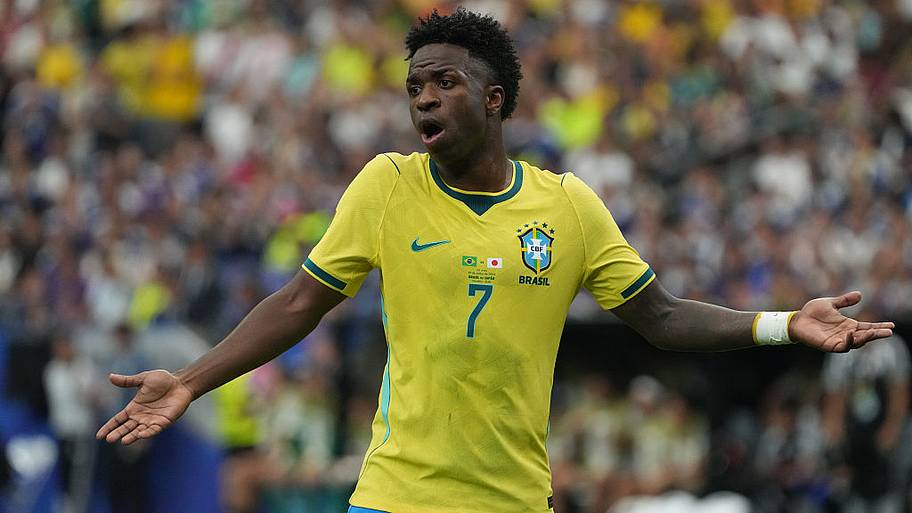
And yet, after Monday afternoon’s miraculous 2-1 victory in the Round of 32 over Japan deep in the heart of Texas, it may not matter one bit.
Suffering is Inevitable...
The vibes were impeccable in green and blue. Manager Carlo Ancelotti, looking like an oasis of calm (or an orchestrating James Bond villain, whichever you prefer) seated along the touchline, could make no wrong moves. The Brazilians were simultaneously lucky and, for long enough stretches, good. Maybe, just maybe, even good enough to let much more than the 68,777 on hand believe that this seven match unbeaten run can continue for a whole lot longer.
“I’m really proud. But what we did, it gives us confidence to move forward. Our team has a lot of quality,” said Gabriel Martinelli, whose 95th minute winner was the latest in stoppage time of the knockout stages of the World Cup since 1966. “This team is going to fight until the end. We’re going to give it our very best. We’re going to lay it all out in the field.”
So the Seleção did against a Japanese side looking for its first-ever knockout round victory in five tries and playing well beyond what was expected given the injuries that had knocked at least three regular starters from the first choice options for Hajime Moriyasu.
Still, the Japanese were mostly undaunted until the dying minutes, playing stout behind a steady drumbeat created by thousands of their fans on hand at NRG Stadium, which more than made up for being out-numbered two to one.
After spending most of the first half looking under siege by Brazil’s high press—holding just a quarter of possession and forced to rely on numerous long balls—the Blue Samuari wisely used the initial hydration break to fully reset and send an early message that they were not to be taken lightly.
Kaishu Sano took advantage of some of the increased spacing that flowed from the break, collecting a recovery off a bad ball by Danilo at the halfway line and dribbling essentially unmarked through the rest of the Brazilian midfield. Then, just into the 30th minute, he unleashed an unprompted rocket behind the right foot of defender Gabriel to find the back of the net just beyond the diving hand of goal keeper Allison. It was the Mainz midfielder’s first-ever goal for the national team and could not have come at a better time to send the highly decorated opponent on its heels.
Not only was it completely against the run of play, but completely against the game state that the South Americans had built up. Brazil completed more passes in the opposition’s half (224) in the first interval than Japan did across the entire game (166). The early goal was more than enough to send millions of supporters abroad and thousands in person fretting around the NFL stadium’s concourses by the time the whistle blew for halftime.
“Football has these moments,” said Ancelotti with a smirk. "You have to go through suffering. It is normal. Suffering is part of modern football. As is relief. I have to remind myself of that sometimes."
...But Ancelotti Can Claw Brazil Out
If anyone is capable of drawing upon the past to inform decisions moving forward, it is surely Ancelotti.
On top of his remarkable career as a player, it’s safe to say that he is one of the most accomplished club managers of all time with a trophy cabinet to prove it. He was a flashy, mid-cycle hire by the Brazilian federation prior to this year’s World Cup but still had plenty of doubters given curious selection choices (such as Neymar) and plodding form that saw them lose 4-1 to Argentina in qualification and 1-0 to Bolivia. A draw with Tunsia in November and a group stage opener that ended the same way against Morocco didn’t exactly help state the case that such thinking can be dismissed.
But now, after Monday, you might have to completely cast it out.
“In the second half, we overcame it,” said Ancelotti. “We got our best foot forward so I believe that this is an evolution for sure. We struggled to find some space at first but we were able to solve this problem very well.”
Much of that can be attributed to the manager himself.
Ancelotti brought on Endrick at halftime in place of Lucas Paquetá and the young forward, who cannot take a foot without throngs of Brazilian media members following him, helped significantly with his pressing in the final third. While many have called for Casemiro to be dropped given his form over the past few weeks, Ancelotti stuck with him to start this game and did so even after Sano dribbled past him for Japan’s goal.
That faith was rewarded as the departing Manchester United midfielder nearly equalized in the 54th minute on a diving header that came up just shy of the line, before eventually putting one in the back of the net five minutes later off a deep cross from Gabriel.
Perhaps the schrewdest move of all was inserting Martinelli. Though the speedy winger is typically found out to the left flying up the flanks for club team Arsenal, the presence of Vinicious Junior means that such a like-for-like substitute can all but be ruled out.
Instead, Martinelli played in an altogether foreign spot, almost a left No. 8 in the half space. Whatever the impetus, it worked as he took a perfectly placed pass from Bruno Guimarares just inside former teammate Takehiro Tomiyasu and slotted it home on the doorstep of extra time.
BRAZIL TAKES THE LEAD LATE IN STOPPAGE TIME 🇧🇷
— FOX Sports (@FOXSports) June 29, 2026
Absolutely clutch from Gabriel Martinelli! pic.twitter.com/gdN7ns8tLA
“We know that we’re going down the right path. We have to continue on this path,” added the manager. “We have to continue to improve.”
After turning around a deficit in the knockout round for the first time since the 2002 World Cup—which they just so happened to win—Brazil still doesn’t quite look like the team its capable of being at its lofty heights.
For now though, that doesn’t matter one bit. The vibes are good, the right buttons are being pushed and they’re on to the round of 16 where more history could be made by a team that simply doesn’t care as long as there’s more football to be played.