
Get all your news in one place.
100's of premium titles.
One app.
Start reading
The Conversation
The Conversation
Sarah Vivienne Bentley, Research Scientist, Responsible Innovation, Data61, CSIRO

Both humans and AI hallucinate — but not in the same way

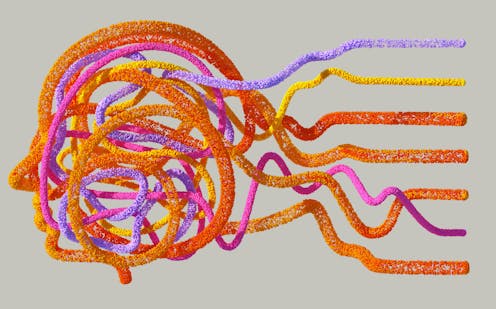
Google Deepmind/Unsplash, CC BY-SA

The launch of ever-capable large language models (LLMs) such as GPT-3.5 has sparked much interest over the past six months. However, trust in these models has waned as users have discovered they can make mistakes – and that, just like us, they aren’t perfect.

An LLM that outputs incorrect information is said to be “hallucinating”, and there is now a growing research effort towards minimising this effect. But as we grapple with this task, it’s worth reflecting on our own capacity for bias and hallucination – and how this impacts the accuracy of the LLMs we create.

Sign up to read this article
Read news from 100's of titles, curated specifically for you.
Already a member? Sign in here
Related Stories
Top stories on inkl right now
One subscription that gives you access to news from hundreds of sites
Already a member? Sign in here
Our Picks
Fourteen days free
Download the app
One app. One membership.
100+ trusted global sources.







