
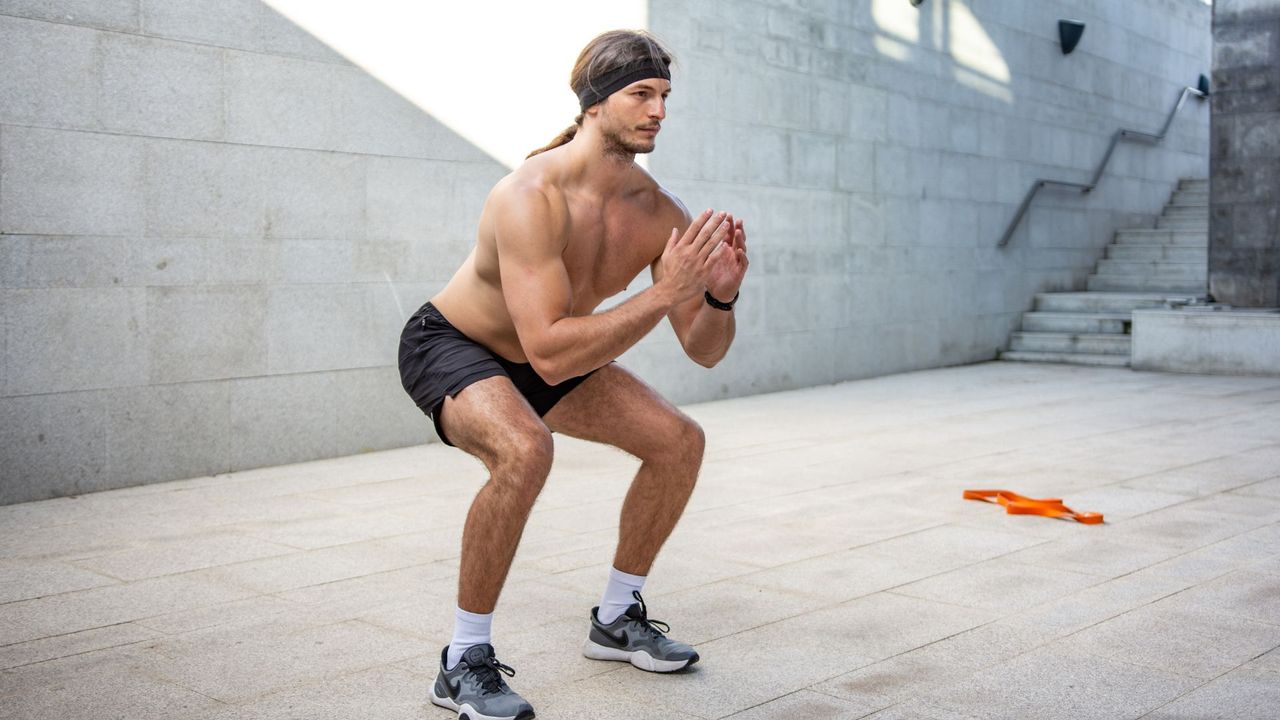
As one of the most effective compound exercises, squats will always have a place in any well-rounded training plan. They build full-body strength, boost athletic performance, and improve the kind of functional mobility that carries into everyday life.
But here’s what most people miss: squats come in far more variations than the classic up-and-down. And after watching movement coach Leandro Fornito flow through his dynamic leg routine, I'm rethinking which squats to try next.
“Your legs are made to move in more ways than just squats and lunges,” says Leo. “Athletes sprint, rotate, change direction, and land from all sorts of angles. That’s how they get strong and stay injury-resistant.”
By adding the right squat variations into your routine, you’ll challenge your legs in new planes of motion, build more resilient strength, and breathe new life into your leg day.
“This bodyweight flow trains your legs to be strong, mobile, and stable in every direction. No weights. No machines. Just movement that makes you faster, more resilient, and ready for anything,” explains Leo.
He recommends performing each exercise for 35 seconds, resting for 15 seconds, and then taking a 30–120 second break after completing all five moves. Repeat the circuit three times.
Stepping X-Steps
A dynamic variation that challenges balance and coordination by squatting and then stepping in an “X” pattern.
Stand tall with your feet crossed, toes pointed slightly out, and your core engaged. Without moving your feet, lower into a squat by pushing your knees out wide.
As you stand back up, step your right foot forward and slightly across to the left (the top right of an “X”), and squat again. Push up, then step your left leg across your right, and squat once more. Continue alternating legs.
I tried it, and I learnt… to keep movements smooth and controlled. Engage your core to stay balanced; the crossed-foot stance creates a narrow, unstable base, making stability key.
Lunge jumps into heel claps
A plyometric powerhouse that hits the legs, core, and upper body. Start in a split stance. Explosively jump up, switching legs mid-air into a jump lunge twice. After the two lunge jumps, drop your hands to the floor, jump both legs into the air, and clap your heels together mid-jump. Land softly, stand up, and return to your lunge jumps.
I tried it, and I learnt… that you need to stay light on your feet and keep your posture tall throughout. Soft landings are crucial to avoid unnecessary impact
Crawl hold to lunge downward dog tap
A hybrid move that boosts mobility, coordination, and core stability. Start in a bear crawl position. Step your right foot outside your right hand into a low lunge. Return to centre, then lift your hips into Downward Dog and tap your left ankle with your right hand. Return to the start and repeat on the other side. Continue alternating.
I tried it, and I learnt… to move fluidly and engage your core to stay stable as you transition between positions.
Lunge Step to Front Kick
Right LegA balance and power exercise that challenges control through every phase. Start in a split squat with your left leg forward. Lower into a lunge and place your right hand on the floor. Drive your back (right) leg through and kick forward. Return to the start position and repeat.
I tried it, and I learnt… to drive through the heel on the way up and brace your core for better control.
Lunge Step to Front Kick – Left Leg
Start in a split squat with your right leg forward. Lower into a lunge and place your left hand on the floor. Drive your back leg through into a controlled forward kick. Return to the split squat and repeat.
I tried it, and I learnt… to feel the hamstring stretch but avoid over-swinging. Keep the kick controlled both forward and back.
Why these moves work
Training your legs in multiple planes of motion prepares them for real-life movement - not just the straight up-and-down pattern of standard squats. Each variation challenges strength, mobility, stability, and coordination from a new angle.“When you train at different angles, you build strength and resilience in those positions,” says Leo. “If you only ever move perfectly straight, you lose that adaptability.”
Which squat should you do?
From practising squats for years (and years), I’ve learnt that the best squat variation is the one that challenges your balance, mobility, and coordination - not just your quads. Once you’ve mastered the basic squat pattern, there’s a lot of fun to be had. Step outside the rack, find some floor space, and move in new ranges. By experimenting and pushing beyond the straight-up-and-down path, your legs will become stronger, more flexible, more powerful, and ready for anything life throws your way.