Get all your news in one place.
100's of premium titles.
One app.
Start reading
Latin Times
Latin Times
National

Border Patrol Is Secretly Tracking Americans' Money and Movements: U.S. Citizens Can Be Pulled Over Without Being Suspected of a Crime

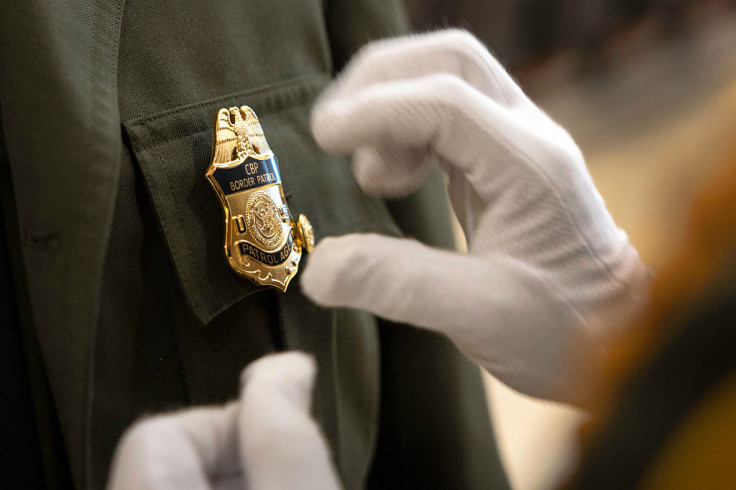
Border Patrol badge (Credit: Photo by John Moore/Getty Images)

Being a U.S. citizen does not appear to protect drivers from a secretive Border Patrol program that analyzes Americans' financial activity, tracks their movements and quietly asks local police to pull them over, even when they are not suspected of a specific crime.

The operation is run through units called Predictive Intelligence Targeting Teams, or PITT, according to a new 404 Media investigation. The outlet identified teams operating in the Spokane Sector, along the Canadian border, and the Laredo Sector in Texas, near the Mexican border.

Customs and Border Protection operates 20 sectors nationwide but would not tell 404 Media how many have predictive intelligence teams.

The investigation exposes a system with consequences far beyond immigration enforcement. Ordinary Americans driving within the United States may be flagged because of their financial transactions, previous arrests, travel routes or other undisclosed data. Local officers can then be encouraged to find a traffic violation that allows them to stop the vehicle without disclosing the federal surveillance behind the encounter.

That practice is sometimes described as a "whisper stop" or "parallel construction," in which police cite a visible traffic offense while concealing the intelligence that caused officers to target the driver in the first place.

One of the clearest examples involved Kyle William Olson, who was traveling across Montana in May with his dog, Ducky, and cannabis products he said he obtained while working at a licensed California farm.

A Montana Highway Patrol sergeant stopped Olson after saying that a tinted cover and luggage holder partially obstructed his license plate. Officers subsequently tested his blood and charged him with driving under the influence. Authorities later charged him with possession with intent to distribute, according to 404 Media.

But court discovery revealed that the license plate was not the original reason authorities became interested in Olson.

A DHS document showed that a Border Patrol agent assigned to the Spokane Sector PITT had reviewed information from "law enforcement-sensitive systems." The agent reported finding financial activity patterns that he believed were commonly associated with illegal narcotics activity, along with Olson's prior arrest and criminal history.

The agent passed the information to the Montana officer to support what the document called "general interdiction efforts." CBP did not explain what financial records it accessed, how it obtained them or whether investigators had secured a warrant.

That lack of transparency is central to the controversy. Americans may have no idea their banking activity or travel history placed them on a government radar. They may only learn about the federal surveillance if criminal charges produce documents during the discovery process.

CBP defended its practices, telling 404 Media that Border Patrol uses intelligence-based analysis to identify potential threats and that its activities comply with applicable laws, privacy protections and oversight requirements. The agency said revealing its data sources and targeting criteria could compromise investigations and endanger agents and the public.

The financial monitoring appears to be one component of a much larger domestic surveillance network. A previous Associated Press investigation found Border Patrol using automatic license plate readers to identify supposedly suspicious travel patterns inside the country.

The system has reportedly drawn information from cameras operated by federal agencies, local police departments and private companies. Through one company alone, Border Patrol temporarily had access to at least 1,600 license plate readers across 22 states, AP found. Some devices were disguised inside traffic cones, barrels and roadside equipment.

The cameras allow authorities to reconstruct what officials call a vehicle's "pattern of life," including where it traveled, whether it followed an unusual route and whether the driver appeared to avoid a checkpoint. Records reviewed by AP showed federal and local authorities also exchanging U.S. citizens' home addresses and social media information.

Americans who had committed no crime have already been caught in the system.

In 2022, Alek Schott was returning from a work trip near San Antonio when a Bexar County sheriff's deputy accused him of drifting between lanes. Officers detained him, brought in a drug dog and dismantled parts of his truck during a search. They found nothing.

Schott's dashcam reportedly showed that he had not drifted out of his lane. He is now suing the deputies and county, alleging violations of his Fourth Amendment rights. "I didn't know it was illegal to drive in Texas," he later told AP.

The Institute for Justice, which represents Schott, argues that police cannot stop a driver without a factual basis for believing a traffic violation occurred. Officers also need an independent justification to prolong a stop and investigate another possible crime.

Predictive policing carries additional dangers for Black and Latino citizens, immigrants and residents of border communities, who already face disproportionate exposure to traffic stops and immigration enforcement. Algorithms can reproduce existing inequalities when they rely on historical policing records, according to the Brennan Center for Justice.

Sign up to read this article
Read news from 100's of titles, curated specifically for you.
Already a member? Sign in here
Related Stories
Top stories on inkl right now
One subscription that gives you access to news from hundreds of sites
Already a member? Sign in here
Our Picks
Fourteen days free
Download the app
One app. One membership.
100+ trusted global sources.