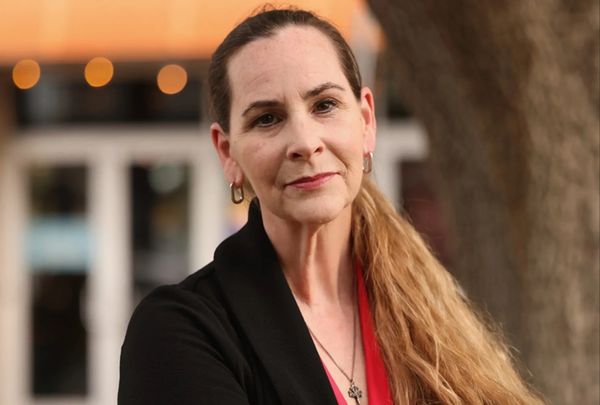
OnlyFans content creator Bonnie Blue has ignited a fierce firestorm after claiming on Australian radio that extramarital affairs can actually make men better husbands.
Appearing on KIIS FM's popular The Kyle and Jackie O Show, she argued that husbands who are refused physical intimacy after a demanding workday are fully entitled to seek gratification elsewhere.

The provocative remarks immediately drew a sharp on-air rebuke from co-host Jackie O, who warned that betrayal fundamentally destroys personal well-being.
While Blue boasted that her controversial business model profits from unfaithful spouses, relationship psychologists and empirical studies have thoroughly dismantled her unorthodox thesis.
Researchers note that infidelity is rarely driven solely by sexual frustration, pointing instead to deeper emotional neglect and lack of commitment.
As clips of the heated broadcast circulate widely across digital platforms, mental health professionals emphasise that rebuilding trust after betrayal remains an arduous process that invalidates any notion of infidelity acting as routine marital maintenance.
Bonnie Blue's Cheating Claim Meets an On-Air Rebuke
'I actually think it makes you a better partner, because then you can come home, deal with your wife's whinge, and you can get on with looking after the kids,' Blue said during the KIIS FM exchange.
Jackie O rejected that reasoning, warning that betrayal could destroy a person. When a caller accused Blue of being a 'pick me' girl, she replied, 'I don't need to be "pick me." I am the main character.' It was the sort of combative answer built for viral radio, but confidence is not evidence.
Blue has also said she made millions from husbands who were not getting what they wanted at home.
Research Challenges Bonnie Blue's Better Husbands Theory
Psychological research and academic studies offer a much less flattering picture of marital unfaithfulness. Sociological data indicates that roughly twenty to twenty-five per cent of married individuals experience infidelity, with men and women participating at comparable rates. The figures do not support Blue's narrow suggestion that men mainly stray because their wives refuse sex after a working day.
However, empirical findings show that sexual refusal is rarely the primary catalyst for straying. Studies examining hundreds of unfaithful individuals point to complex motivations such as anger, waning emotional commitment, and a deep-seated desire for ego validation.
A study of nearly 500 people who admitted cheating identified several recurring motives, including anger, falling out of love, low commitment, feeling neglected and seeking an ego boost. About 70 per cent said neglect had played at least a moderate role in their infidelity.
Neglect may include sexual dissatisfaction, but the study's findings present a more complicated picture than Blue's blunt explanation. They also do not turn dissatisfaction into an entitlement to deception. Better husbands through cheating? That is quite a leap.
Bonnie Blue's Advice Runs Into the Problem of Trust
Relationship psychologist Emma Cholakians told Body+Soul that cheating usually creates a far larger problem than the one somebody hoped to solve. 'Trust is a cornerstone of any successful relationship, and cheating fundamentally violates that trust,' she said.
The reported outcomes offer little reassurance. Some studies cited in the supplied material estimate that between 50 and 60 per cent of marriages affected by infidelity end in divorce. For couples who remain together, rebuilding trust can take considerably longer than either partner might expect.
A serious question still lies beneath Blue's provocative performance. What should people do when sex disappears from a relationship?
Cholakians recommends discussing the problem directly without turning the conversation into blame or pressure. If talking does not resolve it, therapy can help couples identify what each person wants and decide whether they still want the same relationship. That route is certainly less wild than 'just cheat on your wife'. It also avoids presenting betrayal as routine maintenance for a marriage already under strain.