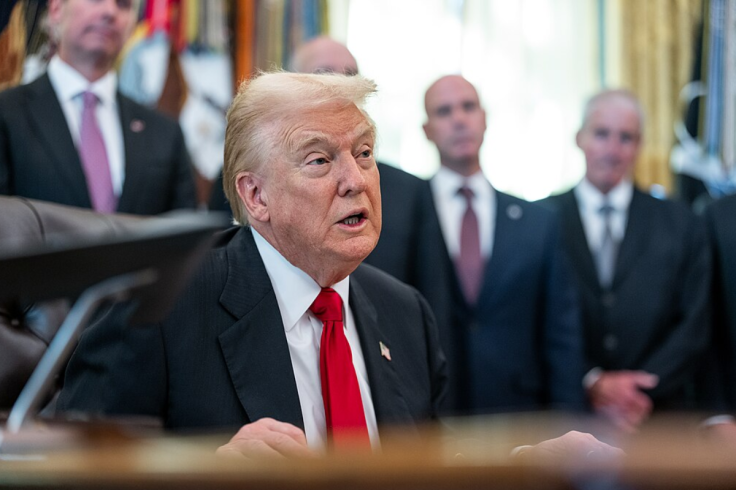
Clinical and forensic psychologist John Paul Garrison has questioned President Donald Trump's eye contact after reviewing recent public footage. He said Trump appeared to look away more often than in earlier appearances. Garrison discussed possible neurological explanations, but his analysis does not establish a diagnosis.
The scrutiny comes as Trump faces a separate legal fight over White House press access. He announced restrictions on CNN, MS NOW and Politico on 18 September 2026. The three organisations sued on 21 September, alleging violations of First Amendment protections.

A federal hearing on their request for temporary relief is scheduled for 23 September before US District Judge Timothy Kelly. Official medical information also provides an important counterpoint to Garrison's claims.
Physician to the President Sean P. Barbabella reported normal neurological findings after Trump's 26 May examination at Walter Reed. His memorandum also recorded a 30-out-of-30 score on the Montreal Cognitive Assessment.
What Garrison Said About Donald Trump's Eye Contact
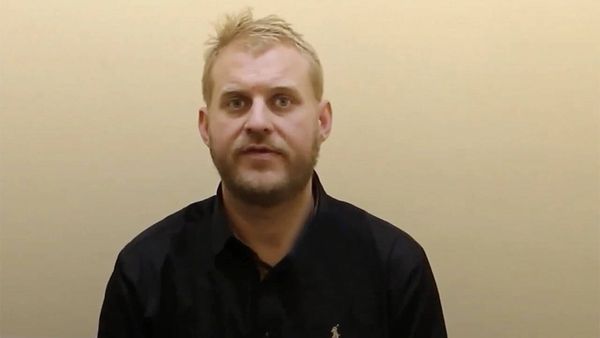
Garrison, whose website identifies him as a clinical and forensic psychologist, has analysed Trump's behaviour across public appearances for several months. He said the president's eye contact now appears different from earlier footage.
Garrison believes the frequency and pattern of Trump looking away have changed enough to warrant attention. He discussed attention, gaze control and social interaction while explaining his interpretation.
Those observations have clear limits. Garrison did not examine Trump clinically, review his complete medical history or administer neurological testing. His comments are an interpretation of public footage, not evidence of a diagnosed cognitive or neurological disorder.
That distinction matters because the White House has released more recent clinical information. Barbabella's 29 May memorandum said Trump showed normal mental status, cranial nerve function, strength, sensation, reflexes, gait and balance.
The report said Trump's cognitive performance was within normal limits on the Montreal Cognitive Assessment. The MoCA screens for cognitive impairment rather than measuring intelligence. A screening result does not, however, explain every behaviour seen during later appearances.
There is also a location issue that should remain clear. Reporting about Garrison's analysis describes an Oval Office exchange concerning the press restrictions. Trump separately addressed the controversy at Gracie Mansion in New York on 21 September.
At Gracie Mansion, Trump said he believed the three outlets produced biased or false coverage. He said he felt an obligation to keep what he called 'fake news' out of the White House. Those remarks establish Trump's stated reasoning, not Garrison's health-related interpretation.
Donald Trump Press Ban Moves Into Federal Court
Trump announced the restrictions on 18 September. Reporters from CNN, MS NOW and Politico subsequently lost access to White House grounds. The organisations filed suit on 21 September, seeking a temporary restraining order against the ban.
Their lawsuit argues that the restrictions amount to retaliation over coverage and violate constitutional protections for speech and press freedom. The White House disputes that position.
In a 21 September statement, the White House said the First Amendment does not guarantee a hard pass, briefing-room seat or press-pool place. It also accused the three organisations of years of false reporting, an allegation presented as the administration's position.
The dispute followed Trump to New York. During his Gracie Mansion appearance, Mayor Zohran Mamdani said journalists should be able to attend regardless of opinion or criticism. Trump maintained that outlets he considers unfair should not receive White House access.
The organisations continued covering Trump at the United Nations on 22 September using UN-issued media passes. Reuters reported that Trump said he would 'probably' restore their White House access if a court ruled against him.
Kelly is scheduled to hear the emergency request on 23 September. The proceeding concerns White House access, while Garrison's comments remain an attributed interpretation of public behaviour rather than a medical finding.