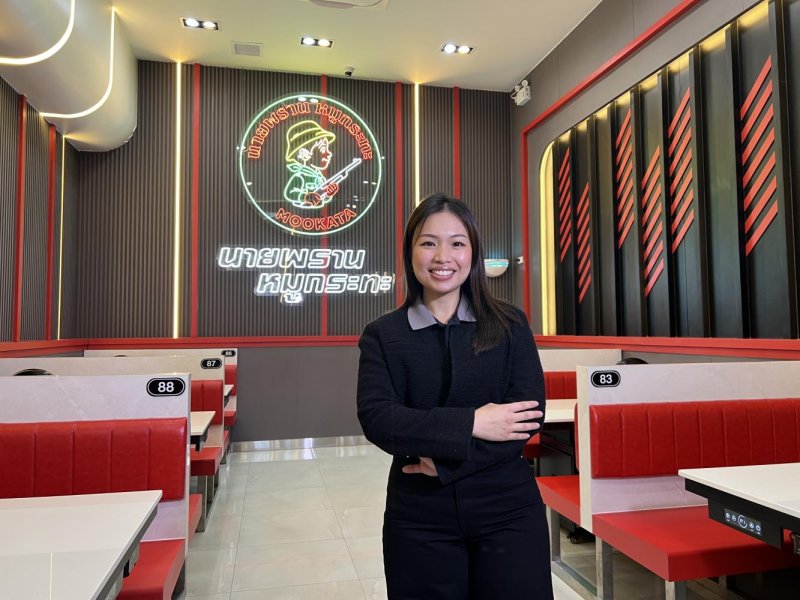
BNN Restaurant Group, the operator of Suki Teenoi, has identified an opportunity in the moo krata barbecue restaurant segment and has launched Nai-Pran Mookata, a new moo krata buffet brand.
Nattamon Pisankitvanich, managing director of BNN Restaurant Group, said moo krata is a popular dish among Thais, available in every province. She believes that demand for this dish remains strong among Thais.
"There is no specific research paper on the moo krata category, which indicates a lack of major players and shows an opportunity gap in this segment," she said.
Ms Nattamon noted the shabu-shabu/sukiyaki market has not yet reached saturation. The launch of Nai-Pran Mookata enables the company to expand its portfolio and offer new dining options to consumers.
She hopes the new brand will grow into a prominent brand within the company's portfolio.
The company plans to operate five Nai-Pran Mookata locations this year, with the first store launched yesterday in Nonthaburi.
She said the company does not intend to convert existing Suki Teenoi outlets into Nai-Pran Mookata branches, but will instead launch new locations. These may be situated near current Suki Teenoi outlets.
Ms Nattamon acknowledged challenges in the Thai food industry, noting that consumers are increasingly price-sensitive and are seeking value for money, making it difficult for operators to sell products perceived as expensive.
She also observed increased competition in the sukiyaki/shabu-shabu restaurant segment this year with brands expanding through the establishment of new stores and by launching pricing campaigns.
Moreover, customers consider brand image when deciding what to eat. Recognising these customer behaviours, the company is prioritising corporate social responsibility initiatives and building brand connection with customers, such as through campaigns on its Facebook fan page.
With many competitors in the market, she said the company must listen to feedback and respond to it as fast as possible. She said the company is flexible and is prepared to adjust its plans as needed.
Regarding the Middle East conflict, the company observed the rising costs of seafood, oil, seasonings and plastic packaging. Factoring in promotional campaigns, these increases have resulted in a 6-7% rise in overall costs, she added.