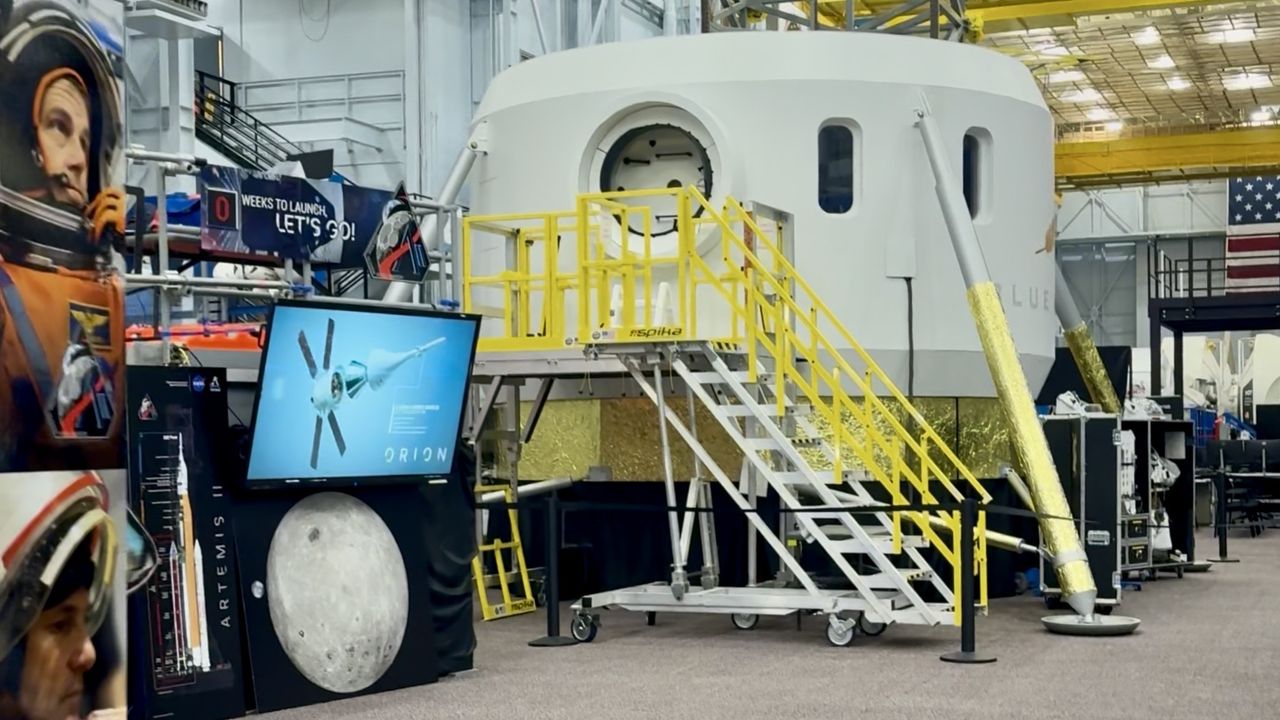
NASA's Orion space capsule training simulator is located inside Building 9 at the Johnson Space Center in Houston. It's a full-scale, high-fidelity model of the real thing, and where the Artemis 2 astronauts spent more than a year preparing for their recent mission around the moon.
For a long time, the Orion simulator sat alone in its own corner, away from the group of International Space Station training modules lined up inside the Space Vehicle Mockup Facility (SVMF). But now, Orion has a neighbor.
A mockup of Blue Origin's Blue Moon Mark 2 (MK2) lunar lander has been assembled at the SVMF, and is ready for astronauts to come aboard to begin training, according to a NASA release. Standing adjacent to the Orion capsule, the Blue Moon crew cabin and exterior resemble the design of the lander's Mark 2 variant, which will eventually land Artemis astronauts on the moon, if all goes according to plan.
With Blue Origin's mockup now assembled at JSC, astronauts can now seamlessly transition from training inside Orion to training in Blue Moon as they prepare for the Artemis missions ahead. The next mission, Artemis 3, is dependent on at least one lunar lander being ready to fly before the mission can launch.
Blue Moon is one of two lunar landers NASA has chosen through the agency's Human Landing System (HLS) contracts, the other being SpaceX's Starship, and is a critical component of NASA's Artemis program that aims to establish a permanent presence on the moon's surface.
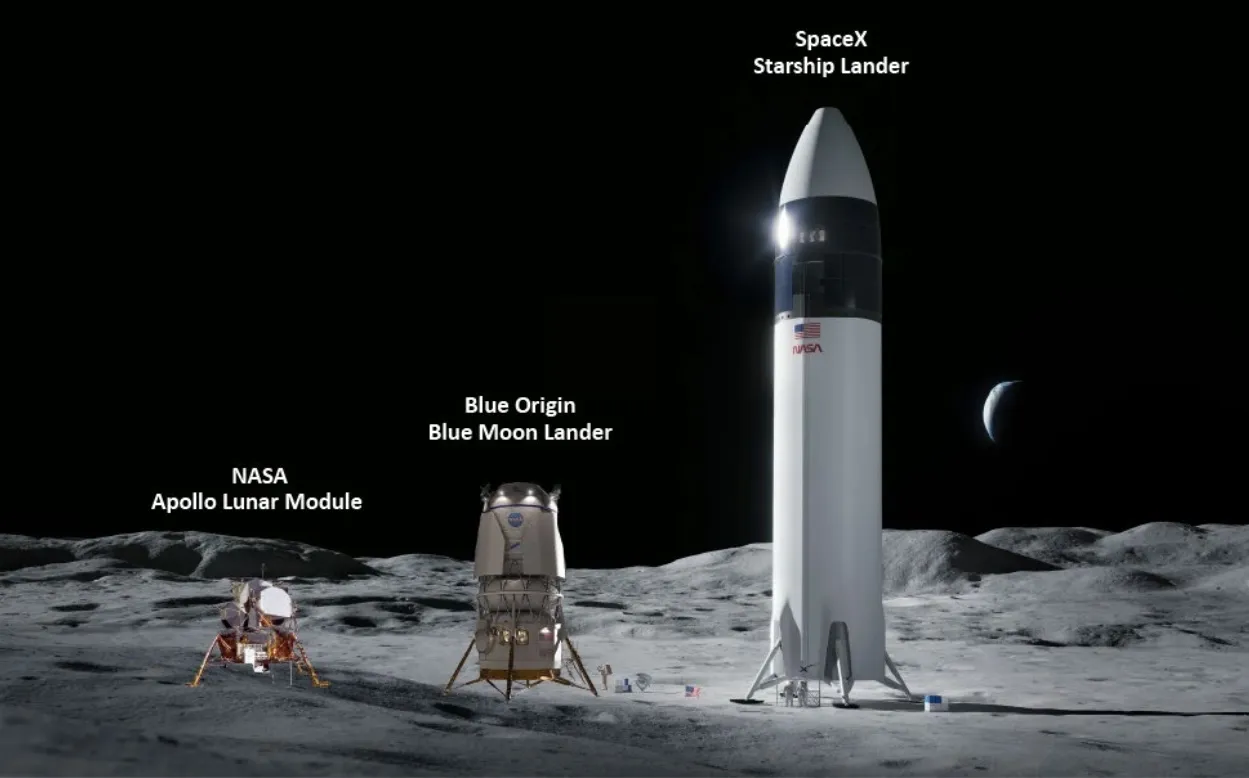
Both landers have faced delays in development, but Blue Moon is the first of the pair to integrate a cabin model for training at a NASA facility. Astronauts wearing Artemis spacesuit prototypes from Axiom Space have had the opportunity to test some of Starship's early cabin designs, as well as the spacecraft's elevator that will be used to lower crews down the roughly 170 feet (52 meters) from Starship's cabin section to its base, but those tests have so far been limited to SpaceX's own facilities.
For comparison, the Blue Moon MK 2 will be about 52 feet (16 meters) tall, with the crew cabin located near the base.
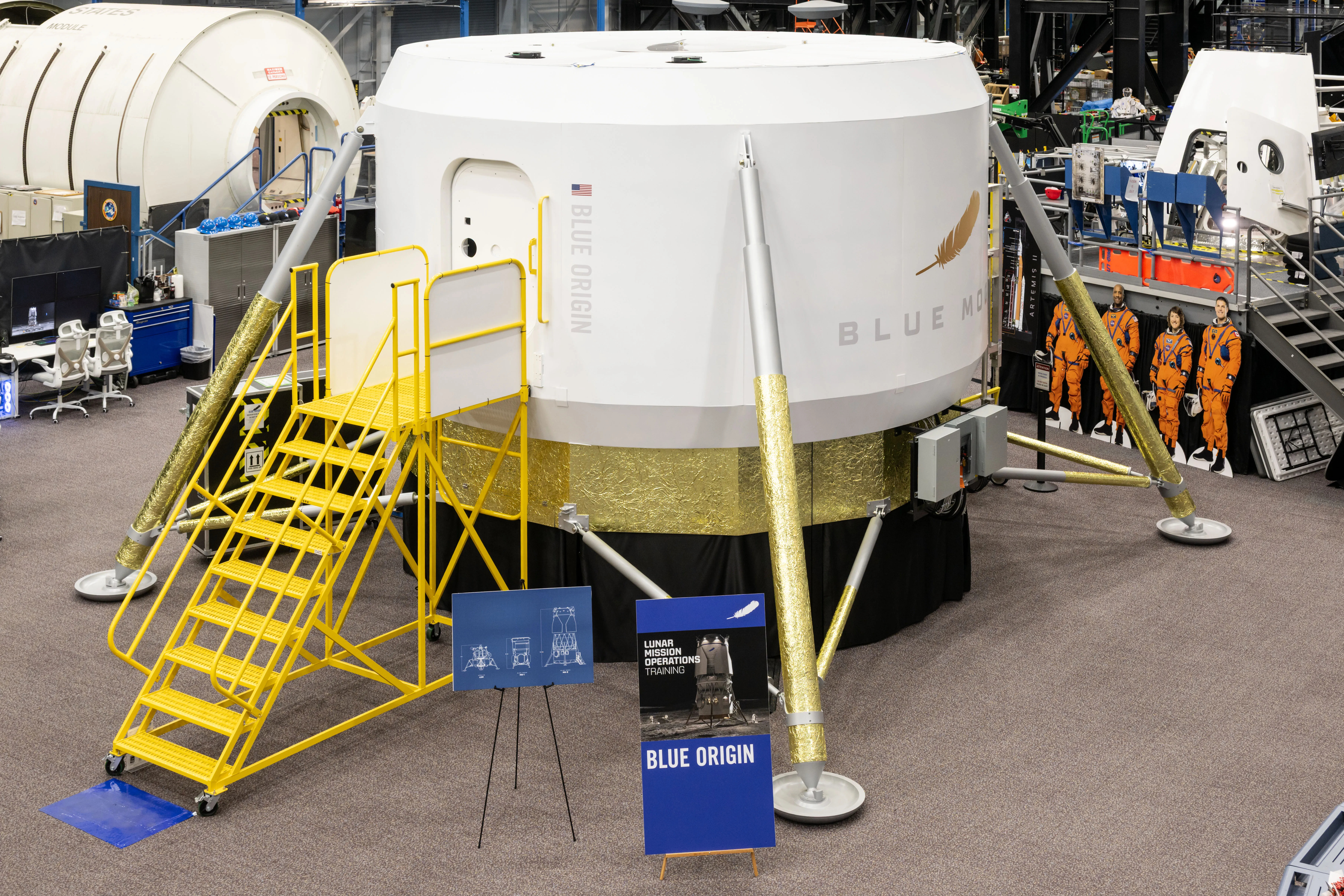
A full-scale prototype of the crew cabin of Blue Origin’s Blue Moon Mark 2 crew lander is now operational for training and testing at @nasa_johnson!Read how we will be using this crew cabin for simulations to prepare for future Artemis missions >> https://t.co/Lo5tcckxUT pic.twitter.com/2OvYoXqyRZMay 8, 2026
Artemis 3 is scheduled for late 2027, according to NASA Administrator Jared Isaacman, who based the timetable on Blue Origin's and SpaceX's estimations of the earliest completion for their respective landers. NASA has indicated a willingness to fly with either or both vehicles, depending on their readiness.
The mission will fly four astronauts aboard Orion into low Earth orbit, where the spacecraft will rendezvous with the lunar lander vehicles to practice docking procedures and verify their life support and communications systems. Artemis 3 astronauts may also have the chance to don Axiom's new spacesuits, but those have also faced significant delays.
If Artemis 3 goes according to plan, and the landers and spacesuits are ready in time, NASA is targeting 2028 for a moon landing on Artemis 4, and possibly again on Artemis 5 that same year. But the landers have a long way to go before NASA will qualify either to deliver astronauts to the lunar surface.
The Artemis moon landers will need to touch down safely on the moon, as well as deliver crews back to lunar orbit for transfer back aboard Orion. That's different from how Apollo astronauts performed lunar landings, flying aboard a two-stage vehicle that left half a spacecraft behind on the surface in order to shed the necessary weight to make it back to orbit. NASA's long-term, sustainable habitation approach for the Artemis program makes abandoning half a lunar lander on the surface for every mission untenable.
To pull off the single-stage landing and launch back to orbit, both Starship and Blue Moon will need several on-orbit refueling flights, requiring transfer and long-term storage of cryogenic propellants — neither of which capabilities have ever been demonstrated in space. Once those milestones have been accomplished, NASA is also requiring successful uncrewed missions to the lunar surface for each lander, before they can qualify to carry astronauts.
The Blue Moon lander mockup now operational in the SVMF is not the final design of the vehicle, inside or out, but NASA plans to use the test article to provide feedback on its design as Blue Origin continues the real MK2's development, according to a NASA release.
Blue Moon MK1, a smaller cargo variant of the lunar lander, recently completed vacuum chamber testing at JSC and shipped to Blue Origin's facilities near NASA's Kennedy Space Center, in Florida. It's slated to launch aboard a Blue Origin New Glenn rocket on an uncrewed mission to land on the moon later this year, though that may face its own delay as the company completes an investigation with the FAA into the failure of New Glenn's upper stage on its most recent launch.