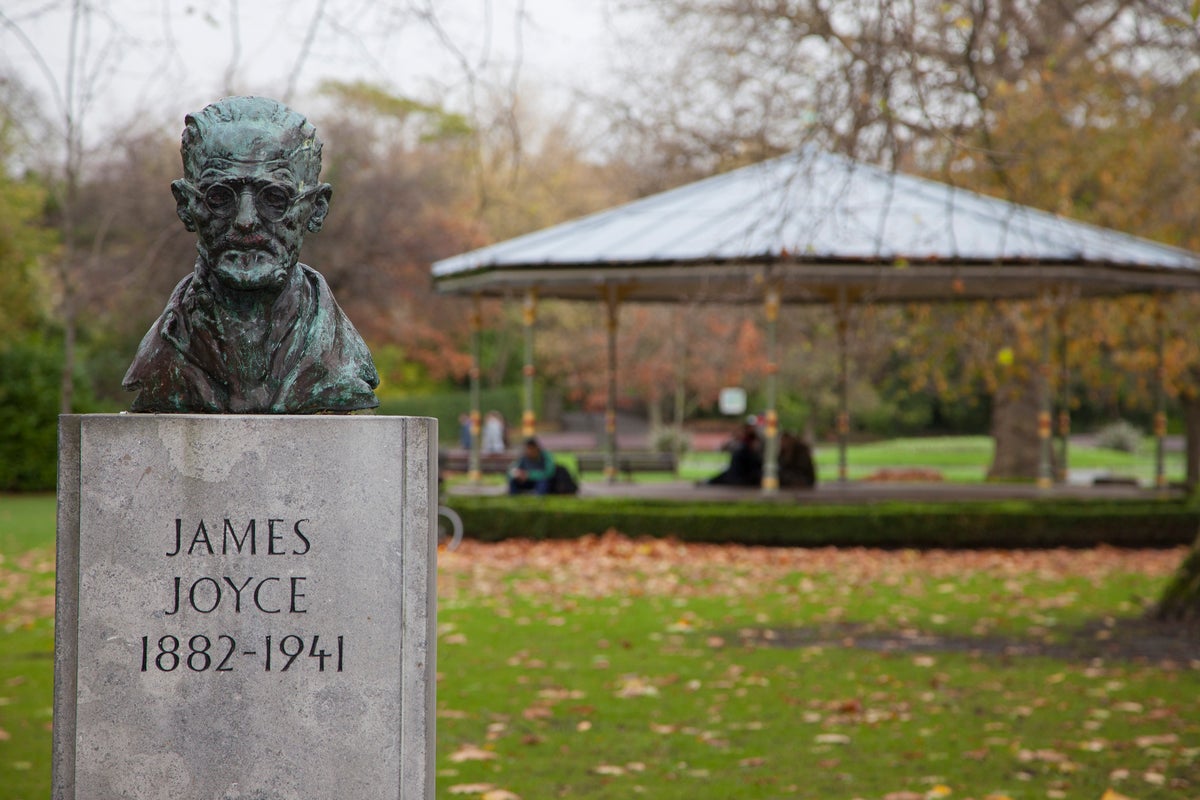
This year marks 80 years since the death of the great Irish writer James Joyce (1882-1941). His most famous novel, Ulysses (1922), is one of those books, like Moby-Dick or Infinite Jest, that more people begin than finish. The tome is widely believed to be a stream of consciousness novel and you could certainly be forgiven for thinking that, if, like many, you only made it 100 pages or so in.
I often advise against starting at the beginning of the novel. In the case of Ulysses, you are thrown head-first into the difficult stream of consciousness of Stephen Dedalus, a precocious 22-year-old writer. The fourth chapter, instead, is a much more accessible opening. It too offers a stream of consciousness, but an easier sort, belonging to the novel’s other main character, Leopold Bloom, a hapless but loveable 38-year-old advertising canvasser. On the day the novel is set, 16 June 1904, Stephen and Bloom strike up an unlikely friendship in Dublin. To read Bloom’s thoughts is to be taken into a world of sensations, trivia, and wonder.